


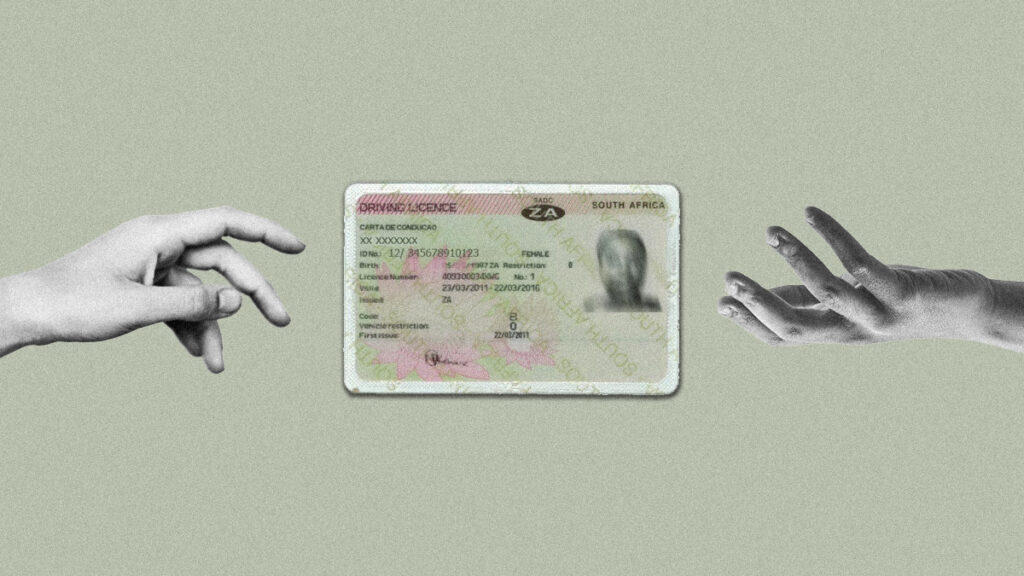
South Africa’s new licences are likely still a few years off, and the Department of Transport has remained silent on where the plan currently stands.
The most recent update on this plan came in the Driving Licence Card Account’s (DLCA) annual performance plan for 2025/26, which indicated new targets for when the new driving licence card scheme will be implemented.
These targets show that the Department of Transport has set no tracking targets for the plan until the 2026/27 financial year – these targets are for the percentage of new card implementation.
This includes reaching 25% implementation in 2026/27 and then 75% implementation in 2027/28.
“The entity has commenced with the process for the acquisition of the equipment and related infrastructure,” the DLCA’s annual performance plan states.
“The new card project will allow the DLCA to adopt digital technologies that will enable the automation of processes and provide some agility with a focus on delivering services efficiently and promptly.”
However, the Department of Transport has remained silent on the exact details of how the implementation of the plan would be conducted.
This includes details such as how long the current cards will be used, and whether the current card printing machine will be used to produce the new cards.
Given the instability of the current system and the frequency with which the current card printing machine breaks down, the new licence scheme could encounter serious setbacks if it elects to retain the existing infrastructure.
Due to these frequent breakdowns, a substantial backlog of unprinted cards has built up, and to help address this, motorists can now drive with expired licences for three months, provided they can produce a receipt that they’ve applied for a new one.
New card printing machine
The process to secure a new card printing machine has encountered multiple setbacks and is currently on hold.
This is because the company that originally won the tender to procure a new machine, Idemia, was found to be at fault with the application process.
The Department of Transport has approached courts to have the R898-million contract with Idemia be overturned, and cited multiple reasons for this:
- An almost-R400 million cost escalation from the Cabinet-approved budget of R486 million to the signed contract of R898 million.
- Use of outdated pricing.
- Exclusion of printing material costs.
- Evaluation errors in scoring and machine assessments.
- Bidder non-compliance and weak documentation.
These concerns are consistent with the issues raised by Outa.
However, thanks to these issues, the procurement of a new machine has been put on hold indefinitely, and it remains to be seen how long it will take to resolve this and secure a new machine.
This also calls into question the plans to implement the new licences, should a new machine remain unavailable going into the next financial year.



 Loading ...

-facelift-2-2025.10.webp)

