



South Africa and China have recently agreed to deepen unilateral trade, which includes increased local automotive investment.
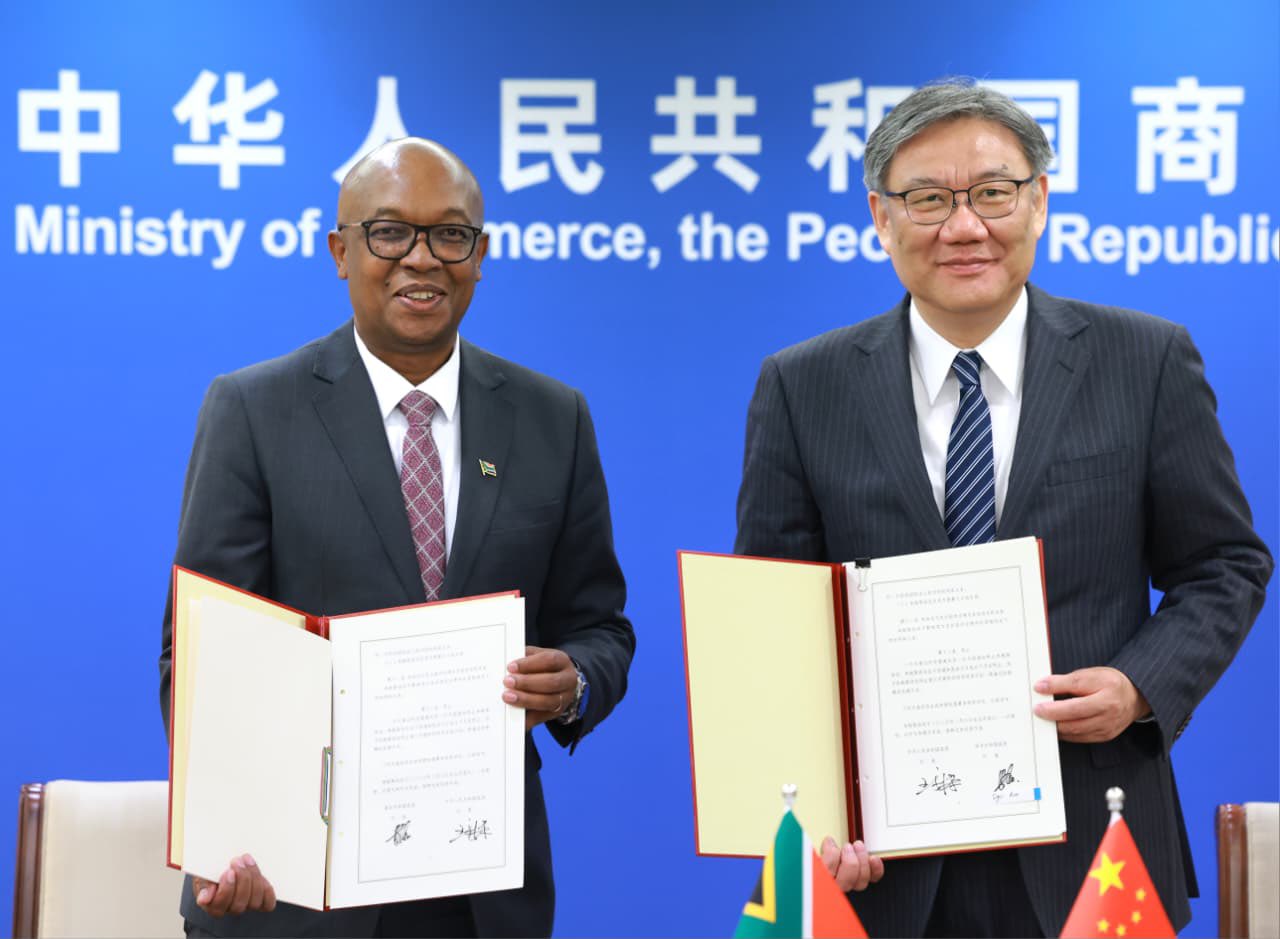
The Framework Agreement on Economic Partnership for Shared Prosperity was signed by Trade Minister Parks Tau and his Chinese counterpart, Minister Wang Wentao, and will be followed by further negotiations.
This agreement will see China provide duty-free access to South Africa for exported products, as well as enhanced Chinese investment into South Africa.
Part of the agreement centres on new energy cooperation, an area China has been excelling in for years, developing New Energy Vehicles (NEVs) en masse.
“As China-South Africa relations continue to deepen, new opportunities emerge for South African businesses seeking to enter the Chinese market,” said Minister Tau.
This is particularly true of sectors like mining, agriculture, renewable energy and technology.
In recent years, South Africa has become a major destination for Chinese investment, as well as the leading African country in terms of investments in China.
“We have seen a significant and steady increase in Chinese investments in South Africa, while South African companies are showing a growing interest in investing in the Chinese market,” said Tau
“Chinese automotive companies are investing in the South African economy and creating much-needed employment opportunities.”
“We look forward to attracting even more Chinese investment into South Africa, and also introducing many South African products into the Chinese market.”
Chery is one major player that has already increased its investment in South Africa with the purchase of Nissan’s Rosslyn plant and all of its production capabilities.
Negotiations between the two countries will be undertaken to ensure that necessary safeguards are built into the agreement to protect South Africa’s industrial capacity.
“We hope that the signing of the Framework Agreement and the outcomes of our Joint Economic Trade Commission meeting will signal the urgency we attach to growing our bilateral trade and investment relations.”
“Together with the Framework Agreement, these outcomes should provide a strong foundation for a mutually beneficial partnership and for our respective private sectors to do more business together,” concluded Tau.
A welcome agreement
A major South African automotive sector voice has thrown its support behind the agreement, welcoming increased Chinese investment.
The Motor Industry Staff Association (MISA), the biggest automotive sector trade union, welcomed the agreement, noting that increased investment will bring with it improved manufacturing and employment.
MISA said it supports the government’s efforts to attract investment and grow local manufacturing.
“There are Chinese automotive companies already investing in South Africa, and they are creating employment,” said the union.
“MISA hopes that the China-Africa Economic Partnership Agreement (CAEPA) will enhance and accelerate this investment.”
Increased local automotive investment will see South Africa’s manufacturing workers benefit from increased employment as a result of expanded local assembly.
South Africa’s logistics sector could also see significant growth as a result of this investment, with hauling, warehousing, retail, servicing, and parts distribution adding to the value chain.
MISA also believes investment will bring greater stability, as Chinese brands will move away from being import-only and will instead deepen market presence through local manufacturing.
“Chinese brands entering South Africa are increasingly investing in dealership networks, which directly employ sales staff, technicians, admin workers, cleaners and security personnel—many of whom are young or first-time entrants to the formal labour market,” said MISA.



 Loading ...

-facelift-2-2025.10.webp)
