New tax proposed for motorists renewing their car licence in South Africa


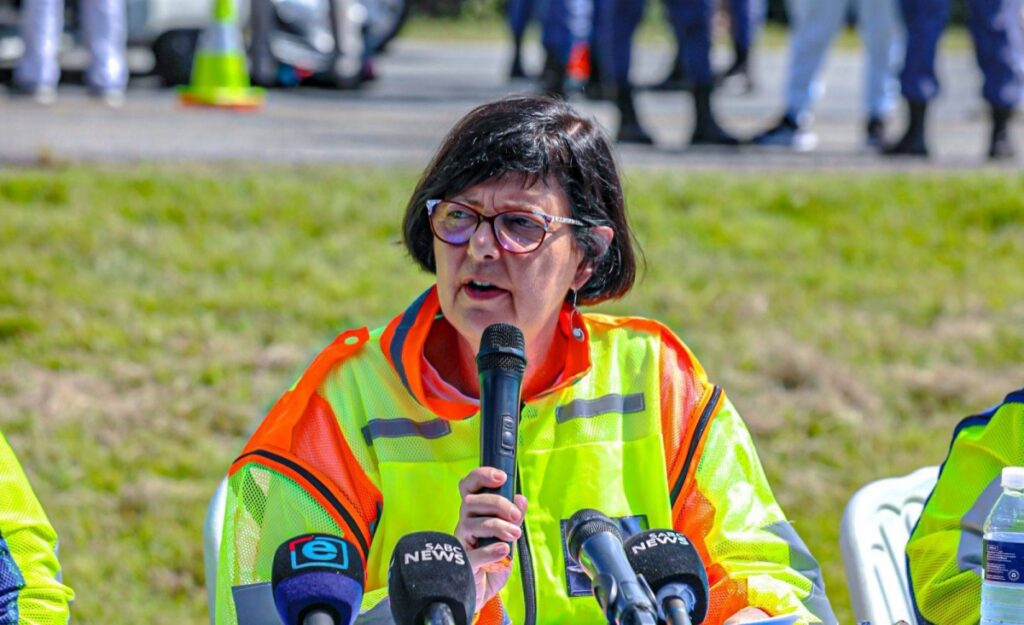
Transport minister Barbara Creecy revealed that her department is considering implementing a new fee for motorists renewing their vehicle licence discs.
This fee would be introduced to support the Road Accident Fund (RAF) as electric vehicle (EV) adoption continues to grow in South Africa.
EV owners do not contribute to the RAF because its revenue is derived from the Road Accident Fund Levy, a tax placed on every litre of petrol and diesel sold nationwide.
As EV adoption rates increase, fuel sales and, therefore, funding for the RAF is expected to decline.
Creecy proposed a transitional levy to offset EV sales and ensure that the RAF remains operational.
The RAF is a state-owned entity that pays out compensation to victims of vehicle-related accidents who have suffered injuries or a loss of income.
However, the organisation has been heavily criticised for corruption and mismanagement, leading to billions of rands in wasted revenue.
The entity is technically insolvent despite receiving R45 billion per year from fuel taxes.
In an interview with Cape Talk, Automobile Association of South Africa CEO Bobby Ramagwede said the idea of the new fee on vehicle licence renewals was laughable.
“It’s no secret. The RAF is embattled and maladministered. In fact, it collects more money than it disburses,” he said.
“Surely, by fixing its efficiencies and its operations, there’d be no reason for us to be collecting a further fee.”
Ramagwede argued that EVs reducing fuel levy revenue was not a good enough reason to introduce a new licence renewal fee.
“EV adoption is very slow. If one were to compare the rate of EV adoption versus the amount of money we’re haemorrhaging from the RAF, it’s abundantly clear that the issue is operational,” he said.
Commenting on the future of the RAF, Ramagwede said that compulsory third-party insurance would fulfill the same purpose.
He questioned whether it would be more efficient to enforce third-party insurance rather than continuing to support the RAF.
“We could still find ourselves in the same position if we centralised a third-party insurance,” Ramagwede stated.
Department of Transport spokesperson Collen Msibi told our sister publication MyBroadband that the minister, in her Budget Vote speech, indicated that the growing use of EVs would result in less fuel levy revenue for the RAF.
“The department further clarified that, to address this, a gap analysis and business case are being finalised,” he said.
This would focus on policy and operational design, as well as the interface between the Road Accident Benefit Scheme (RABS) and third-party insurance.
He added that they would focus on the applicable legal and regulatory framework, as well as financial, actuarial, and funding considerations.
General Fuel Levy also threatened by EV drivers

Electric car owners also do not contribute to the General Fuel Levy (GFL), another tax placed on the sale of petrol and diesel.
The revenue from the GFL is supposed to be used for road maintenance. However the funds are not ringfenced and go towards the government’s national pot for general expenditure.
The argument that EV drivers do not pay for road maintenance is, therefore, not necessarily true.
In recent years, the state has become increasingly reliant on the GFL to make up for its financial shortfalls.
It is now the fourth largest source of tax revenue in South Africa behind personal income tax, value-added tax, and corporate income tax.
Because of this, the growth of EVs and the decline in fuel sales could have a severe impact on government funding.
However, imposing a tax or levy on energy usage for EVs presents a major challenge, as these cars can be charged from a household socket like any appliance, making it impossible to track their energy consumption.
Driving.co.za managing director Rob Handfield-Jones previously proposed a per-kilometre fee to replace the GFL for all vehicles, which would be a fairer application of the user-pays principle.
Under this system, drivers would report their usage between annual licence disc renewals and pay the relevant charge based on the distance they covered in the preceding year.
Right now, vehicle licence disc renewals in South Africa are based on the car’s tare weight and its province of registration.
Tare weight is the weight of a vehicle without passengers, but with fluids like oil, coolant, and 10 litres of fuel.
Heavier vehicles pay a higher renewal fee because they cause greater road degradation, and the fees are intended to support road maintenance.
These are the up-to-date licence renewal fees for different vehicle weight classes in every province, according to Foresight Publications:
Gauteng, KwaZulu-Natal, the Eastern Cape, the Western Cape, and Limpopo
| Vehicle tare | Gauteng (April 2025) | KwaZulu-Natal (April 2020) | Eastern Cape (June 2018) | Western Cape (August 2025) | Limpopo (April 2026) |
| 250—500kg | R396 | R312 | R324 | R372 | R324 |
| 500—750kg | R432 | R384 | R330 | R378 | R336 |
| 750—1,000kg | R456 | R474 | R378 | R408 | R426 |
| 1,000—1,250kg | R528 | R534 | R474 | R480 | R540 |
| 1,250—1,500kg | R732 | R672 | R594 | R672 | R610 |
| 1,500—1,750kg | R852 | R810 | R696 | R738 | R756 |
| 1,750—2,000kg | R1,104 | R948 | R768 | R846 | R930 |
| 2,000—2,250kg | R1,284 | R1,134 | R1,008 | R1,152 | R1,182 |
| 2,250—2,500kg | R1,536 | R1,350 | R1,212 | R1,350 | R1,236 |
| 2,500—2,750kg | R1,728 | R1,566 | R1,368 | R1,512 | R1,398 |
| 2,750—3,000kg | R1,956 | R1,764 | R1,404 | R1,524 | R1,710 |
| 3,000—3,250kg | R2,112 | R1,986 | R1,746 | R1,902 | R1,872 |
| 3,250—3,500kg | R2,484 | R2,250 | R2,058 | R2,148 | R2,124 |
Mpumalanga, Free State, North West, and the Northern Cape
| Vehicle tare | Mpumalanga (April 2026) | Free State (August 2025) | North West (December 2024) | Northern Cape (April 2025) |
| 250—500kg | R360 | R312 | R294 | R366 |
| 500—750kg | R385 | R324 | R336 | R390 |
| 750—1,000kg | R435 | R450 | R366 | R402 |
| 1,000—1,250kg | R522 | R462 | R450 | R486 |
| 1,250—1,500kg | R684 | R606 | R552 | R630 |
| 1,500—1,750kg | R782 | R636 | R672 | R780 |
| 1,750—2,000kg | R894 | R798 | R762 | R852 |
| 2,000—2,250kg | R1,168 | R864 | R762 | R1,092 |
| 2,250—2,500kg | R1,372 | R1,164 | R1,146 | R1,314 |
| 2,500—2,750kg | R1,546 | R1,176 | R1,290 | R1,488 |
| 2,750—3,000kg | R1,670 | R1,422 | R1,324 | R1,536 |
| 3,000—3,250kg | R2,056 | R1,644 | R1,662 | R1,908 |
| 3,250—3,500kg | R2,366 | R1,884 | R1,908 | R2,178 |




 Loading ...