


South Africa is harming its own automotive manufacturing sector by aligning with the European Union’s carbon tax and emissions regulations.
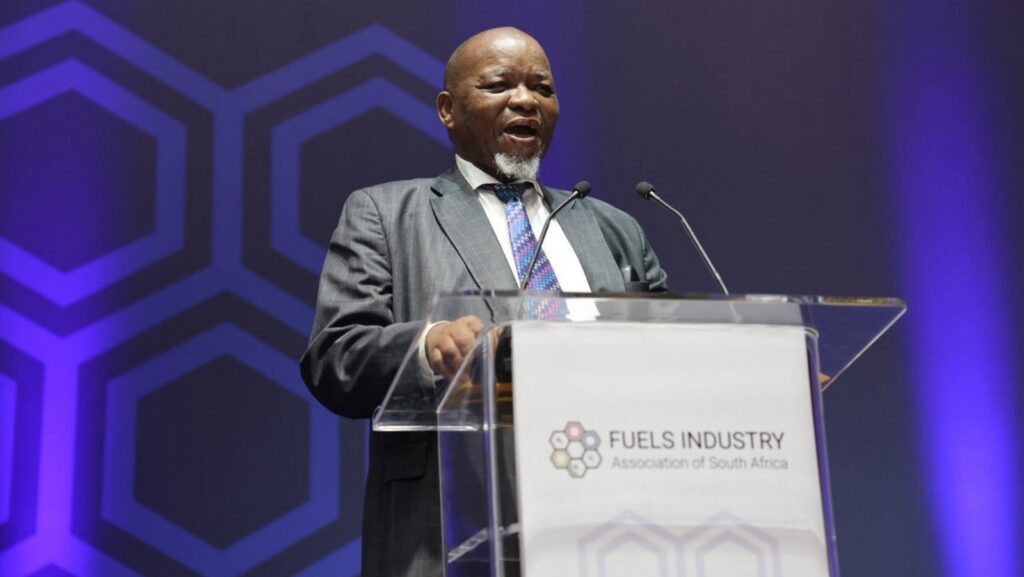
This is the view of Mineral and Petroleum Resources Minister Gwede Mantashe, who addressed the Fuels Industry Association of South Africa’s (Fiasa’s) Annual Imbizo last week.
The minister noted that he believes reliance on fossil fuels like oil and coal will decline, but added that for the time being, demand is still increasing.
“You know, as a coal fundamentalist, many people have been telling us that coal is dirty, and that it will have no role,” he said.
Mantashe explained that he knows that fossil fuels will remain relevant, considering that demand grew significantly last year.
“Coal demand marked a very important signal that coal and fossil fuels are going to be around for some time as we transition to something new that we are looking at,” he said.
“The Chinese have given us advice that one of the things we must never do is to dismantle a technology you have in anticipation of future good technology.”
Instead, South Africa was advised to examine “future” technology and prove its reliability and resilience before implementing it step by step.
“You don’t dismantle what you have because you are looking forward to getting something new, something cleaner, something that can be accepted,” Mantashe said.
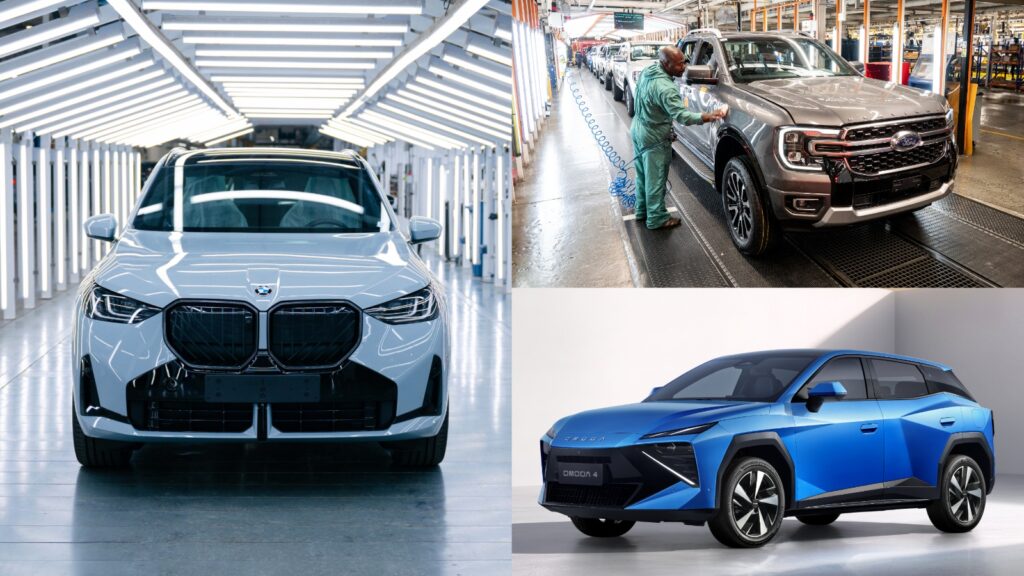
He explained that it is “unfortunate” that our vehicle manufacturing standards are linked to those of the European Union (EU).
“I was telling the minister of finance (Enoch Godongwana) that we’re the only country outside of the EU with a carbon tax,” the minister said.
“The US doesn’t have it, China doesn’t have it, India doesn’t have it, the Middle East doesn’t have it, we are the only country with a carbon tax linked to Europe.”
Mantashe noted that while Europe has accepted South Africa’s carbon tax framework, it also imposed its own on the local automotive sector, causing double taxation for manufacturers exporting to Europe.
“I said to Enoch [Godongwana], we are ahead of our time. We are going to harm ourselves because we want to look good, and this is not a beauty contest; it’s a reality.”
Billions spent on South Africa’s energy transition

In November 2021, South Africa established international partnerships with the European Union to support a just transition towards a low-carbon economy and a climate-resilient society.
At the time, President Cyril Ramaphosa submitted a revised Nationally Determined Contribution (NDC) to reduce domestic carbon emissions by 2030.
The Presidency noted that the target aligns with the goals of the Paris Agreement, representing South Africa’s best effort to confront climate change.
Under the partnership, an initial R131 billion was mobilised through a range of grants and concessional finance to support the revised NDC.
More has since been pledged towards South Africa’s energy transition, with hopes of reducing local emissions outputs to align more closely with Europe’s standards.
Part of the investment was aimed at ensuring Eskom can access resources to finance the repurposing of its coal-fired power stations due for decommissioning over the next 10 years.
Ramaphosa welcomed the partnership, calling climate change an “existential challenge” that affects us all, and added that South Africa is committed to playing its part in reducing global emissions.
“The partnership that we have established today is a watershed moment not only for our own just transition, but for the world as a whole,” he said at the time.
“It is proof that we can take ambitious climate action while increasing our energy security, creating jobs and harnessing new investment opportunities, with support from developed economies.”




 Loading ...