Illegal e-hailing cars impounded in South Africa’s capital city


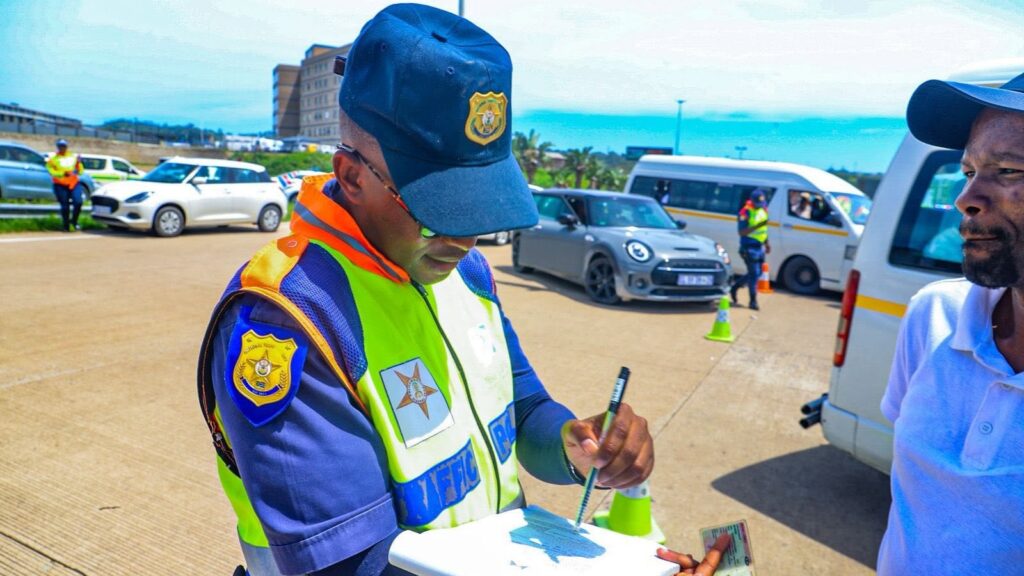
Earlier this week, the Tshwane Metro Police Department (TMPD) impounded 33 vehicles involved in illegal e-hailing operations in Pretoria.
The TMPD’s Public Transport Unit conducted intensified operations during peak morning and afternoon hours this week, emphasising enforcement of the National Land Transport Act (NLTA) and the National Road Traffic Act (NRTA).
The unit monitored taxi routes and addressed public transport-related matters in Pretoria West, at the intersection of Eskia Mphahlele Drive and Vom Hagen Street.
During these operations, 10 illegal e-hailing vehicles were impounded after their drivers were unable to produce the prescribed documentation.
Six more vehicles were also impounded on Eufees Road, as well as on the N14, all for the same offence.
Additionally, the TMPD Public Transport Unit continued its public safety operations on Eufees Road and N14, emphasising the National Land Transport Act 5 of 2009 as primary legislation for restructuring and regulating public transport systems.
This act is South Africa’s foundational legislation for transforming and regulating the public transport system.
It legally requires all road-based public transport operators, including taxis, buses, e-hailing services, and shuttles, to obtain and carry valid operating licenses.
This additional operation resulted in another 17 illegal e-hailing vehicles being impounded for operating without valid licences.
“The TMPD will not tolerate the unlawful operation of motor vehicles used for passenger transportation, as it endangers the public and increases the risk of passengers becoming victims of crime,” declared the municipal law enforcement agency.
“The department urges motorists to comply with the law to avoid having their vehicles impounded and to help promote a safe and efficient public transport system.”
Fake Uber drivers scamming South Africans

South Africans using Uber to get around – especially from airports – have been warned to be on the lookout for scammers posing as e-hailers.
Johan van Schalkwyk, a frequent traveller, told Cape Talk that there are people with no affiliation with e-hailing services who are scamming individuals out of thousands of rands.
He added that they offer services as if they were an Uber or Bolt driver to scam unsuspecting victims, with several tourists and local travellers discussing these scammers on online forums.
“The thing you read often is someone saying ‘my trip should have been R420, but I got to the hotel and connected to the Wi-Fi to see I’ve been charged R4,200’,” he said.
While he did not elaborate on how the fake Uber drivers were able to charge higher amounts, the money was stolen from the victims’ bank accounts, so they likely shared their card details with the scammers.
Van Schalkwyk explained that scammers have grown bolder and have continued to operate despite improvements in airport security.
Major airports have dedicated e-hailing pickup spots in their car parks, with posted signs and markers, or even warn travellers not to engage with supposed e-hailing operators lingering in the area via broadcast announcements in the terminals.
These scammers seem more active at night, which could indicate that the new airport security measures are only operational or effective during the day.
“My latest flight was arriving after 21:00, and it seems that this is where the problem now lies. There’s been improvement. But I do believe there’s a nighttime problem there,” Van Schalkwyk explained.
His suggestion for combating the issue is to formalise “good” taxi operators and grant them an area or space where they could offer their services to travellers.
“Make it clear that this is an approved taxi pickup area. That improves the situation, and it gives those legit drivers a real place to make money and to do business,” suggested Van Schalkwyk.





 Loading ...