


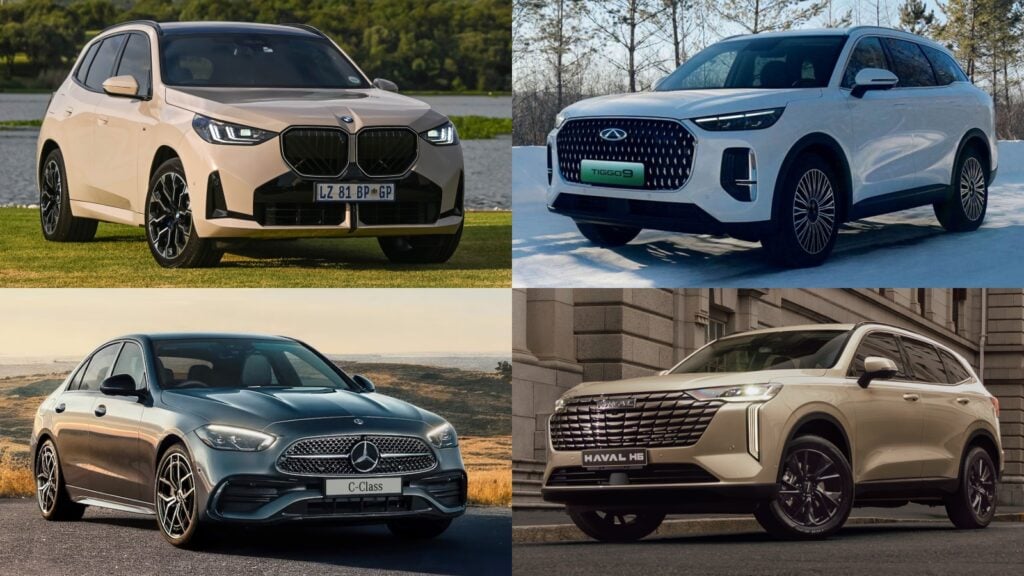
Chinese brands are offering South African motorists luxury comparable to that of historical big hitters like BMW, Mercedes-Benz, and even Land Rover, and stealing away their market share as a result.
While luxury carmakers will always have their loyal buyers, especially on the higher end, more affordable Chinese luxury offerings are eating into their potential sales on the lower end.
Since the start of last year, BMW and Mercedes-Benz have recorded flat numbers, maintaining relatively stable average monthly sales of around 1,000 and 500 units respectively.
By contrast, Chinese brands that offer affordable luxury have seen sales soar over the last year and a half, with Chery, GWM, Omoda & Jaecoo, and relative newcomer Jetour recording growth up to 350%.
While these emerging brands also sell entry-level models with a much lower barrier to entry, these are often better equipped and more feature-rich than cars from established legacy brands.
This creates a scenario where more affordable cars offer considerable luxury at a fraction of the price, drawing potential buyers away from high-end luxury brands and into luxury Chinese dealerships.
Since the start of last year, Chery, which sells its highest-end models – the Tiggo 8 and Tiggo 9 – for roughly the same prices as entry-level Mercedes and BMW models, recorded a 42% increase in monthly sales.
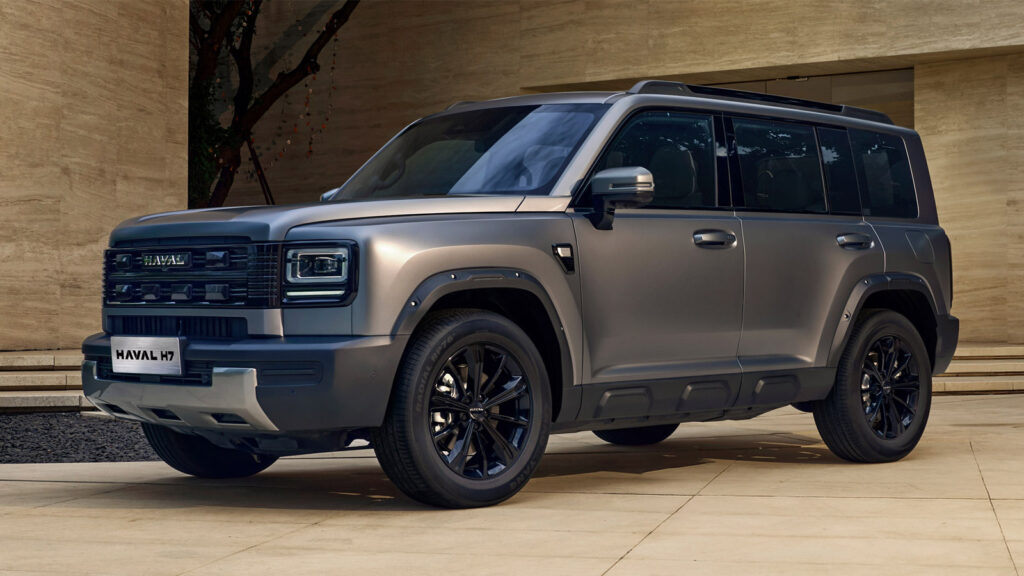
Similarly, GWM, which imports and sells the Haval H6 luxury SUV for significantly less than the German brands demand for their cheapest models, recorded a 43% increase in monthly sales.
Chinese brands that target the luxury market specifically – Omoda, Jaecoo, and Jetour – have seen the most significant growth in a year and a half.
According to Naamsa, Omoda and Jaecoo doubled their monthly sales figures in a year and a half, selling 743 units in January 2025 and 1,502 units last month, thanks to affordable luxury SUV sales.
Jetour, which has seen the most significant growth, improved from 451 monthly sales to 2,034 last month, with T1 and T2 sales driving its 351% increase.
Despite the luxury Chinese brands leaving BMW, Mercedes-Benz, and Land Rover in the dust, these brands maintain steady local sales while focusing on their far more impressive export numbers.
Luxury exports carry South Africa’s auto sector

Mercedes-Benz and BMW have built cars in South Africa since 1962 and 1973, and have, over the years, exported millions of the world’s most popular luxury models from our shores.
This trend continues today, with the Mercedes factory in KuGompo City, formerly East London, manufacturing and shipping thousands of C-Class sedans every month.
Alongside it, BMW’s Rosslyn plant outside Pretoria ships several thousand X3 models all over the world each month.
Last month, despite selling 1,256 models locally, BMW exported 7,000 vehicles to overseas markets, while Mercedes, which sold only 490 models locally, shipped 4,400 models overseas.
The reason for this export focus is that South Africa’s automotive sector is geared toward it.
Earlier this year, Mercedes-Benz South Africa told TopAuto that its local presence serves as a strategic manufacturing hub within Mercedes-Benz’s global production network.
“This strategic focus drives our high export volume, with approximately 90% of cars manufactured here, in both right- and left-hand drive, exported to over 80 markets worldwide,” Mercedes-Benz explained.
“This export-oriented model, supported by programs like the Automotive Production and Development Programme (APDP), significantly contributes to the South African economy.”
Luxury brands are not the only ones who follow this practice. In July 2026, VW exported 12,280 cars and sold 5,731 locally, while Ford shipped as many vehicles to overseas markets as it sold in South Africa.
Chinese carmakers, especially the luxury ones, have yet to make South Africa a manufacturing hub, although this may soon change since Chery took over operations at Nissan’s local production plant.




 Loading ...
Conversation
5 commentsI have always supported them as I prefer the full maintenance plan as specially when I saw the issues my wife had with her newish Toyota. Now she has gone Chinese with a some friends as well. They are all sorry they have gone that way as those 1.5liters are very heavy on fuel and then all the issues they had since then. I wonder how long you are going to have backup from the multitude of Chinese vehicles.