


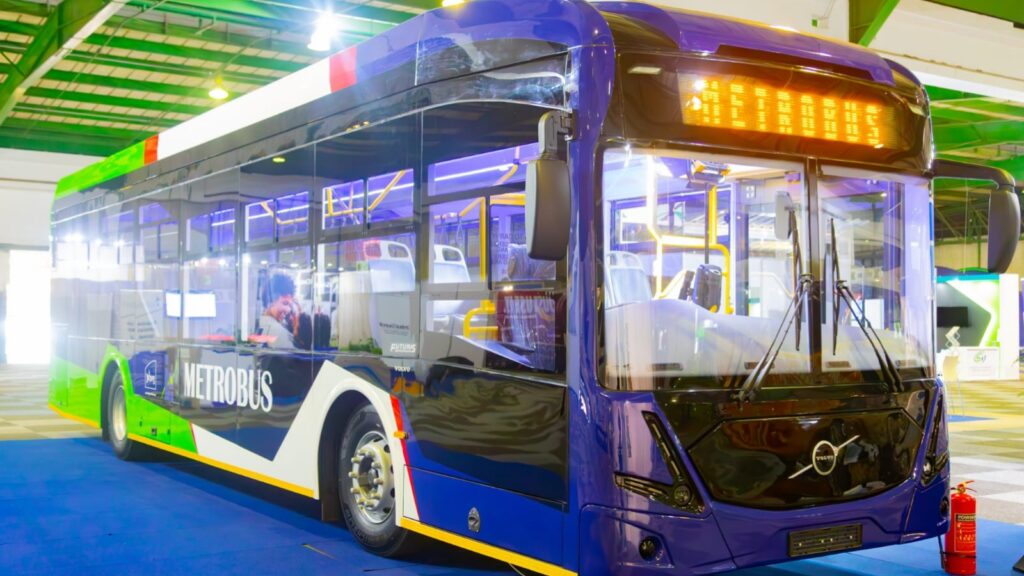
The City of Johannesburg has started a 30- to 60-day trial to assess the viability of electric public transport buses under real-world operating conditions in the city.
The city’s MMC for Transport, Kenny Kunene, launched the pilot programme at the Metrobus Milpark Depot last week, in partnership with several city and industry stakeholders.
The programme forms part of the City’s broader Green Transport and Climate Action agenda, supporting efforts to modernise public transport, improve operational efficiency and reduce the environmental impact of mobility.
At the launch, several buses were deployed on Metrobus and Rea Vaya Bus Rapid Transit (BRT) routes and are operating alongside the existing fleet.
The buses are operating on high-demand corridors, including routes in Soweto, Sandton, the CBD and Roodepoort, and on routes serving communities across Berea, Yeoville, Orange Grove, Norwood, Alexandra, and Marlboro.
During the trial, the city will evaluate the battery-electric technology, energy consumption, fleet reliability, maintenance requirements, intelligent transport systems and overall life-cycle costs.
All trial buses were integrated into Metrobus’s Fleet Management System, Control Centre and Automatic Vehicle Location system, allowing performance to be independently monitored and verified.
The city added that it will also assess passenger experience, including accessibility, comfort and safety, as well as the potential to reduce noise and vehicle emissions.
“Johannesburg cannot continue to buy buses the old way. We must test, measure and prove what works best for our routes, passengers, sustainability and climate goals,” said Kunene.
Transport Department Executive Director Lutando Maboza added that the initiative is a critical step in implementing the City’s Strategic Integrated Transport Plan.
He added that it ensures that every rand invested in public transport delivers measurable value for our commuters.
“By partnering with Metrobus as our municipal operator and with global OEMs, we are creating a living laboratory on our own streets,” said Maboza.
“We are testing cleaner propulsion, smarter ITS (intelligent transport systems), and safer operations in real conditions.”
Joburg’s City Power EV charging station
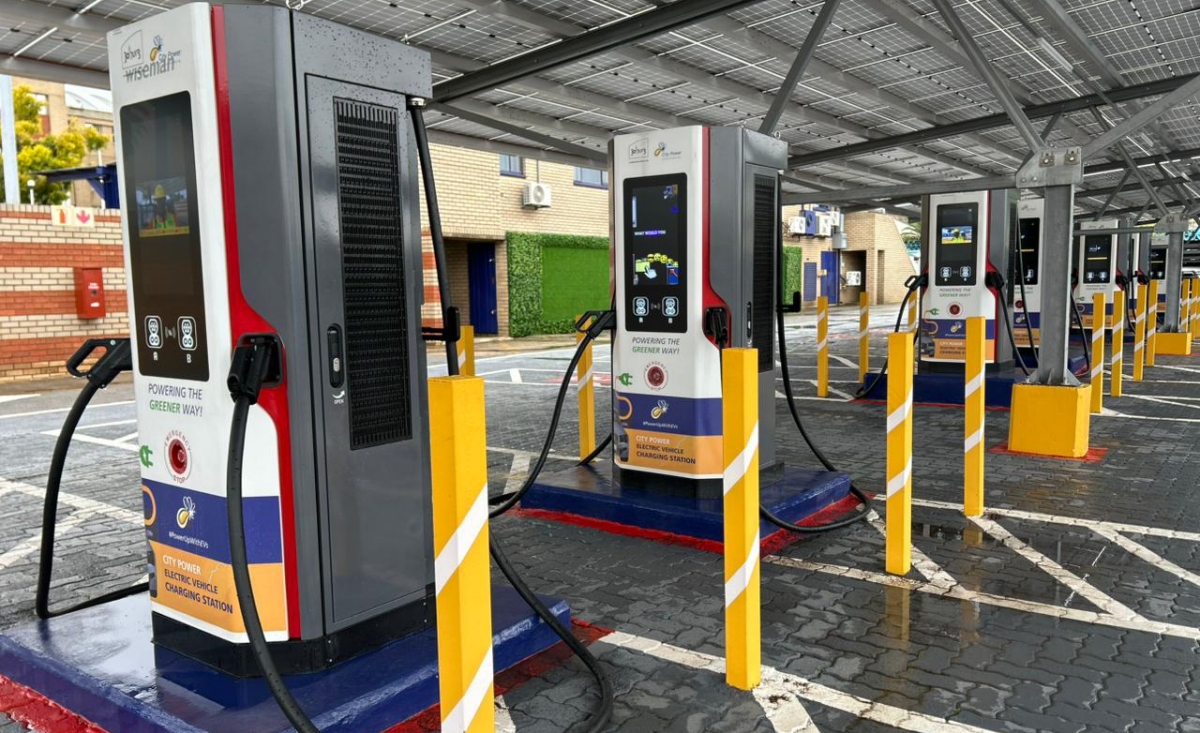
Earlier this year, the City of Joburg and its power utility, City Power, unveiled the first electric vehicle (EV) charging station that forms part of the city’s 10-point Energy Plan.
The station, located within City Power’s charging complex in Booysens, includes several EV chargers powered by off-grid solar panels.
According to the city, these chargers marked the completion of the first phase of its Energy Plan, which aims to enhance service delivery and build a cleaner, more resilient energy system.
The City of Joburg noted that its EV programme will gradually transition its fleet from traditional internal combustion engine vehicles to EVs.
This move will be supported by the growing network of charging infrastructure throughout Johannesburg.
“The electric vehicle programme is part of Johannesburg’s broader strategy to modernise municipal operations while strengthening service delivery,” said Executive Mayor Dada Morero during the launch.
“By introducing electric vehicles and building charging infrastructure, the City is improving operational efficiency while reducing long-term costs and environmental impacts.”
According to the city, its EV programme will include a city-wide charging network rollout across its City Power Service Delivery Centres, operational depots, major transport routes, and public facilities.
“The network will also expand into communities and townships, encouraging broader adoption of electric vehicles among residents and businesses,” the City of Joburg explained.
“In line with global best practice, the City is also exploring innovations such as battery-swapping technology to improve operational efficiency and reduce downtime in high-demand settings.”
The city expects its transition to an all-electric vehicle fleet to significantly lower fuel costs, while also boosting operational efficiency across municipal services.





 Loading ...

Conversation
2 commentsHow much money are going into couches and then Eskom will want to charge solar users that is off the grid to pay for this.