The man who quit his job to fight a R20 billion road war


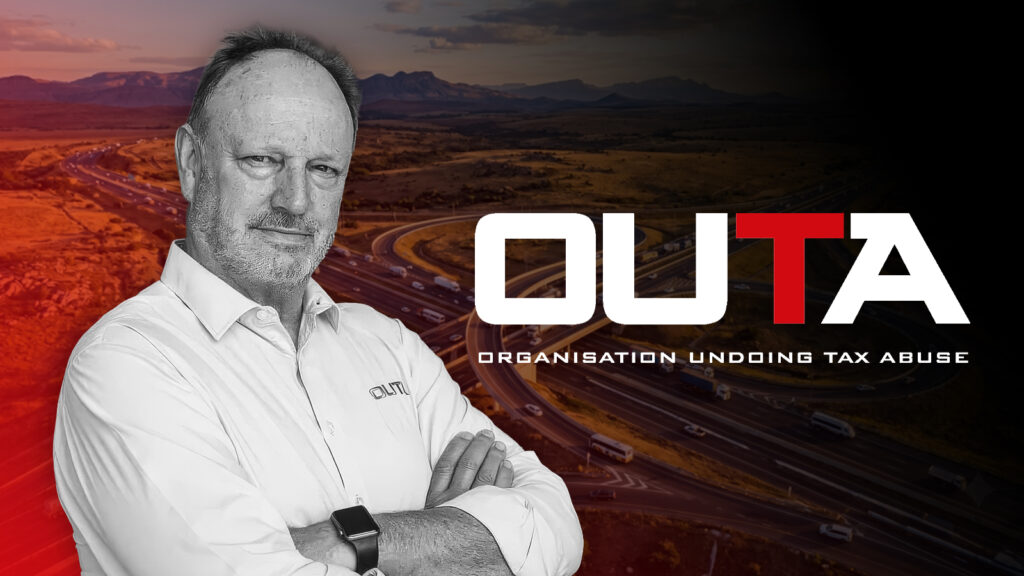
Wayne Duvenage walked away from a highly successful career in the transport and tourism sector to establish the Organisation Undoing Tax Abuse (OUTA), a civil action organisation exposing government corruption and tax abuse.
He was born in Salisbury, Southern Rhodesia (Harare, Zimbabwe today) in 1960 and grew up in his birth country until his parents left for South Africa when he was five.
Duvenage spent four years of primary school in Pinetown, KwaZulu-Natal, before his family moved to Newcastle.
He admitted to being a disruptive student who often questioned the status quo and frequently ended up in the headmaster’s office.
Despite this, Duvenage achieved a university entrance pass and enrolled to study geology at the University of KwaZulu-Natal.
After discovering a strong interest in human behaviour, Duvenage switched his area of study to industrial psychology.
He graduated in 1985 and started working as a dispatcher for Avis car rentals at Durban Airport. He worked shifts preparing and cleaning cars alongside the company’s drivers.
While Duvenage initially saw the job as a gap-filler while he looked for a role in personnel recruitment, he found Avis a dynamic company that offered opportunities for growth and development.
Over his next ten years with the company, Duvenage took various operational management positions, becoming Avis’ head of operations in Southern Africa in 1996.
Duvenage left the position in 2001 to launch the Whispering Pines Country Estate in Magaliesburg – a four-star, 14-cottage country lodge, conference centre, and wellness centre.
At the same time, he was tasked with managing the South African Vehicle Renting and Leasing Association (SAVRALA) before returning to Avis Rent a Car in South Africa as CEO in 2006.
However, he walked away from this role in 2012 to establish the Opposition to Urban Tolling Alliance to oppose e-tolls, before the group evolved into what it is today – the Organisation Undoing Tax Abuse.
Winning the war on e-tolls, 5-year licences, and more

With its sights set firmly on Gauteng’s R20 billion e-tolls, OUTA, in its original form, directed widespread civil action that led a majority of the province’s motorists to refuse to register for e-tolls or pay their accounts.
The campaign worked, and in 2024 the South African government announced the shutdown of the e-toll system.
Earlier this year, it was announced that the government also approved the closure of the Gauteng Freeway Improvement Project’s (GFIP’s) historical debt.
The decision includes the close-out of GFIP historical e-toll debt, as well as the resolution of all outstanding litigation matters and represented another leg of OUTA’s victory lap.
Despite the matter being resolved in a way that benefits the province’s motorists, the Gauteng Provincial Government must still pay 30% of the cost of the system, with the Roads Agency (SANRAL) paying the rest.
Following its name and directive change in 2016, the organisation has tackled hundreds of projects, holding government accountable through its activism and tackling everything from state capture to Eskom.
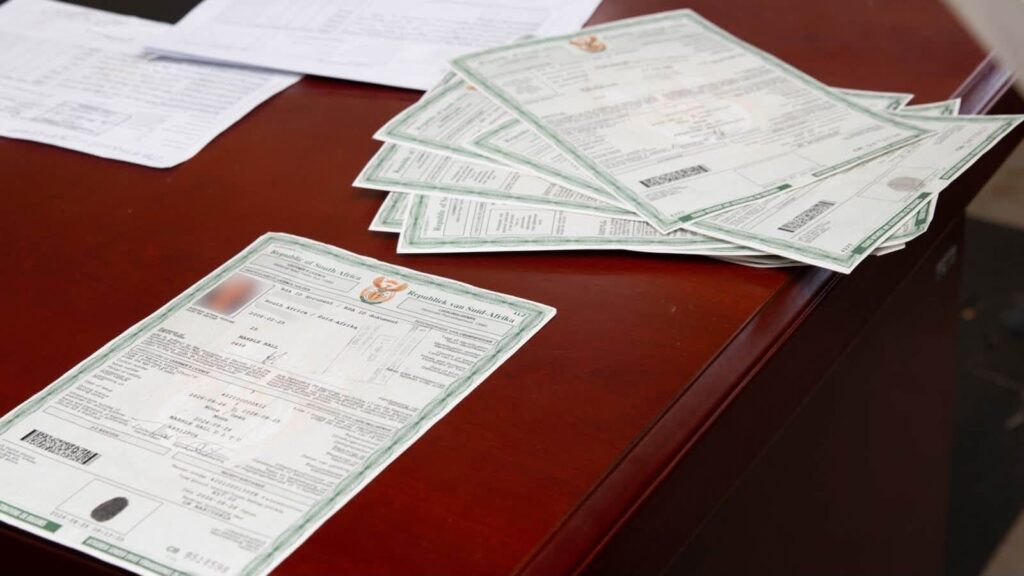
After securing its victory over e-tolls, OUTA set its sights on South Africa’s driving licence card validity period, advocating for longer periods between renewals.
Transport Minister Barbara Creecy recently gazetted the proposal to do just that, marking another victory for Duvenage and OUTA.
The organisation also challenged multiple potential irregularities with a tender for a new card and printing machine, which was eventually blocked as well.
However, OUTA has a new target – the Administrative Adjudication of Road Traffic Offences (AARTO) Act – which it is watching very closely.
The organisation first challenged the AARTO rollout on the basis that the Road Traffic Infringement Agency (RTIA) had not announced the appointment of the members of the AARTO Appeals Tribunal before implementing it.
As a result, OUTA announced it had broadened its investigation into the implementation of the Act and will conduct a full investigation into the appointment of the Appeals Tribunal.




 Loading ...