R52 billion upgrades for two of South Africa’s most important roads


The South African National Roads Agency Limited (SANRAL) is making progress on major N2 and N3 road infrastructure upgrades in KwaZulu-Natal.
This was revealed during the eThekwini Municipality’s Executive Committee meeting yesterday, 22 September 2026.
During the meeting, SANRAL provided an update on progress on upgrading roads in the province, which are designed to ease traffic congestion and bolster vital transport corridors.
According to SANRAL KwaZulu-Natal Head Dudley Mbambo, the N2 programme, which covers a 55km stretch from the Lovu River to uMdloti, comprises 11 work packages valued at approximately R19 billion
He explained that two of these packages, valued at R6.6 billion, are currently under construction, with one of them nearly complete.
The KwaMashu to uMdloti project is 96% complete and scheduled for completion by 2 November 2026, while the EB Cloete Interchange project is 44.6% complete and expected to be completed in September 2028.
Alongside these is the N3 programme, which covers 80km between Pietermaritzburg and Durban, with 15 work packages valued at approximately R33 billion.
Six of these are valued at R22.8 billion and are actively under construction, while three packages valued at R6.8 billion have already been completed.
According to Mbambo, the Westville to Paradise Valley section is 62% complete and on track to be finalised by September 2027, while the Key Ridge to Hammarsdale project is forecast for completion in October 2028.
He explained that the infrastructure investments are delivering substantial local socio-economic benefits, with R1.3 billion spent to date on appointing 7,430 target labourers.
In total, 576 small, medium, and micro enterprises (SMMEs) have benefited from SANRAL’s investment, which spent R4.6 billion on SMME participation.
The National Roads Agency has also trained 5,828 individuals through skills development programmes and 1,616 through its Contract Skills Development Goals programme.
Alongside these projects, SANRAL is executing ward-based projects, including slope stabilisation works to preserve road and sidewalk stability across the eThekwini municipality.
South Africa spent billions on worsening roads
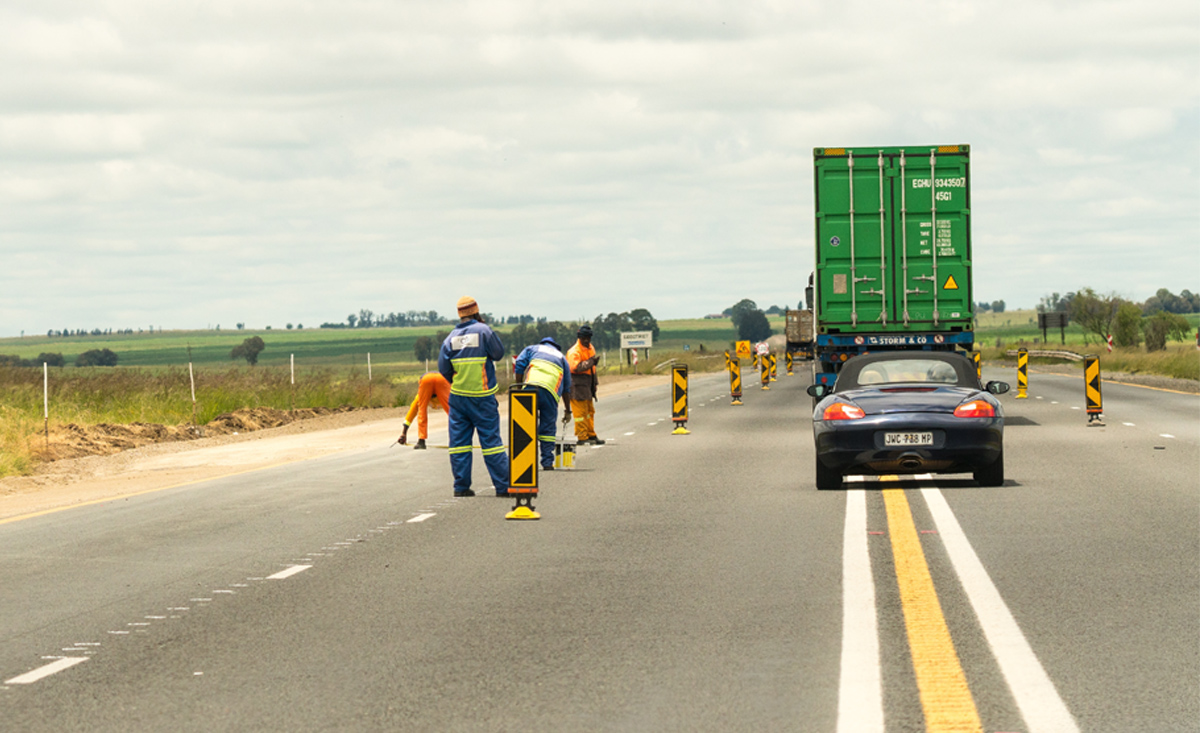
Transport Minister Barbara Creecy has revealed that South Africa’s road maintenance and infrastructure funding grew from R6.5 billion in 2011/12 to R17.2 billion in 2025/2026, while provincial roads are getting worse.
In response to questions in Parliament about road funding, the minister explained that the Department of Transport has provided supplementary funding for road infrastructure in all provinces since 2011.
This is because the Provincial Road Maintenance Grant (PRMG), which tracks this information, was established in 2011.
The data provided by the minister shows South Africa budgeted R6.5 billion for road maintenance and infrastructure across all provinces in the 2011/12 financial year.
Within ten years, that budget had nearly doubled to R11.9 billion, with KwaZulu-Natal consistently receiving close to or more than R2 billion annually.
By the 2025/26 financial year, the PRMG budget reached R17.2 billion – a 167% increase in 15 years – and every province allocated more than R1.5 billion each.
Despite this increased funding, the quality of South Africa’s roads has deteriorated since 2011, according to the South African Institution of Civil Engineering (SAICE) Infrastructure Report Cards (IRC).
These reports include technical assessments from the South African National Roads Agency (SANRAL) and the Council for Scientific and Industrial Research (CSIR).
According to the SAICE reports, the condition of South African roads has deteriorated over the past 15 years, primarily driven by severe declines in South Africa’s provincial and municipal secondary road networks.
The institution’s last report graded South Africa’s paved provincial roads as a “D”, which considers them at risk of failure, while municipal paved roads received a D-minus grading.
Unpaved provincial and municipal roads, which make up 80% of the road network, were classified as “E”, or “unfit for purpose”.






 Loading ...