What it costs to drive from Pretoria to Joburg every day at R30 per litre


Commuting in South Africa has become extraordinarily expensive this year following multiple fuel price hikes brought about by the war in the Middle East.
As of November 2026, motorists are paying R30.24 per litre for petrol 95 at inland rates, while diesel users are paying over R31.60 per litre.
This is a cost that many households have had to absorb into their monthly expenses, as most individuals still need to commute to work every day.
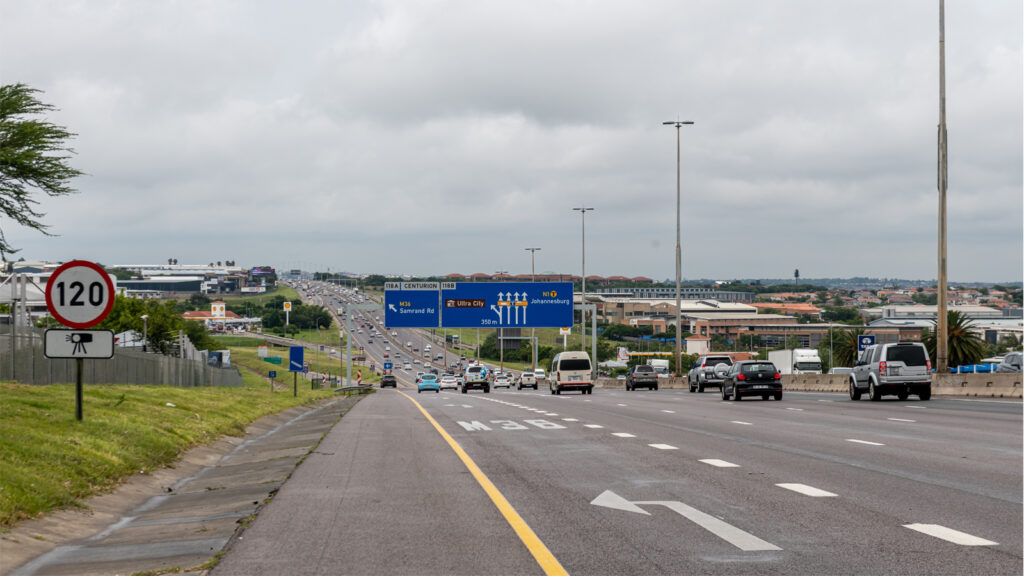
One of the busiest commuter routes in South Africa is between Pretoria and Johannesburg, as many people who live in Pretoria or Centurion need to travel to the country’s economic hub for their job.
With that in mind, TopAuto calculated the cost of travelling between the two metros to get a better understanding of how South Africa’s record-high fuel prices are impacting motorists.
Using the Pretoria and Johannesburg CBDs as a general start and end point for the average commuter, the drive is approximately 60km long, assuming you follow the N1.
Without traffic, this would take roughly 45 minutes; however, we can say from personal experience that, on a particularly bad day, it can easily take two hours or more with the morning congestion.
A typical family SUV with a petrol engine has an average fuel consumption of around 7.0l/100km, which means the average commuter is likely using around 4.2 litres of fuel per trip (or 8.4 litres per day).
Bear in mind that the fuel consumption figures listed by car manufacturers are calculated using a weighted average that already factors in heavy traffic conditions and uninterrupted stretches of freeway driving.
This means that a consumption of 7.0l/100km should be fairly representative of the average motorist’s usage, though the exact number will obviously vary depending on the vehicle’s size and drivetrain.
At R30.24 per litre, motorists are spending around R127 per trip, or R254 per day. Over a typical 20-day work month, that adds up to R5,080 spent on commuting.
This figure excludes the many other trips that an individual will make over the course of the month, such as dropping the kids off at school, visiting the gym, or going to the supermarket.
While the Central Energy Fund reports that motorists will receive a welcome R3 per litre petrol price reduction in December, motorists will still be paying roughly R27 per litre.
This is significantly more than at the start of 2026, when petrol fell to a four-year low of R20.75 per litre.
Petrol tax reductions and calls to work from home

The South African government’s response to the fuel crisis has been to implement temporary tax reductions to cushion motorists from the price shocks.
In April 2026, following the start of the war between the United States and Iran, the National Treasury cut the General Fuel Levy (GFL) by R3 per litre for petrol and diesel to reduce fuel prices.
This measure was then extended into May, and the tax cut on diesel was increased to R3.93 per litre.
However, the relief measure was reduced to R1.50 per litre for petrol and R1.96 per litre for diesel in June, and was done away with entirely in July.
After global oil prices surged again in September and October, the government elected to bring back the GFL cut, lowering prices by R1.50 per litre for petrol and R3.00 per litre for diesel.
This relief measure will once again be phased out, as 50c and R1.50 will be added back to the petrol and diesel price in December, respectively.
All of this has come at a cost to the state, as the Finance Minister Enoch Godongwana warned that the tax breaks were costing the fiscus billions of rands in lost revenue, which will need to be recuperated, one way or another.
Other government entities and industry stakeholders have taken a different approach, calling on companies to adopt more flexible work-from-home policies to reduce the time and money spent on commuting.
Earlier this year, the Public Servants Association (PSA), one of South Africa’s largest public-sector trade unions, made a formal call for remote work and hybrid work arrangements, according to BusinessTech.
It stated that many of its workers were already spending up to 40% of their income on transport, and that remote work was essential to reduce commuting expenses.




 Loading ...