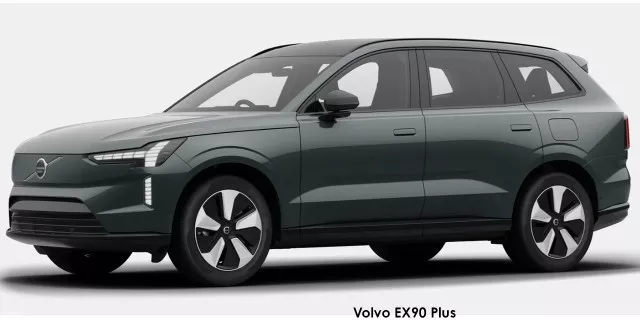
While public and media opinion may hold that South Africa imposes special additional import taxes on electric vehicles (EVs), this is not the case.
Currently, there is only one region from which EVs have a higher import duty compared to petrol or diesel models.
That said, the higher EV import duty is equivalent to the levels applied to just about every other vehicle imported from the rest of the world.
A senior executive from a prominent e-mobility company in South Africa recently discussed the issue with MyBroadband, highlighting their stance on the debate around EV import taxes.
This executive revealed that he was, surprisingly, opposed to the reduction of EV import taxes, despite this having potentially beneficial knock-on effects for his industry.
He noted that he’s also had to correct people complaining about high import taxes with growing frequency.
The executive explained that currently EVs have an import duty of around 25% of the vehicle’s declared value, which is the same value also applied to petrol and diesel vehicles.
This is the standard across the board, except for petrol and diesel vehicles imported from the UK and Europe, where the duty is reduced to 18% due to a reciprocal trade agreement.
The agreement is also set to be reviewed, and the 2025 Clean Trade and Investment Partnership agreement has made particular note of action points for reviewing EV tariffs.
While this could potentially help improve EV affordability, it’s most likely that the most affordable EVs in SA will continue to come from China.
This is because China can produce EVs at a lower cost thanks to cheap labour, economies of scale, easier access to key resources, and well-developed supply chains.
That said, should the import tax on Chinese EVs also drop to 18% it could severely impact the local vehicle manufacturing industry, which has already been experiencing considerable sales drops and job losses.
The harsh truth

While taxes can be discussed, the reality is that EVs are currently, on average, more expensive than equivalent petrol and diesel cars.
The chief reason for this is the battery pack needed for each, an extremely expensive component.
Analysts have predicted price improvements in the future; however, they expect EVs to reach an upfront price on par with petrol and diesel cars by 2026 or 2027.
A key reason is the marked decline in lithium carbonate prices – a major material for producing EV batteries.
President Cyril Ramaphosa has also stated that the government intends to provide consumer incentives to accelerate EV uptake, such as subsidies or tax rebates.
While this might seem advantageous at first glance, premature financial benefits on imported cars could also be costly to local manufacturing.
The executive concluded that EVs should be sold on their main benefits rather than through a financial incentive, like a tax rebate.
Notably, he mentioned that a common misconception is that one of EVs’ most appealing traits is their benefit for the environment.
He said this wasn’t really a chief factor for the average buyer.


 Loading ...
-facelift-2-2025.10.webp)