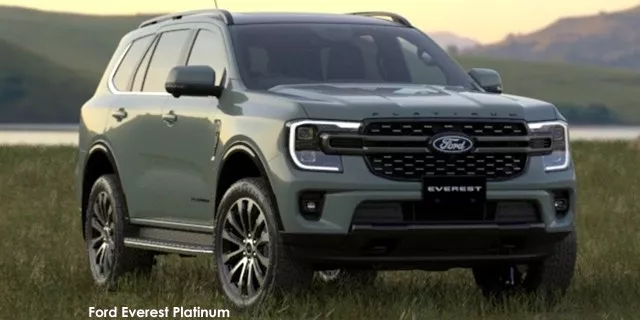
WeBuyCars is facing a new challenger in the form of Chinese car brands, which are siphoning sales away from the pre-owned market.
The vehicle trading platform recently published its latest performance results for the financial year ended 30 September 2025, where it noted the rise in popularity of Chinese car brands.
“WeBuyCars experienced margin pressure resulting from structural shifts within the South African automotive industry,” reads the report.
“The continued strength of the new vehicle market, together with the rapid rise of competitively
priced Chinese brands, including GWM, Chery, Omoda, Jaecoo, Jetour, MG, JAC and BAIC, has significantly influenced consumer behaviour and heightened competition.”
“These brands have captured notable market share through attractive pricing and compelling new-vehicle offerings.”
This comes after TransUnion published its 2025 Mobility Insights Report earlier this year, which highlighted a trend of consumers leaving the used car market in favour of new models despite the ongoing cost-of-living crisis.
While the second-hand market has traditionally been a refuge for motorists in times of economic uncertainty, new-car sales have rebounded in South Africa in 2025, recording over 34,000 sales in Q1 alone.
One of the key factors attributed to this resurgence in new-car sales is the rise in popularity of Chinese marques, which are significantly more affordable than legacy brands.
In fact, Chinese cars are, on average, so much cheaper than their rivals that they are able to compete with second-hand models cost effectively.
For example, a typical used VW Polo sells for roughly R271,802 in South Africa as of October 2025.
According to the latest sales data from AutoTrader, these Polo models tend to be five years old on average with a mileage of around 68,806km.
Another example is the Toyota Corolla Cross, which sells for R383,456 with an average age of two years and an odometre reading of 29,637km.
For the same price, a used Polo buyer could get a brand-new Chery Tiggo 4 Pro SUV, which starts at R269,900 and features a more comprehensive equipment list, a 7-year/200,000km warranty, and a separate 10-year/unlimited-kilometre powertrain warranty.
Similarly, someone considering a Toyota Corolla Cross could buy a new Omoda C5 (R339,900) or Jaecoo J5 (R379,900), which are luxury SUVs with more powerful engines, more features, and better aftermarket coverage.
Consumers have started to catch on to the idea that these cars offer incredible value for money, and are buying new again rather than settling for pre-owned models with tens of thousands of kilometres on the clock.
“Consumers increasingly perceive these [Chinese] brands as offering strong value for money,” said TransUnion.
Consequently, Chinese automakers now account for a significant portion of South Africa’s auto sales.
These are the sales results for October 2025, which were reported to the Automotive Business Council.
Chinese car brands are highlighted in red:
- Toyota – 13,559 units
- Suzuki – 6,890 units
- VW – 6,221 units
- Hyundai – 3,017 units
- Ford – 2,946 units
- GWM – 2,805 units
- Isuzu – 2,784 units
- Chery – 2,210 units
- Kia – 1,808 units
- Mahinda – 1,551 units
- Renault – 1,446 units
- Nissan – 1,360 units
- Omoda & Jaecoo – 1,311 units
- BMW – 1,306 units
- Stellantis – 921 units
- Jetour – 856 units
- MG – 606 units
- Mercedes-Benz – 563 units
- Foton – 403 units
- Mazda – 243 units
- JAC – 221 units
- Jaguar Land Rover – 216 units
- BAIC – 157 units
- Mitsubishi – 155 units
- Honda – 111 units
- Porsche – 100 units
- Volvo – 95 units
- Subaru – 62 units
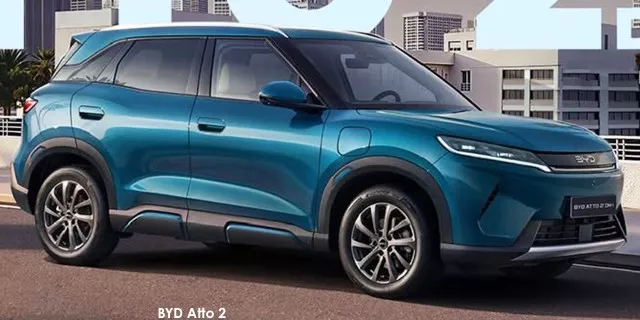
It’s also important to note that not all Chinese car brands operating in South Africa report to Naamsa, including BYD, GAC, and LDV.
What it means for WeBuyCars

Over the short term, the influx of cheap models from the People’s Republic has put pressure on WeBuyCars and other pre-owned trading platforms.
In response, WeBuyCars has had to adjust its prices on vehicles competing against Chinese makes.
“To maintain liquidity and ensure healthy inventory turns, WeBuyCars adjusted selling prices
on vehicles competing within these price brackets,” it said in its report.
“This proactive measure placed short-term pressure on margins during the second half of the year.”
The company has since adopted a new strategy of prioritising more affordable, faster-moving inventory that “aligns with prevailing market demands.”
One challenge for used-car sellers is that most Chinese car brands have been in South Africa for less than two years, meaning there are currently very few second-hand units floating around.
However, WeBuyCars believes it will be able to capitalize on these models once they start to trickle down to the used market in larger numbers.
“The buoyant new vehicle market and the growing penetration of Asian brands are expected to have a positive long-term impact for WeBuyCars, as these vehicles will enter the used vehicle market in the future. This will expand the group’s acquisition base and opportunity set.”




 Loading ...