Over 50,000 vehicles were recalled by the National Consumer Commissioner across several major automotive brands in 2025.
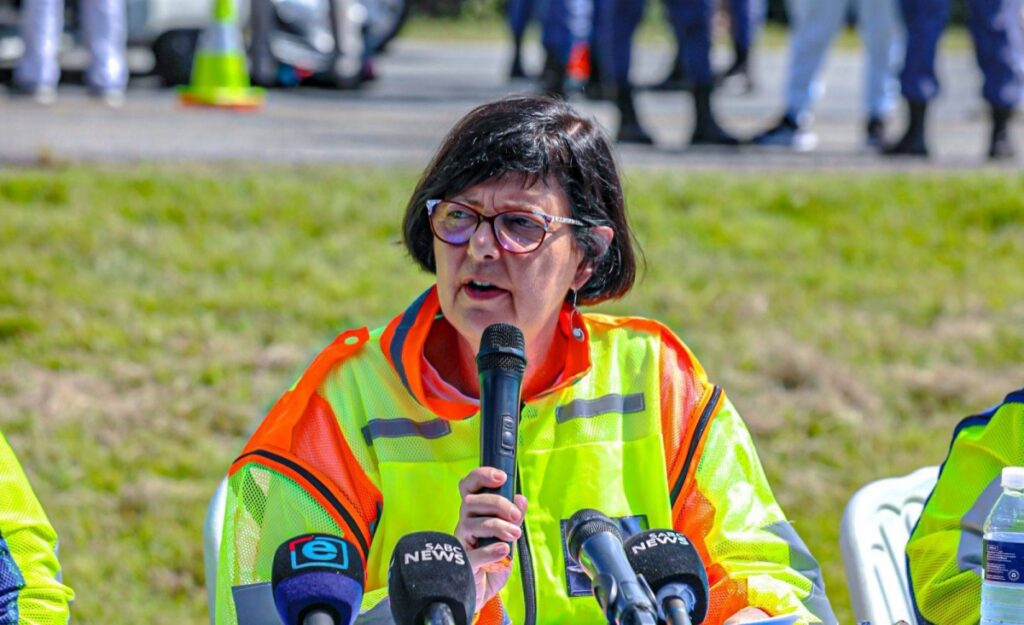
As a result, the Automobile Association of South Africa (AA) recently criticised South Africa’s vehicle pre-market assurance standards.
“Although vehicle recalls currently serve an essential role in addressing latent safety defects, they are inherently reactive in their nature and therefore inadequate as a safeguard,” said the AA.
“What this system has proved is that recall notices often arrive too late, when defective vehicles are already in circulation, driven by unsuspecting motorists.”
The AA said that the increasing pattern of vehicle recalls across many different manufacturers and models shows that there is an inherent system weakness in the pre-market testing process, production oversight, and regulatory verification.
Using available recall notices on the National Consumer Commission’s website, we unpack each recall that took place in South Africa since March 2025, below.
INEOS and Honda – March 2025
Affected INEOS Grenadier models were the M1 Passenger Station Wagon and N1 Light Commercial vehicle double cab pick-up, made for sale from 1 June 2023 onwards.
Some consumers reported door buttons remaining in the depressed position when a door is opened from the outside. This could cause the door not to fully close and latch as designed.
The affected Honda Civic models were the Civic 4 door, Civic TYPE R 5 door, and CR-V 5 door – made available from 2022 to 2025.
Honda said the steering gearbox could result in abnormal noise or dangerous sticking when turning the steering.
Mercedes-Benz, Chevrolet – April 2025
The Mercedes-Benz GLE (167) recall of 54 vehicles sold between 2022 and 2025 was the result of a high-voltage starter-alternator processor load.
According to Mercedes-Benz, “the vehicle’s processor in the control unit of the high-voltage starter generator may experience sporadic overload.”
The recalls of the Chevrolet Cruze, Aveo, Saab, Cadillac and Orlando were all related to airbag inflator defects that could result in metal fragments being directed towards the driver or occupants of the vehicle.
The Chevrolet Cruze, Aveo, and Orlando vehicles in question were distributed between 2010 and 2013, while the Chevrolet-Saab and Cadillac vehicles were distributed between 2014 and 2018.
Chevrolet, Saab, and Cadillac vehicles made available for sale from 2006 to 2008 were also affected.
Jeep, Chrysler, Citroen, Mercedes-Benz, Audi, Volkswagen, Ford, Chevrolet, and Volvo – May 2025
For the Jeep Wrangler and Jeep Chrysler 300C, an airbag defect that could result in the inflator rupturing. Sales took place between 2014 and 2016.
With the Citroen C4, DS4, and DS5, the driver’s and passenger’s airbag inflators could rupture. This was For vehicles distributed between 2009 and 2016.
Mercedes-Benz issued a recall for the CLA (118) and S-Class (223).
CLA brake hoses on rear axles “might not have met specifications” and the same was true of the S-Class (223) – but with brake hoses on the front axle.
Recalled vehicles were distributed between 2020 and 2023.
For the Audi E-Tron GT, “The high-voltage battery may overheat, resulting in an acute fire hazard, with the associated risk of severe fatal injuries to people inside and or outside the vehicle.”
46 vehicles were affected, with these vehicles produced on 27 October 2021 onwards.
VW Polo Sedans made for sale nationally from 2 April 2025 onwards had latch plates for their rear seatbelts that were produced with insufficient hardness.
This was for vehicles made available for sale nationally from 2 April 2025 onwards.
With the Volvo XC90, the high-voltage battery could overheat when fully-charged, potentially leading to a thermal event.
This was for XC90 models from the years 2020-2022.
For Ford Ranger models made for sale in 2024, the wrong front lower control arm may have been fitted on the left-hand side of the vehicle.
“The separation of the joint may result in loss of control of the affected wheel,” said Ford.
Chevrolet Cruze, Aveo, and Orlando models made available from 2010 to 2018 had defective propellant inside the driver’s airbag, which could generate gas faster than intended.
Volkswagen – June 2025
Polo and Taigo vehicles were recalled due to a faulty part in the gas generators of the front passenger airbag module.
This was for Polo vehicles made available for sale nationally from 20 December 2022, as well as Taigo vehicles made available for sale from 29 January 2024.
Furthermore, 13 Tiguan Allspace vehicles – made available for sale between 30 April 2019 and 30 December 2019 – also faced gas generator issues.
Volkswagen, Volvo, Hino, Range Rover, and Mercedes-Benz – July 2025
Volkswagen Golf TSI and GTI models sold between 16 April and 30 June 2025 were recalled due to a defect in the front passenger seat belt.
Volvo XC90 Plug-In Hybrid 2025 and 2026 models were recalled as their braking functionality could be temporarily disabled while using ‘B’ mode or One Pedal Drive.
Over 6,000 HINO vehicles across the 500 SKD and CBU series, sold between 11 May 2017 and 25 December 2024, were recalled because an incorrect cage bolt spanner was supplied – or none was supplied altogether.
Jaguar Land Rover recalled the 2021 to 2024 models – and certain 2025 models – of the Range Rover Evoque due to a passenger airbag issue.
Mercedes-Benz recalled the SL (232), EQS (297), GLC (254), S-Class (223), and C-Class (206) models, which were made available during the year 2023.
This was due to the fuse box not being reworked as intended, potentially resulting in system failures.
Volkswagen Polo Sedans were recalled due to a mix-up of belt webbing, as well as a rear right seat belt fault.
Jaguar E-Pace vehicles sold between 2021 and 2024 were recalled due to an issue with the passenger airbag.
Ford Ranger and Everest models sold between 2022 and 2025 – specifically the Wildtrak and Platinum variants equipped with 3.0L Lion engines – may have a serious defect where the left-hand camshaft sprocket on the engine could fracture.
Ford Puma models sold between November 2021 and September 2024 possibly had a fuel line rubbing against a bracket.
Ford Ecosport models sold between 2021 and 2022 could have had front half shafts that were not fully inserted into the transmission during assembly.
Lexus, Ford, Nissan, Citroen – August 2025
Lexus LX600 vehicles manufactured in 2022 suffered an issue where the engine machining debris of a particular size and amount may not have been cleared from the engine during manufacturing and subsequently contaminated the engine assembly during the production process.
Ford Mustang, Everest, Ranger, and Transit Custom vehicles made between 2021 to 2025 had an issue where the infotainment system could freeze, followed by a black screen and system reboot.
Ford Mustang, Everest, Ranger, and Ecosport models could face repeated short ignition cycles that could result in an error in the SYNC system.
2025 Ford Ranger Wildtrak models could have transmission main valve body’s internal dimensions that do not meet the engineering print specifications.
Nissan Qashqai vehicles made between September 2021 and April 2024 had an EGI harness battery connection that may have been incorrectly assembled during production.
Citroen C4, DS4, and DS5 models sold between 2009 and 2016 had driver airbag issues.
Ford, BMW, Volkswagen, Hino, Jeep, Chrysler, Mercedes-Benz – September 2025
Ford Mustangs made available from 2021 to 2022 had an issue with the low-pressure fuel pump.
Ford Transit Custom vehicles made available from 2024 to 2025 had an airbag defect.
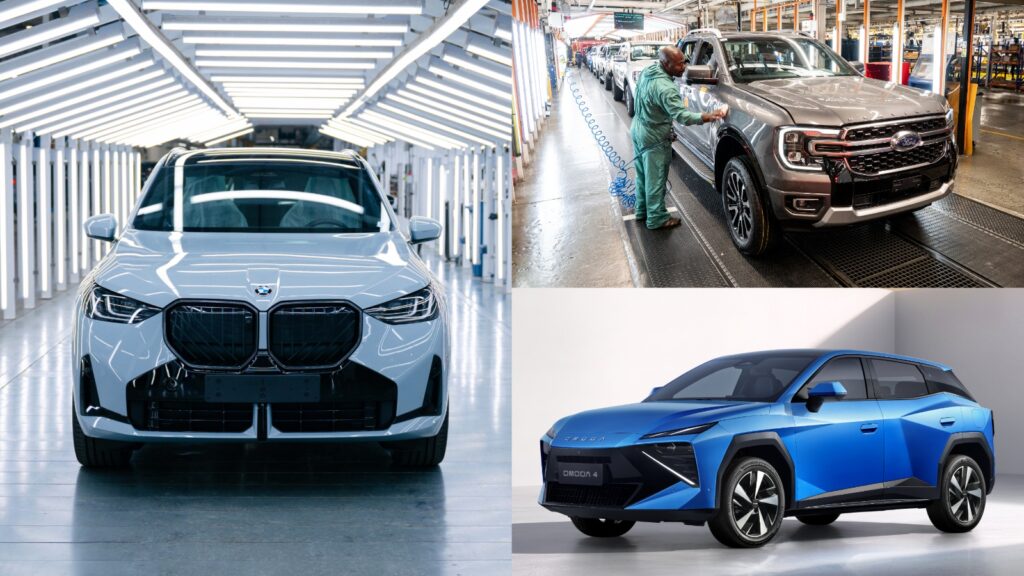
For BMW X3 (G45) vehicles, the two outer head restraints on the rear seats of the affected vehicles were not manufactured correctly.
Volkswagen Polo vehicles made available from 19-23 May 2025 had a rear axle that was not bolted to the body with the necessary torque.
Hino 500 series buses made available between 5 July 2018 and 12 August 2025 may have been manufactured with a drag link that was not torqued correctly, and in some cases, split pins may be missing.
Hino 700 series trucks made available for sale from 04 December 2024 to 30 June 2025 have a fuel pump housing that has an inappropriate surface treatment process done during production.
Ford Ranger Wildtrak, Tremor, and Platinum vehicles from 2025 and 2026 had issues relating to their brake boost feature and requiring increased pedal effort.
Jeep Wrangler and Chrysler 300C vehicles made available between 2009 and 2013 had defective airbags.
Mercedes-Benz EQE-294 and GLC-254 vehicles had issues with the bolting of the steering coupling – which might not meet specifications.
2025 model Volkswagen Amarok vehicles were recalled due to the possible loss of braking assistance, caused by the electromechanical brake servo control unit.
Over 1,000 Chrysler 300c models made available from 2006 to 2010 had issue with defective airbags.
Audi A3 vehicles were recalled due to an issue with the gas generator of the front driver airbag.
BMW, Peugeot, Nissan, Opel, Ford – October 2025
Various BMW models, including 3 Series, 4 Series, 5 Series, Z4, X3, and X4 models were recalled – totalling 12,491 vehicles. This was because water can enter the Starter Motor at certain points and cause corrosion.
Peugeot Landtrek vehicles made available nationwide from 2021 to 2025 were recalled because they may experience wear of the doorsill wiring harness caused by interference with the doorsill cover.
1,665 Nissan Qashqai vehicles made available nationwide from May 2021 to October 2024 were recalled because there was potential for movement of the fuel pipe within its retaining clip within the engine bay.
BMW 1 Series, 2 Series, X1, and X2 vehicles sold in 2025 nationwide were recalled because one of the seat belts may not have been manufactured correctly in the affected vehicles.
Opel Astra vehicles made available from 2004 to 2015 were recalled due to the driver’s airbag inflator, which may rupture during the airbag deployment phase.
Ford Mustang vehicles made available from 2015 to 2019 were recalled because consumers may experience a blank or distorted image on the centre display screen when the vehicle is in reverse.
Land Rover, Volvo, Lexus, Isuzu – November 2025
The 2025-2026 model year of the Discovery Sport, Range Rover, Range Rover Evoque and Range Rover Sport vehicles were recalled because moisture may have entered the Gear Shift Module during the assembly process.
Volvo EX90 vehicles made available in Gauteng from 7 October 2025 were recalled because the power-operated tailgate (POT) spindle may separate during the opening or closing of the tailgate.
Lexus recalled its RZ450e EX, RZ450e SE and RZ450e SE CVT models, which were sold nationally from 15 November 2023 to 7 July 2025. This was because of faulty HVAC systems.
Isuzu RT66 vehicles, made available from 16 July 2025 to 8 September 2025, were recalled becausse they may experience an intermittent airbag warning light due to a poor electrical connection between the Supplemental Restraint System (SRS) circuits and the clock spring.
Jeep and KIA – December 2025
323 Jeep Wrangler vehicles sold nationally during 2016 and discontinued in 2018 were recalled because the dust inside the clockspring could compromise airbag circuits.
18,600 Kia vehicles across ranges like the Sportage, Sorento, Optima, Cerato, and Soul – sold nationally between 2009 and 2015 – require an ABS fuse replacement or risk a malfunction of the ABS system.
Where the issues lie
The AA said that the current recall framework is fundamentally insufficient.
Key issues include:
- Delayed detection – Issues often arise years after vehicles were sold, and across consecutive model years.
- Consumer burden – Acting on recall notices rests on the consumer to monitor these notices, meaning many motorists are unaware of the faults in their vehicles.
- Limited regulator role – While the NCC performs recall notices, it does not conduct any tests or certifications itself.
Fixing the system
The AA urged that the NCC, trade and industry bodies, and the AA work together to build a more unified system for pre-market certification and post-sale monitoring.
“With its proven experience, backed by its advocacy, technical depth and long-standing partnership with Global NCAP, the AA is uniquely positioned to lead, guide and bridge the gap between motorists and the OEM in the event of a recall, serving as a trustworthy, independent coordinator of the flow of information between the two groups,” said the AA.
“The message is clear: waiting for defects to surface post market reach, is neither efficient nor ethical. The future of South Africa’s road safety depends on prevention, empowered consumers and an independent, technically capable body to lead verified safety standards.”



 Loading ...