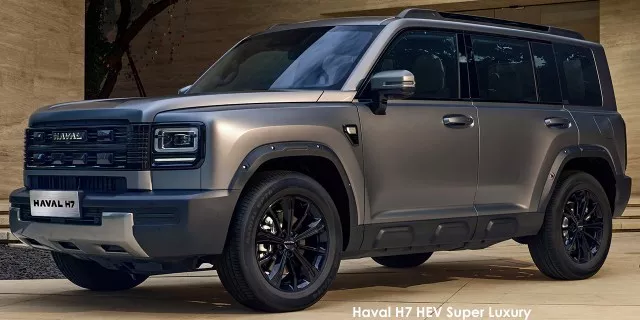
How Chinese car brands are convincing South Africans to switch from BMW, Mercedes, and Audi


“Chinese car brands are rapidly gaining popularity in South Africa” is a statement that would have sounded unbelievable a few years ago, and yet the latest sales figures attest to the fact that brands like Chery and GWM are now some of the biggest players in the auto sector.
The first generation of Chinese cars that arrived in South Africa in the early 2000s were often labelled as cheap and unreliable, establishing a long-held perception that models from Chinese brands were to be avoided at all costs.
This all changed in the span of just a few years, however, as manufacturers from the People’s Republic now sell thousands of units every month.
In most cases, Chinese cars now offer the same level of comfort and performance as their legacy competitors while costing significantly less, giving them widespread appeal in this day and age when many households are downsizing their car purchases.
The thing is, none of this would matter if people still didn’t trust Chinese car brands, which is indicative of how perceptions have changed over the last few years.
TopAuto recently contacted Omoda & Jaecoo South Africa to ask about the automaker’s plans for our market, and how Chinese brands have become so popular in such a short space of time.
Establishing trust with consumers
Most Chinese carmakers we’ve spoken to will freely admit that the first wave of Chinese cars to arrive in South Africa weren’t very good, and that it’s fair for motorists to be sceptical about these new brands.
Most of these companies have launched within the last two to three years, which means they haven’t been around long enough to establish a credible reliability record.
The challenge that brands like Chery, Haval, BYD, and others now face is convincing motorists to try one of their cars rather than sticking with established names like Toyota, BMW, Mercedes-Benz, or Audi
We asked Hans Greyling, General Manager of Omoda & Jaecoo South Africa, how the company would reassure customers who are still on the fence about trying a Chinese car.
“Omoda was launched in April 2023, followed by Jaecoo in 2024. Models introduced under these brands were launched with a 10-year 1-million-kilometre engine warranty, in addition to the standard comprehensive service plan and warranty,” he said.
“You can only offer that level of coverage if you have complete confidence in the quality of your vehicles.”
This is a tactic that many Chinese companies have followed, as most provide warranties that are substantially longer than the ones offered by legacy marques.
To put Omoda’s 10-year/1-million km warranty in perspective, here are the standard warranties for the Audi A5, BMW X3, Lexus NX, Mercedes-Benz GLC, and Range Rover Evoque.
- Audi Q5 – 1-year/unlimited km
- BMW X3 – 2-year/unlimited km
- Lexus NX – 7-year/105,000km
- Mercedes-Benz GLC – 2-year/unlimited km
- Range Rover Evoque – 5-year/100,000km
Greyling also explained that Omoda & Jaecoo has invested millions of rands to establish a supply chain and address customer concerns about a lack of spare parts when they need something repaired.
“From an after-sales perspective, we’ve invested over R140 million in spare parts, housed in a 6500 sqm warehouse facility, to ensure we can effectively support our customers.”
“We currently maintain a measured first-pick ratio of 98.6% and strive to deliver the best after-sales service in South Africa, because that’s what builds long-term brand legacy.”


 Loading ...