


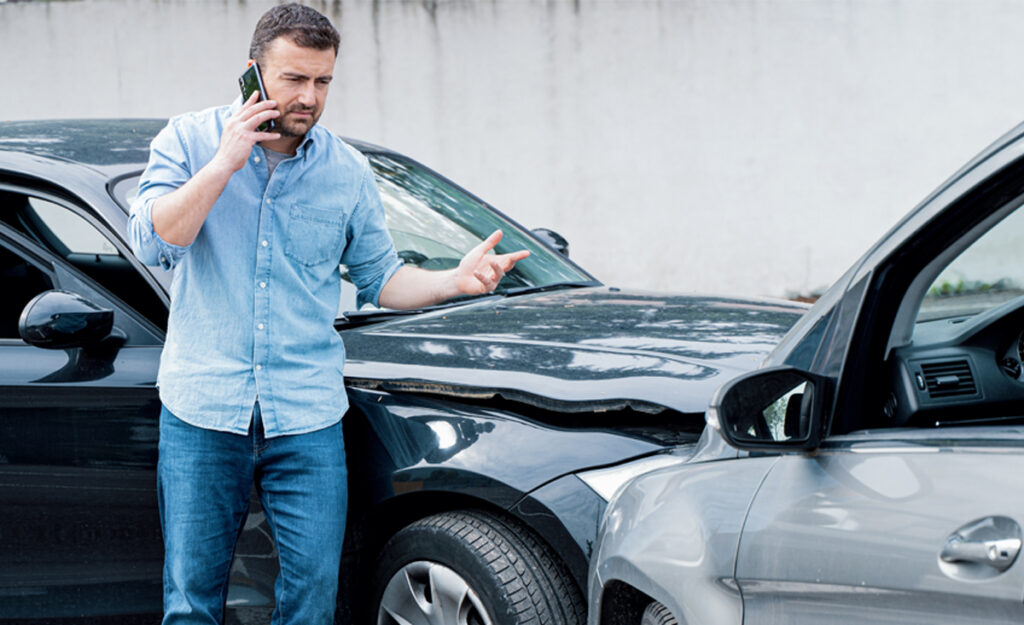
The Vanderbijlpark scholar transport crash and the subsequent release of dashcam footage of the incident have led drivers in South Africa to be more cautious on the road and left them wary of head-on collisions.
Amid concerns and speculation about what to do in such a scenario, the CEO of MasterDrive, Eugene Herbert, said a possible head-on collision is something every defensive driver should expect and prepare for.
“Understand and accept that mistakes or bad decisions will be made on the road by others,” he said.
“Drivers must always be prepared for a potential head-on collision and respond in a manner that minimises risk for all road users.”
“While nothing can guarantee complete safety, there are recommended steps that can reduce harm in the critical moments before a head-on collision.”
Certain reactions and techniques can either reduce the impact felt in a head-on collision or help minimise injuries and even death.
“These techniques, however, are often at ‘war’ with your instinctual reaction, which is often not the safest course of action,” explained Herbert.
He said that choosing the right reaction depends on awareness of what may happen during a potential head-on collision and how to respond.
“This will make a war between instinct and a trained reaction, significantly less,” he added.
What to do in a crash

Herbert shared some examples of reactions which are not always beneficial in a head-on collision and proposed some alternative behaviours instead.
Often, drivers will instinctively swerve away from oncoming danger and towards the left shoulder of the oncoming lane, essentially the right, which is often called “faked left”.
In this scenario, Herbert’s advice is for the non-overtaking driver in the left lane to never move into the right-hand lane. The safest choice, in most instances, is to move towards the left shoulder or side of the road.
Another behaviour drivers exhibit is fixating on the oncoming vehicle, which causes them to steer towards the object or vehicle they are staring at.
Herbert advises drivers to identify the risk of a potential head-on collision, look away from the oncoming vehicle, and steer towards the safest direction.
In a head-on collision, reducing speed is crucial, and while that is the case, many drivers will slam on their brakes, causing them to potentially lock or lose control as a result of a sudden change of speed.
Drivers should instead stop accelerating before gradually applying brakes. Once speed is reduced, it is easier to manoeuvre into a safe position.
In this case, other drivers will likely allow a gap for the oncoming driver to move back into their lane.
If there are obstacles or ditches on the left, or “safe” side of the road, drivers may feel the need to slam on their brakes or perform an overcorrection.
Instead, Herbert suggests still steering towards the left shoulder to avoid a direct head-on collision and to aim to hit obstacles from the side rather than directly from the front.
Should a head-on collision or any crash occur, Hippo shared advice on what to do after an accident and what not to do.
What to do:
- Stay at the scene and turn on your hazards.
- Check for injuries and call emergency services (dial 112 from any cellphone).
- Call the police if there are injuries, fatalities, or serious damage.
- Photograph the scene before moving vehicles.
- Collect details from all drivers, passengers, and witnesses.
- Document the scene: road conditions, weather, traffic lights, etc.
- Report the accident to your insurance company.
- Keep any dashcam footage.
- Search for Original Equipment Manufacturer replacement parts if needed.
What not to do:
- Don’t leave the scene, even for a minor bumper bash.
- Don’t admit fault—state the facts to the police and insurers.
- Don’t get aggressive or emotional; stay calm and respectful.
- Don’t ignore minor injuries—they can worsen over time.
- Don’t delay reporting the incident to your insurer or the police.




 Loading ...