
How Chinese car brands are growing so quickly in South Africa


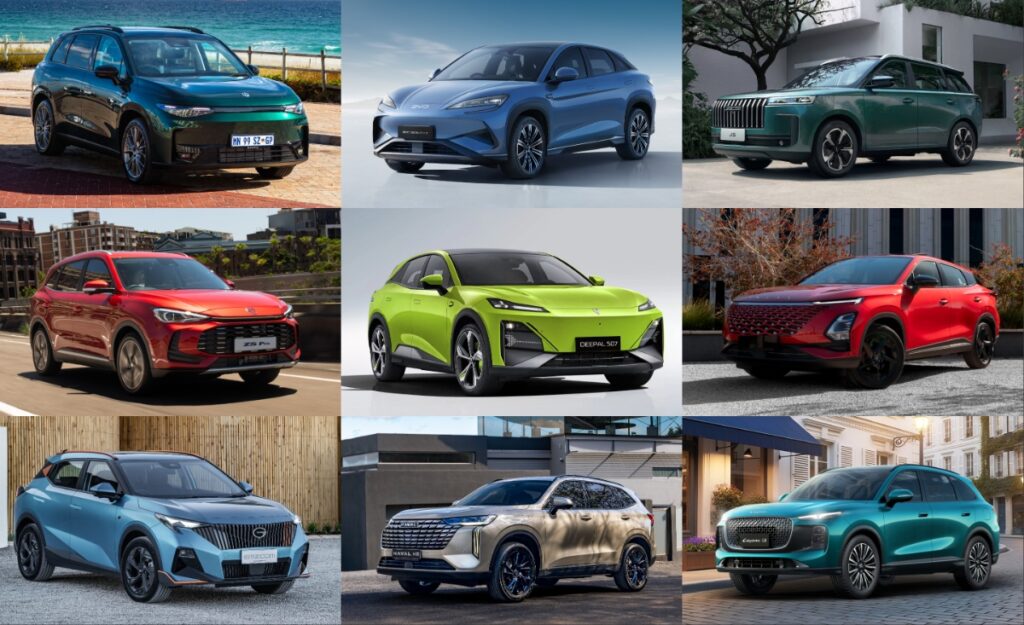
Chinese carmakers are having a great time in South Africa, with seemingly all of them finding some level of success locally thanks to a common formula.
More established brands, like GWM and Chery, have long cemented themselves as South African mainstays, regularly finding themselves in the top ten best-selling car brands.
They have been joined by a slew of brands from the Asian motoring powerhouse, whether they be standalone or sub-brands, including Omoda & Jaecoo, BYD, MG, and Changan.
South Africa’s car buyers have also received these brands with open arms, leading to strong sales growth for virtually all of them.
Legacy brands are standing strong, and brand loyalty is serving the established brands well, but local buyers are increasingly looking for cheaper alternatives.
Marinus Venter, Country General Manager for Jameel Motors South Africa – the brand responsible for distributing Changan and Deepal – explains that the brand is seeing a new kind of consumer confidence.
“People are no longer choosing brands based purely on heritage. They’re choosing based on what the product delivers today,” he says.
This behaviour mirrors a growing global shift, as innovation-led manufacturers are claiming large market share where traditional badges once dominated.
Venter notes that the rise of new-era brands signals a powerful industry evolution, requiring credibility to be demonstrated, not assumed.
“As an industry, we’re moving into an era where trust is earned through action,” he adds.
“Consumers want proof. They want value. They want modern engineering they can rely on. The brands that deliver on these expectations will define the future.”
South Africa’s next decade of mobility will be shaped by those willing to innovate boldly, prioritise customer experience, and back their promises with real-world performance.
The winning formula

Globalisation is redefining how buyers see quality, as supply chains, manufacturing technology, and international testing standards converge.
Venter explains that quality is no longer the exclusive domain of legacy brands, with modern manufacturing levelling the playing field.
“Consumers now understand that excellence can come from anywhere, as long as the engineering is sound and the testing is thorough,” he notes.
“New-era brands,” as Venter calls them, have invested heavily in global networks, cross-border engineering talent, and rigorous development cycles, which South African buyers are learning to trust.
Buyers are also looking beyond affordability alone, as demand increases for brands that innovate, combining technology, safety, design, and reliability into a single, attainable offering.
“The question customers are asking today isn’t ‘Who made it?’” explains Venter.
“The question is ‘Does it give me more than I expected for the price I’m paying?’”
He notes that this is where new-era brands excel, prioritising high specifications, safety, and advanced infotainment as integral parts of their offerings, not as expensive add-ons.
Venter explains Changan’s strategy of delivering high-spec vehicles at competitive price points signals respect for consumer expectations and a commitment to innovation.
With information freely and readily available, consumer opinions are formed or shifted more quickly than ever. Despite this, real-world feedback is still valued above all.
“South Africans trust what they can see and experience for themselves. If a brand delivers on quality, service, and everyday reliability, trust grows naturally,” Venter adds.
Globalisation and improved quality from new and emerging brands are leading to a gradual migration away from legacy brands and towards new-era offerings, especially in South Africa.
Brands are being rewarded for transparency and customer focus, while value-for-money models drive popularity.
New-era brands are also benefiting from early-established local dealership networks, with strong parts availability and robust after-sales support reinforcing these brands’ trust-building models.




 Loading ...
-2026.10.webp)

-2026.10.webp)