


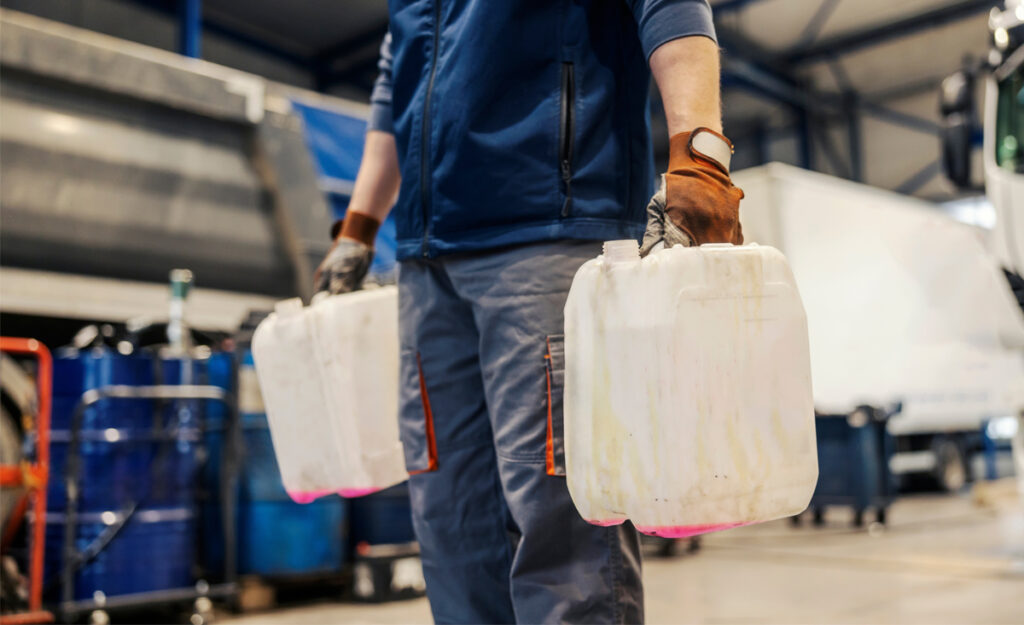
Individuals who engage in the illegal sale of petroleum products can face a fine of up to R1,000,000 and up to 10 years’ imprisonment.
The price of fuel is expected to skyrocket next month due to the ongoing conflict in the Middle East, raising concerns about higher transport costs and the knock-on effects on the economy.
The silver lining is that South Africa is not currently at risk of fuel shortages, as the government and industry stakeholders have assured motorists that the country’s current fuel retail supply is secure.
Even so, several households are already filling their tanks to the brim this month to offset April’s expected fuel price hikes.
Motorists are also permitted to purchase and store up to 500 litres of petrol and 1,000 litres of diesel, provided they transport and store the fuel in jerry cans or similar metal containers that do not present a flash-fire risk.
Some may, therefore, be tempted to stock up on as much fuel as possible and either share it with friends and family, or sell it to others, but doing so illegal if you don’t acquire the necessary licence.
TopAuto contacted the Fuels Industry Association of South Africa to inquire whether individuals are allowed to sell petrol and diesel in their personal capacity.
The association responded by confirming that the sale of fuel is regulated by the Petroleum Products Act and Petroleum Products Sites and Retail Licence.
“Selling fuel in South Africa requires compliance with strict regulatory requirements,” it said.
“Individuals cannot simply buy and resell fuel privately; instead, they must obtain the relevant licences—whether wholesale, retail, or site licences—depending on the role they intend to play in the fuel supply chain.”
It explained that individuals are not legally permitted to sell fuel informally solely on their own capacity or resources, as petrol and diesel are regulated by the Petroleum Products Act 120 of 1977, which is administered by the Department of Mineral Resources and Energy.
“This legislation was introduced to ensure safety, proper market regulation, and fair participation within the petroleum industry,” said the association.
“Under this regulatory framework, any person that intends to participate in the fuel value chain must obtain the appropriate licence from the Controller of Petroleum Products. The specific licence required depends on the type of activity the business intends to undertake.”
Persons that wish to sell fuel directly to consumers, such as operating a filling station, must acquire a retail licence.
Additionally, they will require a site licence, which authorises the storage of petroleum products at the physical location where the fuel will be sold.
“These licences ensure that the facility complies with safety, environmental, and zoning regulations.”
Alternatively, any person who wishes to operate in the bulk distribution of fuel must obtain a wholesale licence.
This allows a company to purchase petroleum products in large quantities from licences manufacturers or suppliers to sell to other licensed retailers, wholesalers, or high-volume end users such as the mining, agricultural, or transport sectors.
“Wholesale transactions generally involve bulk quantities, typically 1,500 litres or more per transaction,” said the Fuels Industry Association.
Regulations on the sale of fuel in South Africa

Section 2A of the Petroleum Products Act 120 of 1977 lists the prohibition of certain activities related to the sale of fuel in South Africa.
It states that a person may not:
- manufacture petroleum products without a manufacturing licence;
- wholesale prescribed petroleum products without an applicable wholesale licence;
- hold or develop a site without there being a site licence for that site;
- retail prescribed petroleum products without an applicable retail licence,
If a person engages in one of the above-mentioned activities, they will receive a written notice from the Controller of Petroleum Products to cease the activity forthwith.
However, individuals can continue to operate, pending an application and the issuing of a licence.
Section 12 then lists the offences and penalties for such actions.
It notes that a person who contravenes a provision of the act shall be guilty of an offence and be liable on conviction to a fine not exceeding R1,000,000.00, or to imprisonment for a period not exceeding 10 years, or to both such fine and such imprisonment.





 Loading ...
-2026.10.webp)



-2026.10.webp)