


Very few car brands have been able to enter the South African automotive market and make as big a splash as Chery.
The Chinese auto giant has not only cemented itself as a local favourite, but has also successfully introduced several of its sub-brands in recent years.
Chery is a relative newcomer in the sector with a 30-year history, but has recently exploded in South Africa and beyond, selling more than 1 million units globally in 2023, and producing its 15-millionth vehicle in 2024.
Addressing the National Automobile Dealers Association (NADA) Conference, Chery South Africa CEO Tony Liu explained that the automotive sector is changing quickly.
The reason Chery has been able to grow so drastically is that it embraced this change early, leveraging new technologies to make its mark on the new-energy vehicle (NEV) sector.
“I think, for sure, that NEVs are the future, especially in the current geopolitical situation,” said Liu.
Away from the ongoing conflict in the Middle East, Liu mentions the South African government’s commitment to upgrading the local automotive sector as another opportunity for the advancement of NEVs.
“We are working closely on advancing the industry transformation here in South Africa,” Liu mentioned.
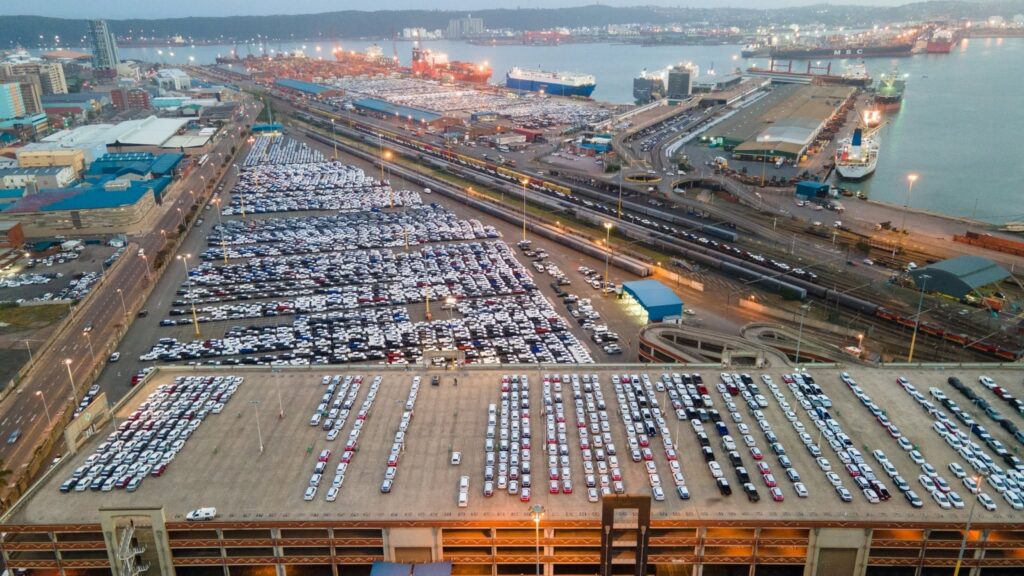
He noted that in 2025, locally produced vehicles fell below imports for the first time, with 39% of vehicles sold originating in India, compared to 31% in South Africa.
Chinese import sales figures surged massively, increasing to 16%, while Chery alone makes up 6% of the local market.
Chery did so by establishing its own South African subsidiaries, allowing it to listen to local dealers and customers and respond quickly to local needs.
It has since gone beyond this and is even in the process of taking over Nissan’s Rosslyn plant in Pretoria to establish itself as a local manufacturer.
This decision is an example to other Chinese brands and opens the door for more emerging manufacturers to establish local production plants.
“Our vision for South Africa is to bring the latest technology to consumers. We are not here only to sell cars, we are here to empower this nation,” said Liu in his address.
He said that South Africa has tremendous potential, which is why Chery is engaging stakeholders to create policies to benefit both the brand and the country.
NEVs are the future

During his address, Liu declared NEVs the future of South Africa’s automotive sector.
“In 2025, NEV sales were more than 16,000, a yearly increase of around 16%, while the NEV penetration is about 4.5%,” he noted.
He highlighted plug-in hybrids (PHEVs) as a solution to the ongoing fuel supply and price uncertainty in South Africa.
“We have seen the big change is happening with plug-in hybrids. Hybrids are dropping a bit, but plug-in hybrids are the future for South Africa,” he noted.
“I think we all know that there are different advantages with plug-in hybrids.”
Liu explained that the first advantage of PHEVs is not having to charge them all the time.
He mentioned that consumers think that ‘plug-in’ means that the car needs to charge, but this is not the case.
“If charging infrastructure is not in place, you can drive it as a normal hybrid while saving fuel,” Liu said.
He explained that PHEVs also offer the greatest fuel efficiency, which improves the cost of ownership, and solves the biggest concern for local buyers.
This sector is also where Chery shone in 2025, representing 48% of all PHEV sales in South Africa, based on Naamsa figures, which exclude BYD.
Liu noted that there are some concerns that would discourage South African motorists from adopting NEVs, including range anxiety driven by charging point coverage and charging convenience.
He notes that in the long term, new technologies and infrastructure upgrades will resolve range and charging speed concerns.
Chery will have its own hand to play in this, partnering with South African stakeholders to introduce fast chargers capable of charging EVs from 10 to 80% in eight minutes.
“We are working with local partners to make it really convenient for South African consumers,” Liu said.



 Loading ...
-2026.10.webp)

-2026.10.webp)