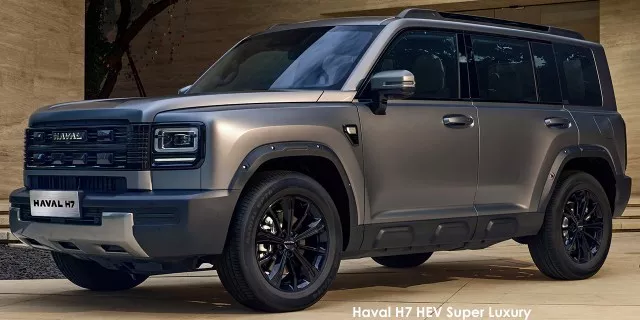
Diesel price hike already taking casualties in South Africa


Demand for pre-owned diesel cars has plummeted in South Africa ever since the war between Iran and the United States sent global oil prices through the roof.
At the same time, there has been a surge in interest for hybrid and fully-electric cars.
This is according to new data from AutoTrader, which found that enquiries for used diesel models on its used car trading platform have seen a substantial drop of -18% month-on-month between February and March 2026.
George Mienie, CEO of AutoTrader, said this was a notable shift for a country where diesel has long been a preferred option for motorists focused on fuel efficiency and long-distance driving.
“For years, diesel has occupied a comfortable middle ground between affordability, performance and range,” he said.
“But when fuel prices rise sharply, that equation starts to change. And consumers appear to react immediately.”
Since the start of March, the conflict in the Middle East between Iran, Israel, and the United States has caused the price of oil to skyrocket past $110 per barrel,
For reference, oil was trading at $58 per barrel at the start of 2026.
Consequently, South Africa is now facing massive petrol and diesel price hikes this April, with the Central Energy Fund estimating that petrol will go up by R6 per litre while diesel will go up by R10 per litre.
Adding to these concerns, there have been growing reports of fuel shortages across South Africa, particularly for diesel, as it is used in large quantities for transport and agricultural purposes.
The end result is that many South Africans are starting to re-evaluate whether to purchase a traditional internal combustion engine (ICE) model or a new-energy vehicle, such as a hybrid or EV.
Searches for battery-electric cars shot up 45% over the same period on AutoTrader, and hybrid searches are up 16%.
“Together, these shifts suggest that rising fuel costs are pushing many South Africans to reconsider their reliance on traditional fossil fuels,” said the company.
Mienie commented that the unintended consequence of South Africa’s fuel crunch may be doing what policy and incentives have long struggled to achieve: pushing more motorists to consider electric vehicles over diesel.
“What makes this shift more telling is that it is not just showing up in search behaviour. Demand is translating into action.”
“Consumers are not only searching for alternatives, but also engaging with them more seriously as running costs come under pressure.”
He highlighted that demand for electric vehicles is not yet being matched by stock availability.
EV listings are down 3% even has demand has sharply increased, though its possible that this is the result of stock being quickly bought up, while existing EV owners are choosing to hold onto their cars in light of recent events.
“If demand for BEVs continues to rise while listings remain constrained, the used market could feel the effects first.”
“Tighter supply and growing demand would likely put upward pressure on prices, particularly for well-priced second-hand electric vehicles.”
This data does not mean the automotive landscape is changing overnight, or that South Africa is becoming a major EV market just yet.
However, Mienie noted that a -18% change in diesel inquiries in a single month is still an enormous shift in consumer trends, especially when this drop in interest is happening at the same time that hybrid and EV inquires are taking off.
“If these trends continue, rising fuel costs may do more than squeeze household budgets,” he said.
“They may also have the unintended consequence of quietly accelerating South Africa’s shift towards full battery electric vehicles.”


 Loading ...