The big reason why Tesla still hasn’t launched in South Africa


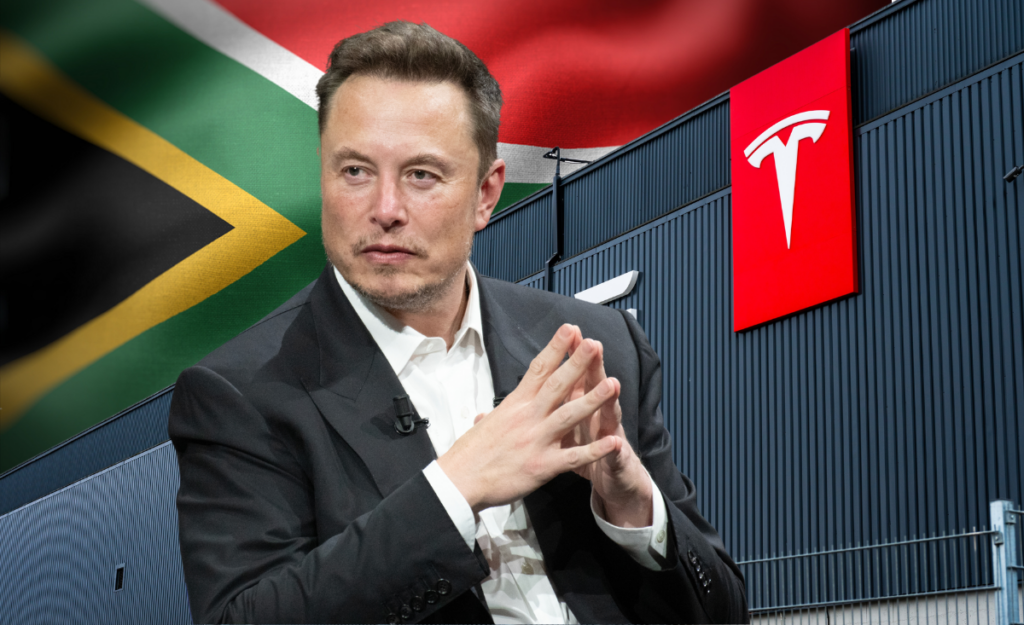
Tesla planned to launch in South Africa in 2026, but these plans have been put on ice due to the country’s volatile political landscape.
An industry source recently told our sister publication MyBroadband that South Africa was at the top of a list of markets that the electric carmaker planned to launch in this year.
However, the political tension between the United States and South Africa has put a damper on these plans.
Tesla was originally expected to launch in South Africa a decade ago. Back in March 2016, the company opened pre-orders for the Model 3 sedan.
These units were scheduled to arrive in early 2018 after Tesla opened a small office in Cape Town. These units never arrived.
Responding to queries from motorists at the time, Tesla CEO Elon Musk claimed that South Africa’s high import duties are preventing the carmaker from entering our market.
South Africa imposes a 25% import duty on all vehicles with the exception of those built in the United Kingdom and European Union, as these units are subject to a lower 18% duty thanks to a preferential trade agreement.
Even then, the lower tariff only applies to petrol and diesel models. All electric vehicles (EVs), regardless of origin, are hit with a 25% duty in South Africa.
Adding to this, all cars sold in South Africa are subject to an ad valorem luxury goods tax.
This tax formula has not been adjusted in three decades, meaning that entry-level cars are now taxed as luxury models because they cost the same that a BMW or Mercedes-Benz did decades ago.
This ad valorem tax increases exponentially as the car’s value rises.
Considering that EVs are more expensive than an equivalent internal combustion engine (ICE) model to begin with, the tax negatively impacts their ability to compete in our market cost effectively.
A source close to Tesla previously told MyBroadband that another reason why Tesla hasn’t launched here is because of South Africa’s low EV adoption rate and lack of charging infrastructure.
However, this was years ago when less than 1,000 EVs were being sold per month. Most of the early EVs brought to South Africa also came from luxury brands like Porsche and Jaguar.
The automotive landscape has undergone a significant shift in the last few years, as automakers like Volvo and BYD have proven that there is significant demand for EVs, provided they are reasonably priced.
Donald Trump and Elon Musk

However, the main reason for Tesla’s latest delay appears to be the diplomatic tension between South Africa and the United States.
The source claimed that the war of words between the two countries’ leadership had thrown a spanner in the works.
South Africa is one of several countries that the US imposed “reciprocal” tariffs on in mid-2025.
While the US Supreme Court declared these tariffs unlawful in March 2026, the spat between the US and South Africa goes well beyond trade deals.
US President Donald Trump has alleged that terrible things are happening in South Africa, citing government policies and proposals like racial employment and business requirements, and expropriation without compensation.
Trump has also leaned into the “white genocide” rhetoric.
The US government has since put forth five “asks” of South Africa to resolve these diplomatic disputes.
This includes condemning statements that incite hatred and glorify violence, ensuring fair and clear compensation for property appropriation, and improved protection for rural communities.
It also wants an end to the mandatory surrender of ownership or control over corporate decision-making at the cost of doing business, referring to BEE laws.
Lastly, the US wants South Africa to end its association with Iran and other countries considered enemies of the US, and to become a non-aligned state.
Elon Musk has been one of Trump’s biggest supporters in the past, and has echoed the same criticisms towards South Africa.
He has taken particular issue with South Africa’s BEE requirements, which has affected the rollout of one of his other companies – SpaceX and its Starlink service.
Starlink is a satellite-based internet service, but it has been blocked from launching here because it needs to comply with BEE ownership laws to obtain the necessary telecommunications network, service, and spectrum licenses.
Our team has asked Tesla for feedback on the source’s claims, but it did not respond by the time of publication.





 Loading ...