The Department of Transport (DoT) has unveiled the Draft National Rail Master Plan (NRMP), which outlines its plans to position rail as the backbone of South Africa’s logistics and transport ecosystem by 2050.
The plan, which details how the department aims to do so through a R2 trillion investment, was approved by Cabinet on 1 April 2026 and was released for public consultation on 23 April.
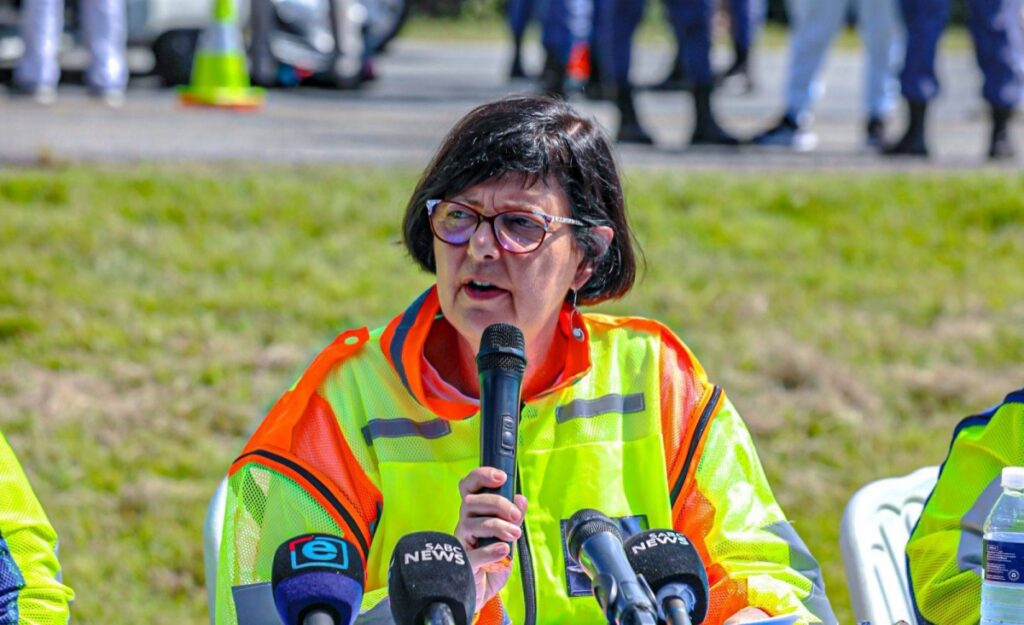
Speaking at the launch of the public consultation process, Transport Minister Barbara Creecy explained that the plan includes both passenger and freight rail, and addresses commuter rail systems and long-distance passenger rail.
“It recognises that an improved rail network benefits households, communities and the economy as a whole,” she said.
“It is not about re-inventing the past; it is about building a resilient, adaptable, dynamically scalable rail system that serves the nation’s broader economic and social goals.”
The minister explained that currently, approximately 165 million tons of freight are moved by South Africa’s rail system annually, while the market appetite is closer to 280 million tons.
She added that the consequences of this underperformance include a loss of foreign exchange earnings and job losses, as mining and agricultural products cannot be exported affordably and timeously.
“Congestion, road deterioration and safety concerns inflate transport costs and undermine efficiency,” explained Creecy.
Commenting on the commuter sphere, the minister noted that high transport costs undermine take-home pay, and condemn commuters to several hours spent on congested highways.
“An effective commuter rail system would lower household costs, save time, reduce accidents and improve accessibility to income and services for low-income communities,” she explained.
Full implementation of the NRMP would require both public and private investment of up to R2 trillion over the next thirty years, which aims to increase South Africa’s GDP by R4.3 million for every one million spent.
Concerns regarding Transnet’s performance

Business Leadership South Africa (BLSA) noted in its 2026 first-quarter review that South Africa’s logistics reform pipeline was the most active it has been in many years.
“Q1 2026 brought regulatory milestones, new procurement activity and early signs of private capital responding to the opportunity,” said BLSA.
However, it did warn that structural gaps remain, adding that there is a risk that the transaction pipeline is running ahead of institutional reforms and the capacity required to make these “bankable”.
“We understand that seven private train operating companies (TOCs) – of the 11 selected for further accreditation – are now in advanced negotiations with the Transnet Rail Infrastructure Manager (TRIM),” said BLSA.
“We are also seeing an increased focus on opening up secondary rail lines, with short-haul operations
expected to commence in April 2026, with full network access following.”
Last month, in line with its mandate to enable private sector participation, the TRIM also released a request for proposal to lease three freight sidings to private operators.
BLSA also warned of three issues which threaten to undermine the progress in the country’s logistics reform journey if left unchecked.
The first issue BLSA raised is that Transnet is both a player and referee in the private sector participation (PSP) processes.
“When the incumbent operator runs the processes for its own replacement, it has both the incentive and power to possibly favour arrangements that protect its position rather than genuinely open the market to the investment that the rail and ports networks urgently need, and which Transnet cannot provide,” it said.
The second issue raised is the delays in institutional reforms and regulations that exacerbate procurement governance uncertainty.
The DoT has, in the past, missed multiple deadlines for the publication of its Network Statements, which were also deemed “largely unbankable by operators and financiers”.
Finally, BLSA highlighted that opportunity costs are becoming increasingly visible as a result of these delayed reforms.
“The next three months will test whether institutional reform can keep pace with the transaction pipeline,” concluded BLSA.




 Loading ...