
The iconic car brand being revived by South Africa’s most popular Chinese carmaker


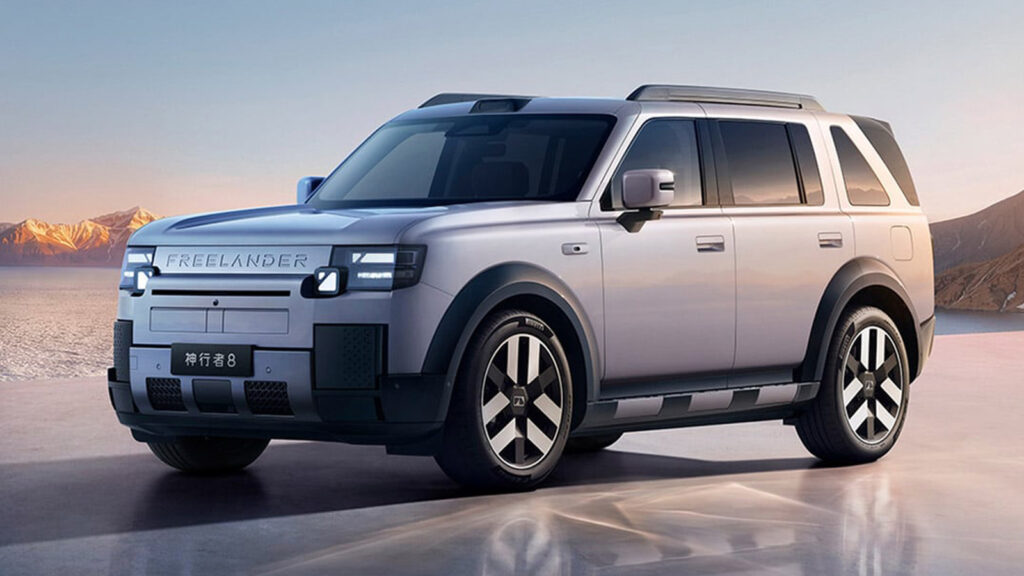
Chery is preparing to introduce a new global car brand, and it’s a name that some motorists may be familiar with.
Earlier this year, the Chinese automaker unveiled Freelander, a revival of a brand that dates back to 1997 under the Jaguar Land Rover (JLR) family.
The original Land Rover Freelander was a trailblazer for the company and the industry as a whole. It was the brand’s first compact crossover SUV.
It was created as an entry-level option targeted at a younger, more lifestyle-oriented buyer who needed something different from JLR’s other products, like the Land Rover Defender or Range Rover.
It abandoned JLR’s traditional body-on-frame construction, low-range transfer cases and agricultural driving characteristics in favour of something smaller and more urban friendly.
While it was a dramatic departure from JLR’s usual offerings, the original Freelander was a massive success. It became Europe’s best-selling four-wheel-drive car for five consecutive years.
It was also arguably one of the most influential cars of the time, helping to shape the modern crossover SUV segment that nearly all carmakers compete in today.
AutoTrader recently provided TopAuto with data on the original Freelander, showing where the nameplate comes from, and how it shaped the automotive industry.
“The Freelander was an important vehicle because it introduced Land Rover to a much broader group of buyers,” said George Mienie, CEO of AutoTrader.
“The used-car data shows how that formula evolved, with the original now offering a very affordable entry point, while the Evoque and Discovery Sport occupy a considerably more expensive part of the market.”
Freelander – Then vs now
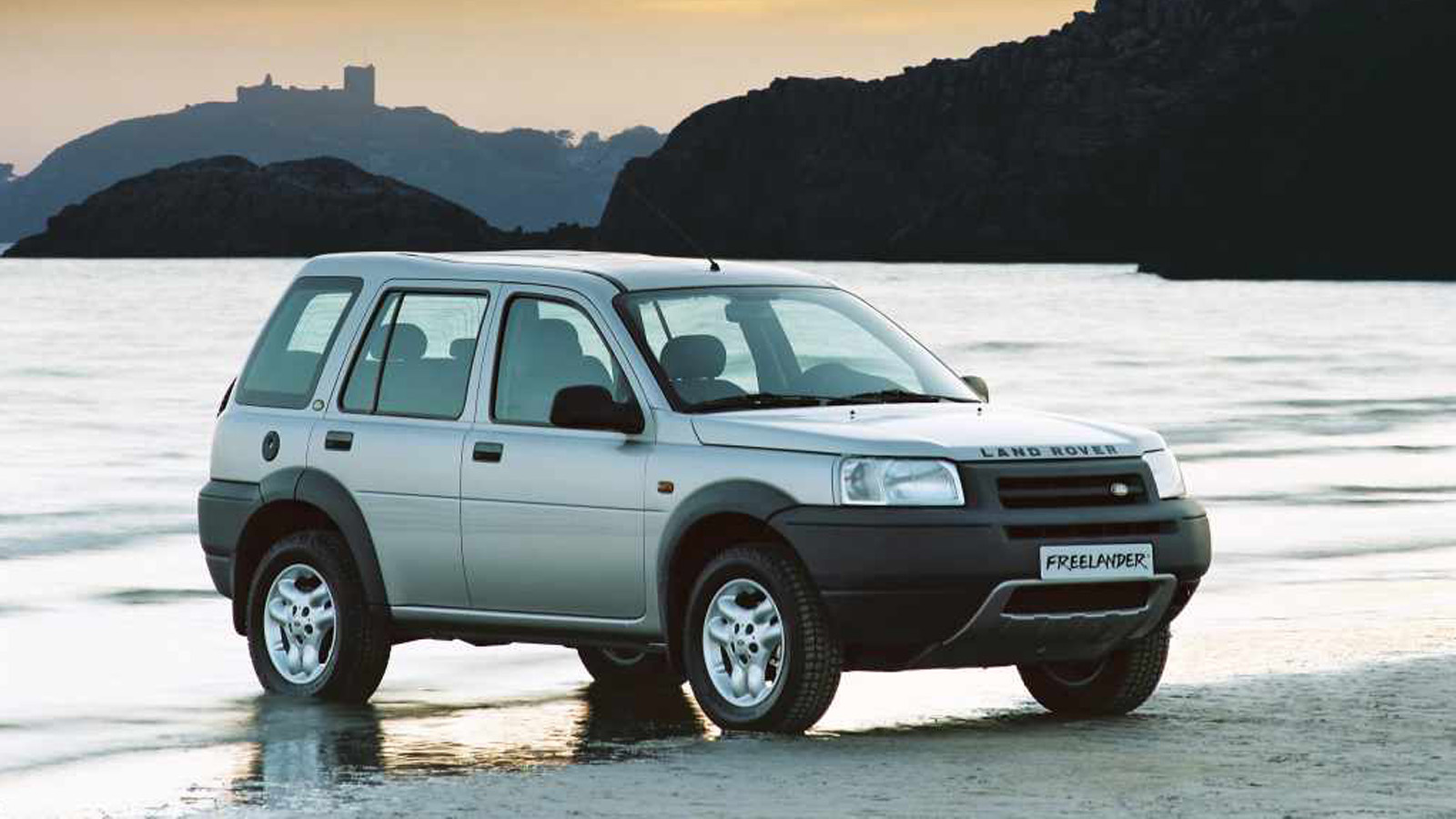
Freelander was very different to JLR’s other vehicles, which all had defined roles with distinct advantages and tradeoffs.
“Buying a Land Rover meant accepting a degree of compromise. The Defender was uncompromisingly utilitarian, the Discovery was capable but hardly dainty, and even the original Range Rover still had one muddy boot planted firmly in the countryside,” said AutoTrader.
To create Freelander, JLR approached the task from a new direction. Rather than creating a 4×4 and making it more suitable for urban use, the Freelander I was a family car that was capable of going off-road.
It used a monocoque body, independent suspension and a transversely mounted engine driving all four wheels through an Intermediate Reduction Drive (IRD) and viscous coupling.
There was no separate chassis, locking centre differential or low-range gearbox, which, ordinarily, would have been enough to have it laughed out of the Solihull gates.
However, it featured Hill Descent Control, a function that has since become commonplace throughout the SUV market.
Engines were equally varied, including the Rover K-Series petrol, L-Series diesel, BMW-sourced Td4 and a 130 kW 2.5-litre V6.
The second-generation Freelander was introduced in 2006. Developed while Land Rover was under Ford ownership, the new model used the same EUCD architecture used by vehicles such as the Volvo S80, V70 and XC60.
Options like three doors and a removable roof were removed, leaving the Freelander II as a more conventional five-door SUV that functionally served as a mini Discovery.
Engines included a PSA-Ford 2.2-litre turbodiesel and Volvo’s transversely mounted 170 kW 3.2-litre straight-six.
Today, motorists can find original Freelander models floating around in the used-car market from time to time.
AutoTrader noted that the first-gen tends to retail for roughly R78,117 on average, while the Freelander II still goes for R157,400.
The Freelander was eventually succeeded by the Discovery Sport and Range Rover Evoque, which still serve as the entry points to their respective series to this day.
The Evoque (L538) was launched in 2011 and was the most attainable Range Rover at the time. Examples of the first-gen Evoque cost around R298,100 today with an average mileage of 131,560km.
The second-generation (L551) units introduced in 2018, meanwhile, still cost around R750,135 with 59,166km on the odometer, almost 10 times as much as the original Freelander.
“That is not an apples-to-apples depreciation comparison, but it illustrates how far the compact Land Rover concept migrated upmarket,” said AutoTrader.
“The affordable little 4×4 eventually became a leather-lined fashion accessory with flush door handles, available plug-in hybrid powertrains and an options list capable of pushing the new list price close to the R2-million mark, depending on the chosen specification.”
While Freelander never enjoyed the same cult following as the Defender, it showed that there was a huge demand for compact SUVs long before the crossover craze took over the global car scene.
“The Evoque subsequently turned the formula into a fashion statement, while the Discovery Sport developed it into a polished family SUV,” said the used car platform.
“Between them, they divided the original Freelander’s personality into two substantially more expensive products.”
Below is a price comparison of the original Freelander models and their spiritual successors.
| Models | Average price | Average mileage | Average age |
|---|---|---|---|
| Land Rover Freelander | R78,117 | 244,389 km | 25 years-old |
| Land Rover Freelander II | R157,400 | 184,037 km | 13 years-old |
| Land Rover Discovery Sport | R493,305 | 95,584 km | 7 years-old |
| Land Rover Range Rover Evoque (L538) | R298,100 | 131,560 km | 12 years-old |
| Land Rover Range Rover Evoque (L551) | R750,135 | 59,166 km | 5 years-old |
Freelander is back as a Chery brand
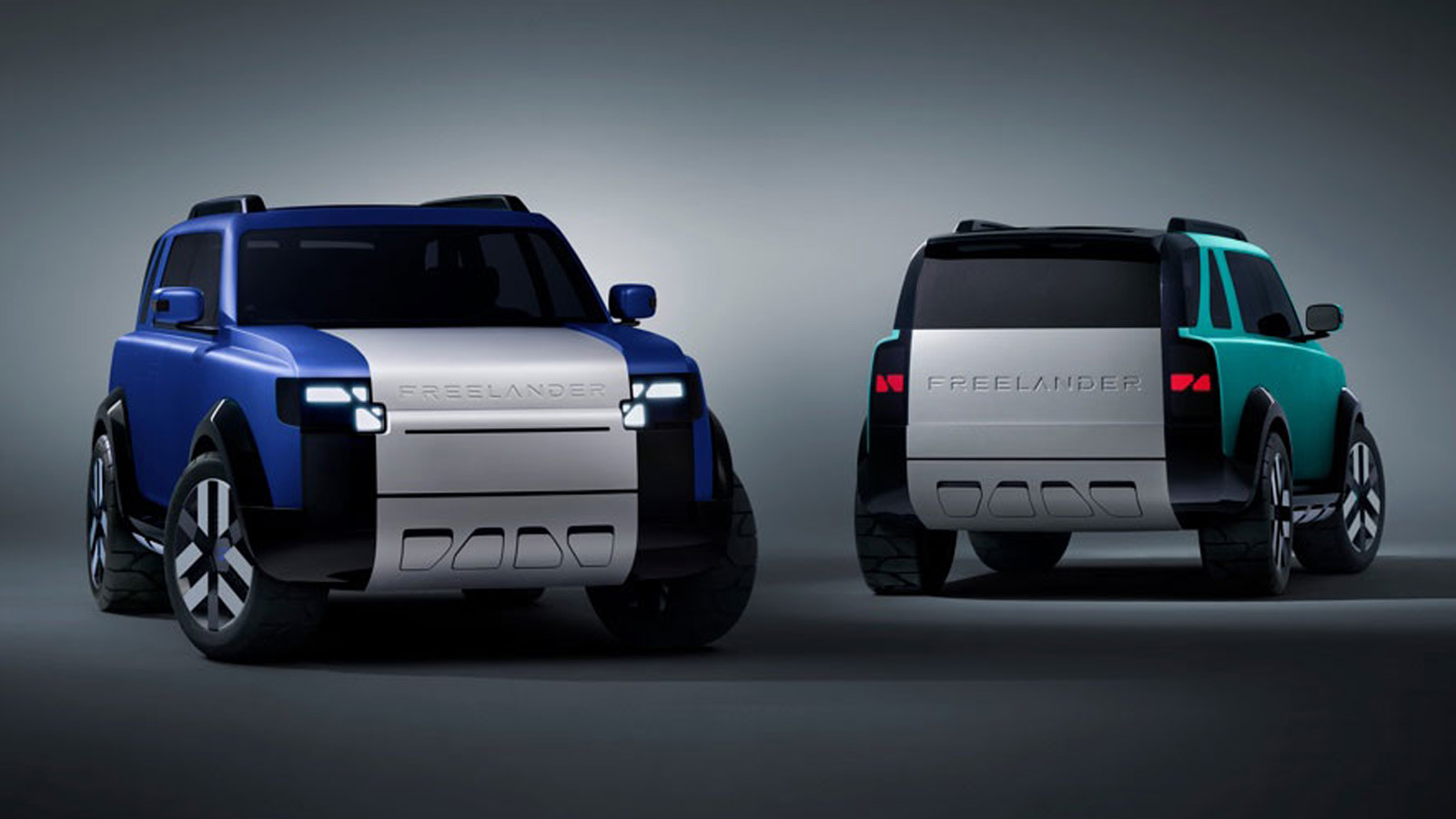
Chery unveiled Freelander during its annual international business summit in Wuhu, China, taking the nameplate in a new direction as a luxury SUV brand with new-energy vehicle (NEV) powertrains.
This new brand was created by Chery Jaguar Land Rover, a 50:50 joint venture between the two automakers in China.
However, while it is a joint venture, Freelander is a new Chery brand for all intents and purposes. TopAuto spoke to JLR South Africa, which said that Freelander is not associated with its operations in any way.
The vehicles will be produced at a factory in China, and the first models will go on sale in Middle Eastern markets later this year.
While Freelander has yet to officially be confirmed for South Africa, it is more of a question of “when” rather than “if,” considering the enormous success Chery has experienced in our market.
Chery recently purchased Nissan’s factory in Gauteng, making it clear that the Chinese carmaker isn’t going anywhere anytime soon.
It has also launched multiple sub-brands in recent years, including Omoda, Jaecoo, Jetour, iCAUR, and Lepas.
Freelander aims to launch six new vehicles over its first five years of operations, starting with the Freelander 8, a large luxury SUV that will be offered with either an electric or plug-in hybrid drivetrain.


 Loading ...
-facelift-2-2025.10.webp)
