Despite being in the province with the second-lowest hijacking rate, Bloemfontein in the Free State has become a surprise hotspot for high-end SUV theft.
According to the latest quarterly South African Police Service (SAPS) crime statistics, 40 cars were hijacked across the country every day.
Over the 90 days from the start of January to the end of March 2026, SAPS recorded 3,609 carjackings, which equates to an average of 40.1 hijackings per day.
The figure may seem alarmingly high, but it does represent a significant 20.4% reduction from the same three-month period a year earlier.
Between January and March 2025, a total of 4,533 cases were recorded by SAPS, translating to around 50 hijackings per day.
Further wins for South Africa’s police include a slight reduction in both truck hijackings – which fell from 359 to 357 incidents – and cash-in-transit heists – which declined from 35 to 31.
Looking at the statistics by province, Gauteng recorded more cases than nearly all other provinces combined, with 2,062 reported carjackings or 57.13% of the national total during the period.
South Africa’s richest and most populous province was followed by the Western Cape, which recorded 498 hijackings, and KwaZulu-Natal, which reported 446 incidents.
At the opposite end were the Free State and Northern Cape, with the former recording only 32 cases, averaging slightly more than 10 per month, while the latter recorded only 6 cases all quarter.
Despite this, the Insurance Crime Bureau (ICB) has identified a surge in the theft of new-model, high-end SUVs in the Free State.
According to the ICB, these vehicles are becoming increasingly likely to be targeted by relay attacks, especially in the Bloemfontein area.
“Recent incidents indicate that organised criminals are using relay attack technology to target vehicles equipped with keyless entry and keyless start systems,” the bureau explained.
Protecting your SUV from a relay attack

To protect themselves and their SUVs from becoming targets of relay attacks, motorists first need to know how these work.
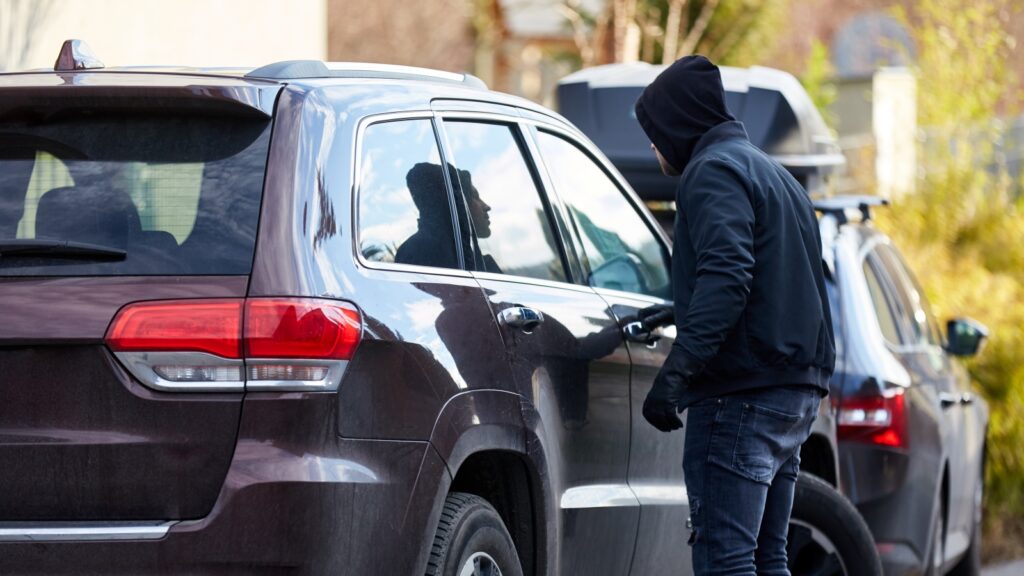
“Relay attacks allow criminals to capture and amplify a vehicle key fob’s signal, enabling them to unlock, start and drive away with the vehicle without the physical key being present at the vehicle,” said the ICB.
Attackers carry these out by following the vehicle owner closely, capturing the vehicle’s key fob signal with specialised electronic equipment, and relaying it to a second attacker near the vehicle.
Once the signal is captured and relayed, the thieves can use it to unlock the car, get in and start it, and drive away, with the owner only realising that their car has been stolen when they return to where it was parked.
Cars fitted with keyless entry and start are more susceptible to relay attacks, since attackers can get in and drive off with the victim relatively nearby.
The ICB’s advice for owners of high-end SUVs, particularly newer models with keyless entry and start functionality, is to take additional precautions.
“If your vehicle allows it, consider disabling the keyless entry or proximity function when it is not required and store key fobs in a Faraday pouch or other suitable signal-blocking container when they are not in use,” it advised.
Motorists have also been advised to remain vigilant when entering and leaving shopping centres, offices, restaurants and other public areas, and take note of anyone following or positioning themselves unusually close.
The ICB urged drivers to avoid leaving vehicle keys near doors, windows or external walls, as their signal could be intercepted from outside and to report suspicious activity or vehicle theft to the relevant authorities.
“While relay attacks are not a new method, the apparent increase in incidents involving new-model, high-end SUVs highlights the continued need for awareness and preventative measures,” the bureau concluded.



 Loading ...