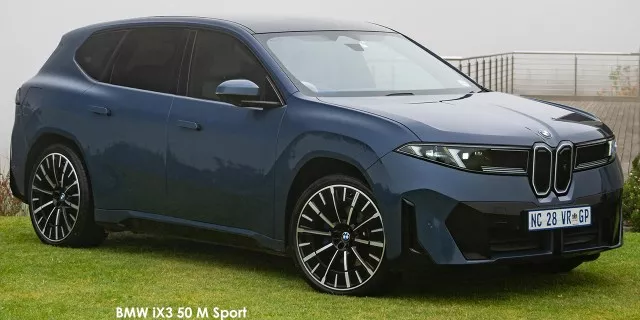
Motorists in South Africa are feeling the pinch of rising fuel prices and responding by driving less, using more public transport, and downscaling to smaller, more efficient vehicles to get by.
Since the onset of the conflict in the Middle East at the end of February, petrol and diesel prices have skyrocketed out of control.
As a result, South African motorists are spending more on petrol while taking home less and less in actual fuel volumes.
According to Statistics South Africa (Stats SA), June represented the biggest disparity between fuel cost and the actual volume of fuel South Africans purchased so far this year.
In real terms, using constant 2019 prices, the actual volume of fuel South Africans purchased plummeted by 12.0% year-on-year in June 2026 – a severe acceleration from April’s 5% and May’s 8.2% decreases.
Nominal fuel sales, the actual cash value spent at current prices, increased by 21.3% year-on-year in the same month.
This led to the widest gap of the year between cash spent and fuel pumped, with motorists paying a fifth more to take home a tenth less fuel.
Stats SA’s data found that this has led drivers to cut down aggressively on physical travel to cope with massive transport inflation.
A new study by the University of Cape Town’s (UCT) Liberty Institute of Strategic Marketing corroborates the country’s official statistics department.
The institute found, among other things, that South African motorists travel in different ways and also spend their time commuting differently.
The study, which culminated in the Commuter Report 2026, drew on a nationwide survey of 2,198 commuters and 100 in-depth qualitative interviews.
One of the biggest takeaways was that rising motoring costs are forcing many drivers to change their behaviour.
South Africans prefer to own a car despite rising prices

In its Commuter Report 2026, the university found that nearly half of respondents said that they have actively tried to reduce their commuting costs over the past year.
Alongside this, 31% said they had restricted their driving due to higher fuel prices, while 15% have even downscaled to smaller, more efficient vehicles to curb rising transport costs.
The report found that public transport users had far less flexibility to absorb rising transport costs, with 40% saying they have been forced to reduce how much they travel because of transport costs.
Paul Egan, managing consultant at the UCT Liberty Institute, explained that while private vehicle owners can adjust their habits or downsize to cope with inflation, public transport users have far fewer levers to pull.
“Of course millions of South Africans already suffer from travel poverty – where restricted mobility directly limits access to job opportunities, basic services and personal wellbeing,” he added.
Interestingly, 59% of private car commuters and 62% of taxi and bus users were open to switching to train travel if reliable and safe services were available.
The desire for personal vehicle ownership remains strong among public transport commuters, with 70% saying they would prefer to commute by car and citing safety and control rather than status as major reasons.
One public transport respondent noted that they would rather have control over the time they leave and arrive at their destination and would also feel safer in their own vehicle.
That being said, car ownership also brings along with it a different set of stresses.
14% of drivers reported experiencing serious road rage, while 33% of drivers and 41% of public transport users reported feeling fearful for their personal safety on South African roads.
Professor James Lappeman, co-author of the report, explained that owning a vehicle offers schedule control and independence, but that control comes bundled with anxiety, road stress and safety concerns.



 Loading ...

-2026.10.webp)