
Sky-high petrol prices driving South Africans to unfamiliar car brands


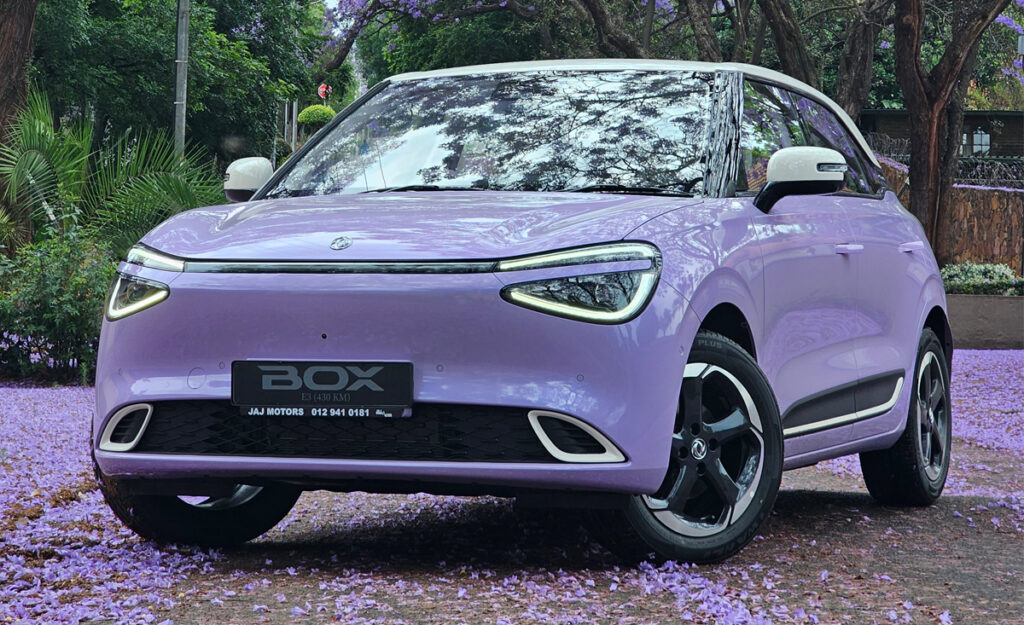
South African motorists are open to buying vehicles from manufacturers they are unfamiliar with – including electric vehicles (EVs) – as long as they save on their monthly fuel spend.
The country’s petrol prices have skyrocketed since the onset of the ongoing Middle East conflict, forcing motorists to reconsider not only how much they drive, but also what they drive.
As a result, many are considering switching to lesser-known or unfamiliar car brands simply because they are more fuel-efficient or cheaper to run than their current cars.
This came to light in a new study by the University of Cape Town’s (UCT) Liberty Institute of Strategic Marketing, which found that motorists are facing increasing economic pressure because of their daily commute.
Drawing on a nationwide survey of 2,198 commuters and 100 in-depth qualitative interviews, the Commuter Report 2026 found that South Africans travel in different ways and spend their commuting time differently.
Among its findings was that rising motoring costs are forcing many motorists to change their driving behaviour, with nearly half – around 45% – saying they have actively tried to reduce their commuting costs over the past year.
Nearly a third (31%) of motorists surveyed reported restricting their driving as a result of higher fuel prices, while 15% have already downsized to smaller, more efficient vehicles.
The university’s Commuter Report 2026 also found that nearly a quarter (24%) of all drivers surveyed are open to buying an unfamiliar vehicle merely to lower ownership and fuel costs.
Beyond this, 22% of surveyed vehicle owners said that the next vehicle they buy will be a fully electric car, but cited load shedding, high upfront costs and limited charging infrastructure as major barriers.
Despite many motorists being open to using trains and other public transport if they were more reliable, the desire to own a vehicle remains strong, driven by safety and control rather than status.
“Unfamiliar” car brands are leaving the big hitters behind

Car buyers in South Africa are increasingly likely to give Chinese and Indian imports a chance, since these are often cheaper than their closest legacy-brand rivals.
As a result, these are rapidly overtaking badges that have been in South Africa for the longest time, including Nissan, Kia, Honda, and Mazda.
While Korean automaker Kia remains one of the top car manufacturers in the local market, it has been overtaken by relative newcomer Jetour.
Comparing the two brands’ performances so far this year, Jetour has seen a massive 25.94% increase in monthly sales between January and August, selling 14,855 vehicles so far this year.
Kia, on the other hand, started the year ahead of the Chinese nameplate, but ended August with sales numbers 5.56% lower than at the start of the year, selling 12,953 units since the turn of the year.
Traditional Japanese big hitters, Honda and Nissan, have recorded massive drop-offs in sales numbers so far this year, while Mazda’s figures have remained flat.
Nissan started the year with 1,133 units sold in South Africa, but saw its performance slip 30.63% to 786 units by August, while Honda failed to increase sales from a relatively low base.
The latter started the year with only 311 sales, which decreased even further to 196 by the end of August, meaning its year-to-date sales total compares to the average monthly performance of brands like Chery and Omoda & Jaecoo.
While the legacy brands are struggling, relatively unknown emerging brands are taking over.
Since it started reporting sales to Naamsa in March, new-energy vehicle (NEV) specialist BYD has not dipped below 500 monthly sales, outselling both Honda and Mazda so far this year.
The same can be said for Tata, which relaunched in South Africa and also started reporting sales figures of its frugal, entry-level vehicles in March, recording massive 65.63% growth.
With petrol prices expected to continue climbing for the foreseeable future, South Africans may become more familiar with these relatively unknown brands as they look to escape further car ownership cost increases.





 Loading ...
-2026.10.webp)



Conversation
5 commentsFor what it’s worth, petrol prices around Europe run in the R30 to R45 a litre range at present. Hong Kong at about R67.