
The car company that turned an abandoned warehouse into a R31.8 billion empire in South Africa


Ford is one of the largest car manufacturers in South Africa, with a history that dates back more than 100 years, tracing its origins to a single warehouse.
The automaker made its debut on our shores in the early 20th century, only a few years after Henry Ford established the Ford Motor Company in the United States in 1903.
Henry Ford made a strategic move to enter our market, appointing Arkell & Douglas in Port Elizabeth as the company’s first agents for the sale of Ford vehicles, which were originally imported from Commonwealth countries like Canada.
The famous Model T quickly became South Africa’s best-selling car, which ultimately led to the decision to begin local assembly operations.
In 1923, the Ford Motor Company of South Africa was founded in PE (now Gqeberha), which was chosen due to its strategic access to the country’s road, rail, and port network.
Work immediately began on converting an old wool store on Grahamstown Road. This warehouse became Ford’s 16th assembly plant outside the United States, building cars from complete-knock-down kits imported from Canada.
This made Ford not only the first global vehicle manufacturer to establish operations in South Africa, but also the first to introduce the continent’s first vehicle assembly line.
In 1924, the plant had a capacity of 10 cars per day and employed 21 office staff and 70 assembly floor workers.
It produced 1,446 cars in its first 12 months, including five-seater touring cars priced at £165, relatively affordable at the time.
Ford eventually outgrew the old wool store in PE and relocated to a new 7,032-square-metre factory on Harrower Road in 1930, which could produce 90 cars per day.
The plant was expanded multiple times over the following years, reaching a floor space of 24,000 square metres. During World War II, Ford produced cars for the Union Defence Force and did aircraft repairs.
After the war, Ford began construction in the Neave Industrial Township, which opened in 1948 and went on to produce iconic models like the Fairlane, Zephyr, Zodiac, Anglia, Prefect, Consul, Escort, Granada, and Capri.
In the 1960s, the carmaker invested R8 million in a dedicated engine manufacturing facility at Struandale. In 1976, the company built its 1 millionth car in South Africa.
During the political upheaval of the 1980s, Ford relocated its vehicle assembly operations to Silverton in eastern Pretoria. The Struandale engine plant remained in PE and still operates today.
By 1997, Ford’s Gauteng factory began producing the Fiesta, which was a major hit, though the company soon realized that even greater success was to be had in the bakkie market.
Between 2000 and 2011, Ford invested in its factories to concentrate solely on the Ranger midsize pickup, both for the local market and for export overseas, mainly to Europe.
Ford’s multi-billion rand investments in South Africa

Ford has invested billions of rands into its operations in South Africa over the decades. In 2010, the company spent R3.4 billion on its global export programme to begin producing the Ranger at its Silverton plant.
This doubled the brand’s manufacturing capacity to 110,000 cars per year. By 2018, Ford had invested R11 billion in its export programme with production increasing to 168,000 per year.
It also upgraded its Struandale plant to accommodate its latest generation 2.0-litre single and bi-turbo diesel engines.
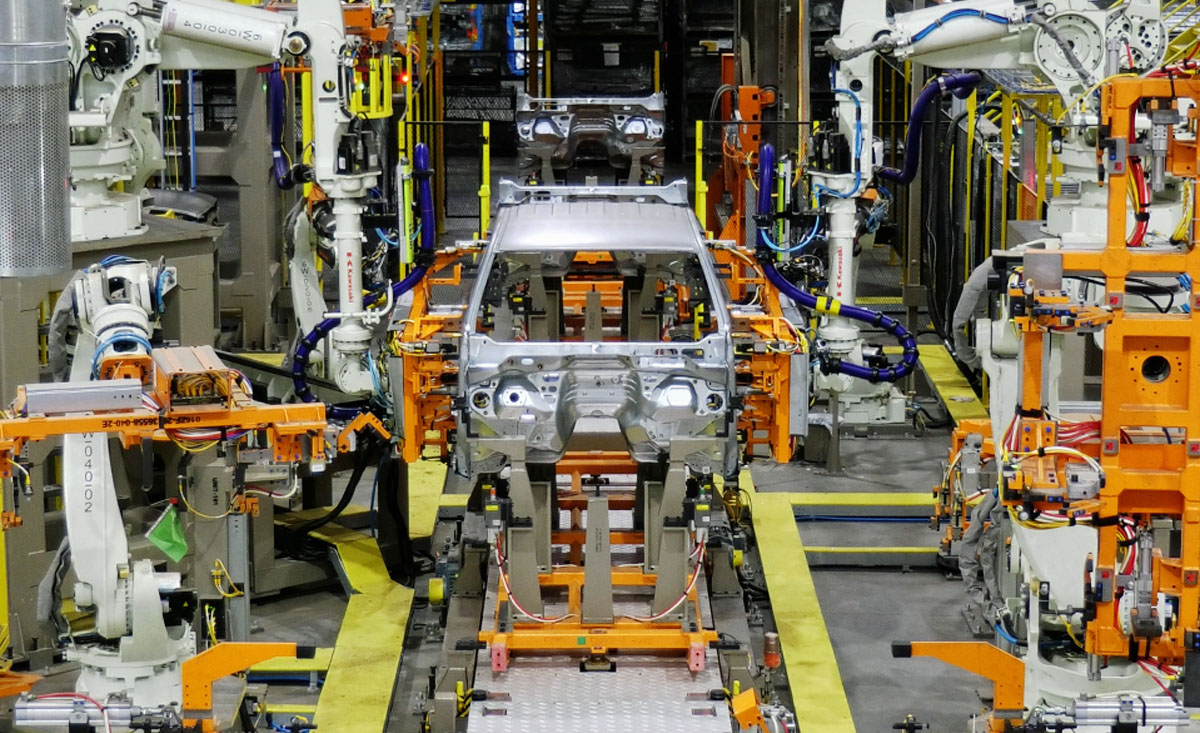
In 2021, Ford invested an additional R16.8 billion to upgrade its Silverton factory to produce the next-gen Ranger, the single largest investment in the auto industry to date.
The site now has a capacity of 200,000 cars per annum and has created 5,500 permanent jobs for South African workers.
Ford has also upgraded its factory with solar installations to reduce its reliance on the grid and offset load-shedding, which can generate 13.5MW (just over a third of the site’s electricity requirements).
The Struandale plant also received another R600 million to build the 3.0-litre V6 diesel engine used in its top-spec bakkies.
Today, Ford is one of the top five best-selling car brands in South Africa alongside Toyota, VW, Suzuki, and Hyundai.
In August 2026 alone, the manufacturer sold 2,373 Ranger models, nearly all of which are made in South Africa (the exception being the Raptor).
Considering that the cheapest Ranger currently retails for R593,700, that means Ford generates a minimum of roughly R1.4 billion per month in bakkie sales.
However, the true figure is much higher, given that prices for the Ranger now reach up to R1.3 million.
In the last 16 years alone, the Ford Motor Company of Southern Africa has invested at least R31.8 billion into its local vehicle and engine assembly operations, cementing its position as one of the nation’s oldest and most popular local manufacturers.
Ford’s history in South Africa






 Loading ...
Conversation
1 commentsI was working at Ford South Africa until 2001 amd I think that there are a few inaccuracies and omissions in this report. To my knowledge the Fiesta was never assembled in South Africa in 1997, I don’t recognise the (faded) colour picture of the building with the prominent ‘Ford’ logo on the front. as being in South Africa. The story of Ford South Africa should include mention of the activities of the Engineering Centre in Struandale in P.E. ,adjacent to the engine plant, led by Engineering Director Derek Morris and Chief Engineer Rudi Geggus. A small team of dedicated people created some vehicles unique to South African needs including pickup trucks (bakkies) for the local market based on the Cortina (called the P100), Escort (called the Bantam) and the Mazda 323. Unique performance versions of the Cortina and Sierra (XR6’s with the locally made Essex V6)) and XR8 using imported V8 Cleveland engines from the USA were also developed and were very successful in sales and motor racing. A similar situation existed in Ford Australia where they were allowed to develop their own vehicles for the huge distances there – mainly the Ford Falcon with a 4 litre locally made straight 6 cylinder and imported V8. This continued until the new MD -Alex Trotman- clamped down with his ‘Ford 2000’ concept to reduce unique overseas investments.