
Dawn of a new era for e-hailing in South Africa’s richest city



Traditional e-hailing powerhouses Bolt and Uber will soon have a new, locally developed rival when OMN1 launches next month with a unique proposition for its drivers.
What will have established e-hailing providers sweating is its super app combining e-hailing, food delivery, creator monetisation and messaging in one platform.
OMN1 also addresses some of the biggest complaints about Uber, including the state of its vehicles and drivers’ complaints about the commissions Uber takes on rides.
Another issue with Uber in South Africa is that it has yet to register with the National Public Transport Regulator more than six months after the deadline, meaning it is operating unlawfully.
Its new rival, OMN1, is planning a 5 November 2026 launch, and offers e-hailing drivers a different proposition and two different routes to making money – OMN1 Move and OMN1 Hub.
Having conducted in-person driver onboarding in Johannesburg, Move operates in Midrand, Sandton, Rosebank, and the Johannesburg CBD and inner city, with expansion planned after the national launch.
It pays drivers 85% of every fare, applying to each completed trip without tiered structures or performance conditions.
The company said this is designed around the economic realities faced by e-hailing drivers, including fuel, vehicle finance, maintenance, and household responsibilities.
“Drivers are not a cost line to be optimised. They are the business,” said Livhuwani Mutavhatatsindi, Chief Executive Officer of OMN1.
“If a driver can’t cover fuel, finance, and maintenance and still take something home, the model has failed, no matter how good the technology looks.”
OMN1 Hub, the platform’s creator ecosystem, allows South Africans with at least 3,000 followers to earn money through a points-based system at 20 cents per point, with a monthly ceiling of R50,000 per creator.
The company has set a target of 1,000 South African creators earning at least R20,000 a month through the platform.
It added that its model came from observing how people already move between multiple applications each day.
“South Africans have been using platforms built elsewhere, priced elsewhere, and answerable elsewhere for over a decade,” said Mutavhatatsindi.
“There is no reason a world-class super app can’t be built here. That is what 5 November is all about.”
Local e-hailing apps are eating Uber’s and Bolt’s lunch
OMN1 is not the first locally launched and driver-centric alternative to Uber and Bolt, after Percy Qamata, Msizi Mtolo, Cebile Magudulela, and Luther Mfetane launched Bro Cabs in recent months.
Our sister publication, MyBroadband, reported that Bro Cabs drivers don’t pay the company any commission and instead pay a fixed subscription to use the platform.
According to Qamata, the app already had over 1,000 drivers by July 2026, who pay either R30 per day, R150 per week, or R600 per month to access the platform.
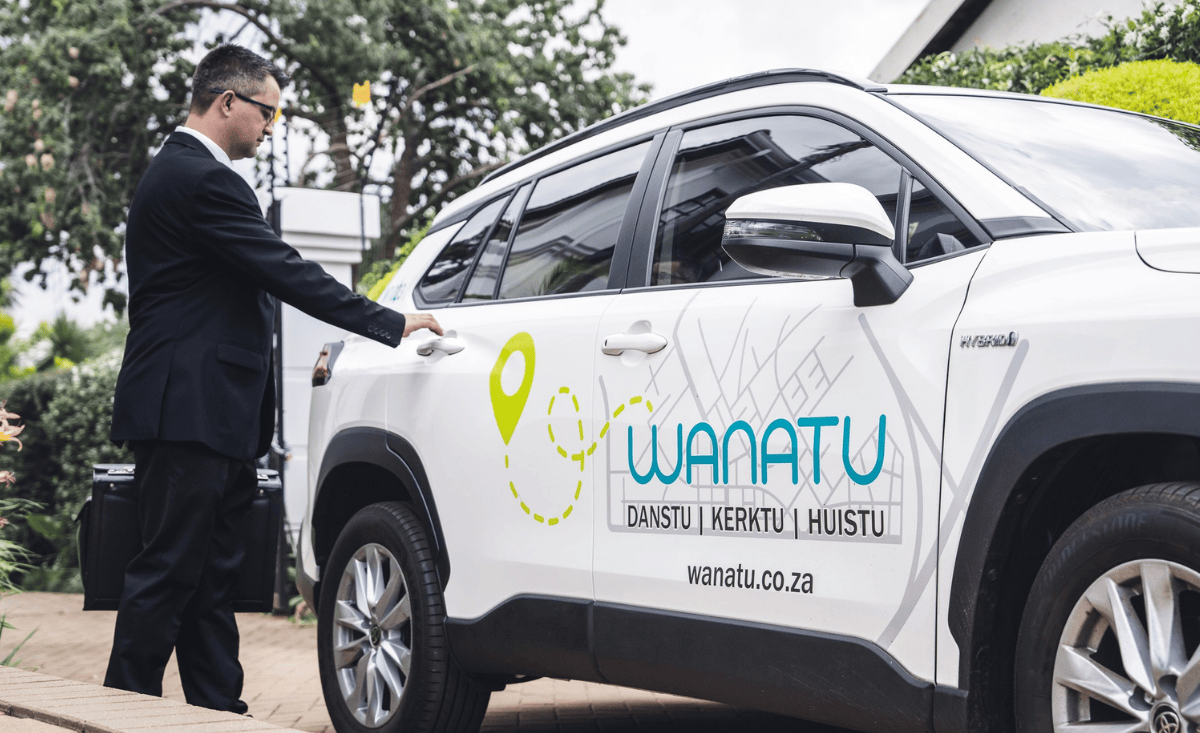
Wanatu, another local e-hailing service, has also confirmed that it is expanding beyond its predominantly Afrikaans-speaking focus.
“Wanatu delivers a service to a multilingual South African community, and therefore, we are bringing more balance between English and Afrikaans in our social media,” said its spokesperson Helena Davel.
“Afrikaans remains part of our trademark, but our goal is that more people recognise themselves in Wanatu. The greater usage of English on social media is primarily about inclusivity and access.”
Unlike other traditional e-hailing services, Wanatu owns its own fleet, employs all of its drivers, and places a particular emphasis on safety and vehicle cleanliness, equipping its vehicles with a range of security equipment.
Features include forward- and inward-facing dashboard cameras, a hand radio for communicating with a 24/7 control room, multiple panic buttons, and a tracker linked to Fidelity Services.
App users can also access the live camera feeds inside the vehicle to ensure that their family members are safe while travelling.




 Loading ...

-2026.10.webp)
