The actual difference between a hatchback and a crossover in South Africa


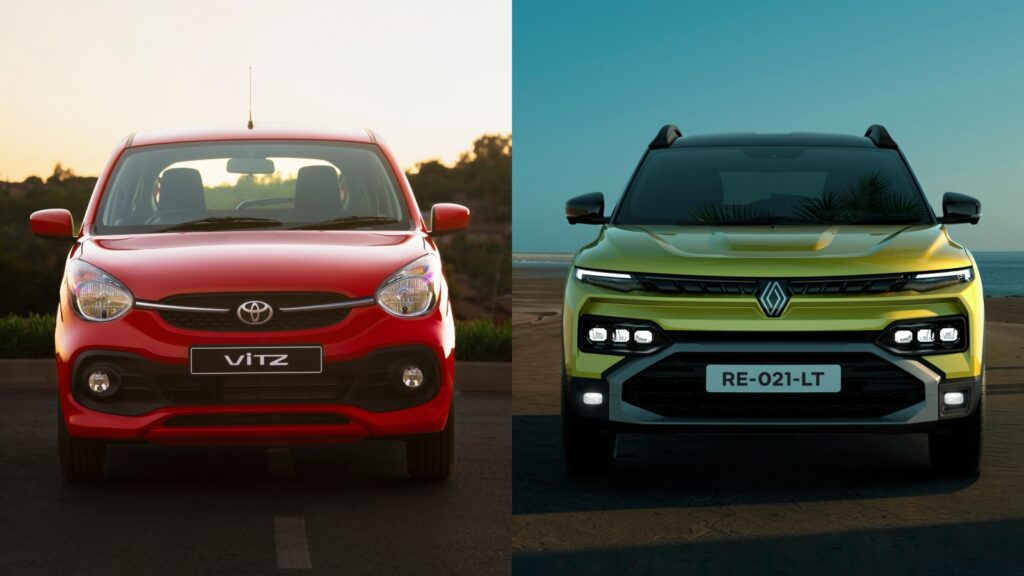
Crossover SUVs in the global market, and locally, seem to be getting smaller, with more compact models landing on our shores than full-sized SUVs, making it hard to distinguish between a crossover and a hatchback.
Often, the simplest way to tell the difference between the two types is to look at each one’s ground clearance, but this isn’t a sure indicator.
Take the Suzuki S-Presso and the Mazda CX-3, for example. The former is a “SUV-style” hatchback, while the latter is categorised as a crossover SUV in our market.
That said, the Suzuki boasts 181mm of ground clearance, compared to the Mazda’s 155mm, which is closer to that of a hatch like the VW Polo Vivo than to the S-Presso.
Similarly, dimensions don’t seem to distinguish a crossover from a hatchback, since the CX-3 is both wider and longer than the S-Presso, but around 30mm shorter, although it does have a substantially longer wheelbase.
The way the two body types are constructed is also nearly identical, since they share car-like, unibody architectures, unlike ladder-frame, bakkie-based SUVs.
Simply put, crossovers take some of the best bits from both hatchbacks and SUVs, giving you the raised stance and styling of an SUV – most of the time – but with the lower running costs of a smaller car.
Crossovers have also become more mainstream in the South African market, eating into the market share once dominated by affordable hatchbacks, thanks to their overlap in price.
For example, the cheapest crossover SUV in South Africa, the Renault Kiger, is only around R40,000 more expensive than the cheapest hatch, the Renault Kwid.
At the other end of the price spectrum, the story is slightly different, since the most expensive crossover in our market, the Porsche Macan GTS, costs around R600,000 more than the most expensive hatch, the Audi RS3.
What actually sets them apart

While crossovers and hatchbacks often share the same chassis and engines, a crossover is a taller, lifted hatchback, trading aerodynamics and sharper handling for ride height, easy entry, and optional all-wheel drive.
Continental, a brand that makes tyres for all vehicle types, explained that understanding the difference between hatchbacks and crossovers is particularly tricky because of similarities in size and shape.
“Although there is some overlap between the categories, each type of car has distinct characteristics that make it unique,” it said.
The German tyre manufacturer explained that hatchbacks are typically smaller than crossovers and offer a sporty look, and often feature two doors, with the rear cargo area accessed through a liftgate that opens upward.
Hatchbacks tend to be more fuel-efficient than crossover SUVs, without sacrificing any of the style, comfort or performance of other cars, but they also have less cargo space.
Most crossovers offer the higher ground clearance of an SUV, along with the sporty styling of a hatchback and typically feature four doors, allowing for more passenger space than either an SUV or a hatchback.
“They also tend to be lighter than traditional SUVs, making them more fuel-efficient and better for city driving,” added Continental.
“One of the main advantages is their versatility, as they bridge the gap between SUVs and sedans. This means they offer many of the same features as SUVs but in a sleeker, more compact package.”
Crossovers also typically offer higher seating positions than sedans and hatchbacks, making them easier to enter and exit, and offer better visibility while driving.
While crossover SUVs are more fuel-efficient than traditional SUVs due to their lower weight and aerodynamic design, they are less efficient than hatchbacks, which are made to be as frugal as possible.
On top of this, hatchbacks tend to be built more cheaply to be more attainable, with fewer additional features, while crossovers are usually equipped with the latest technology and safety features.
Ultimately, hatchbacks tend to be around 10% cheaper to buy than their crossover counterparts, as well as around 10% cheaper to own and run.



 Loading ...