
2 new Chinese car brands launching in South Africa very soon


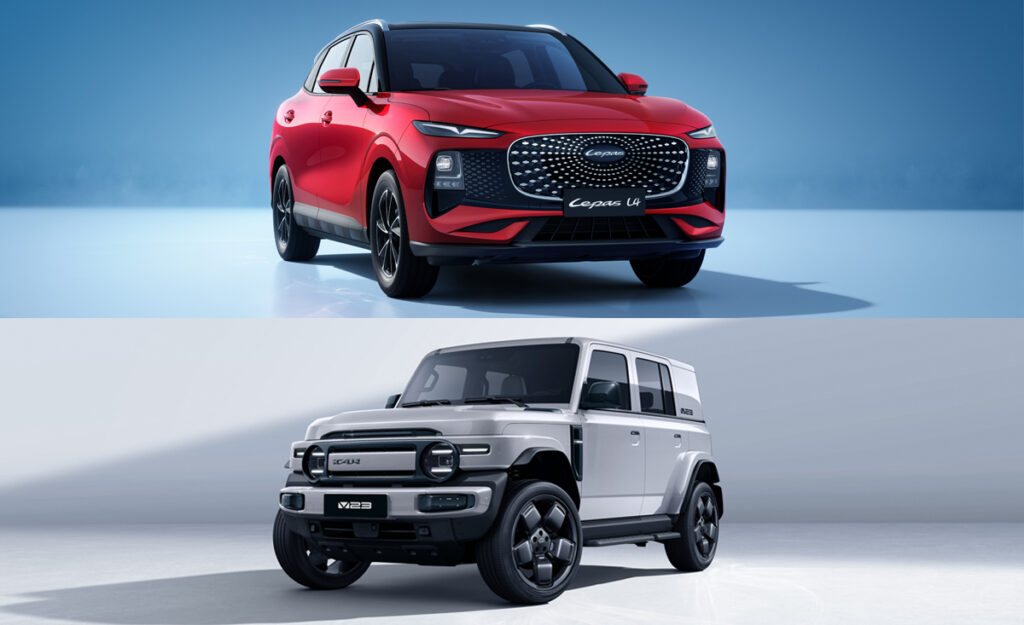
The Chinese carmaker Lepas is set to launch in South Africa in the first quarter of 2026, with a second brand, iCaur, to follow soon after.
Lepas and iCaur are two new brands under the Chery Holding Group, marking the next major expansion for one of South Africa’s fastest growing automakers.
Chery relaunched in our market in 2021, which was later followed by the introduction of Omoda in 2023, and Jaecoo and Jetour in 2024.
The newest member of this growing family will be Lepas, which will debut in South Africa later this week.
The company recently announced that it will showcase its first car, the L4 crossover, at the Cape Town Met on Saturday, 31 January 2026.
It also confirmed that full retail sales will commence in March, with the larger L8 SUV to follow later this year.
iCaur, meanwhile, has just announced that it will launch its first two vehicles in May, and that a third model will arrive before the end of the year.
“Launching the V23 and 03T in May alongside a national dealership footprint allows us to deliver a complete iCaur experience from the outset,” said Shannon Gahagan, National Brand and Marketing Manager for iCaurSouth Africa.
“Looking ahead, the planned arrival of the 03T REEV towards the end of 2026 reflects our commitment to expanding the range in line with customer expectations and market readiness.”
A lot to look forward to
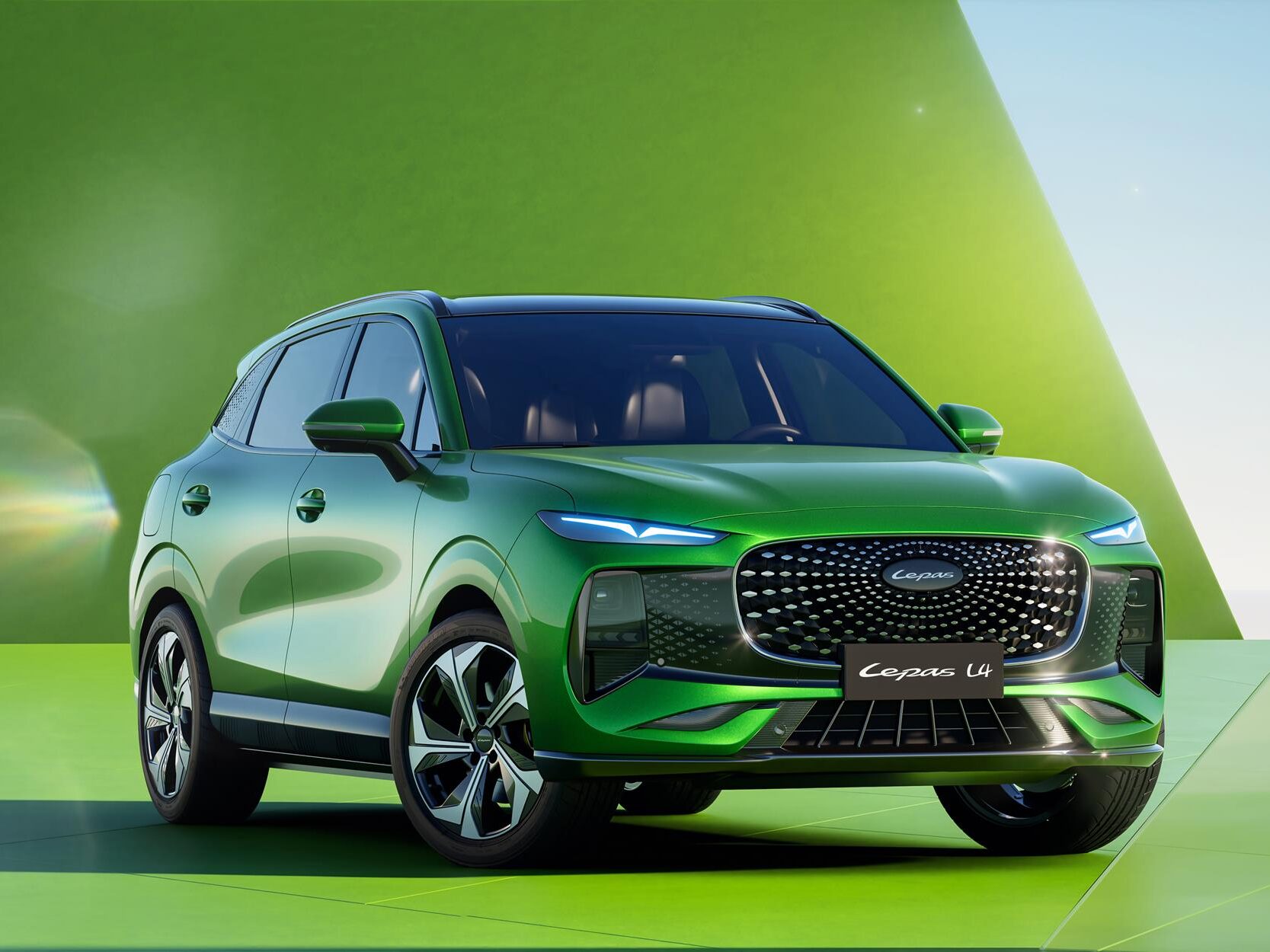
Lepas is being positioned as a premium alternative to Chery’s selection of Tiggo SUVs, but the company has been fairly tightlipped about each car’s specifications.
It plans to launch three cars in South Africa – the L4, L6, and L8 – and the speculation up till now is that each car will use the same engine as the equivalent Tiggo model.
This seems to have been confirmed by Lepas’ latest press release, which states that the L4 “offers a choice of sophisticated powertrains: a responsive 1.5L turbocharged petrol engine or an advanced, efficient hybrid system.”
This sounds identical to the Chery Tiggo Cross (a.k.a. the facelifted Tiggo 4 Pro) which features a 1.5-litre turbo-petrol engine with 108kW and 210Nm, and a 1.5-litre petrol hybrid plant with 150kW and 300Nm.
We’ll only know for sure after the L4 makes an appearance at the Met this weekend, but all signs thus far indicate that it will essentially be an upmarket version of the R359,900 Tiggo Cross.
iCaur is quite different to the other Chery brands, as it specializes in retro-themed electric 4x4s targeted at younger audiences.
The carmaker confirmed that it will launch with an initial network of 20 dealers, which will be expanded over the next two years.
It also mentioned that its dealerships will not be traditional showrooms; instead, each location will “incorporate lifestyle elements linked to customer interests such as camping, running, fishing, rock climbing, and gaming.”
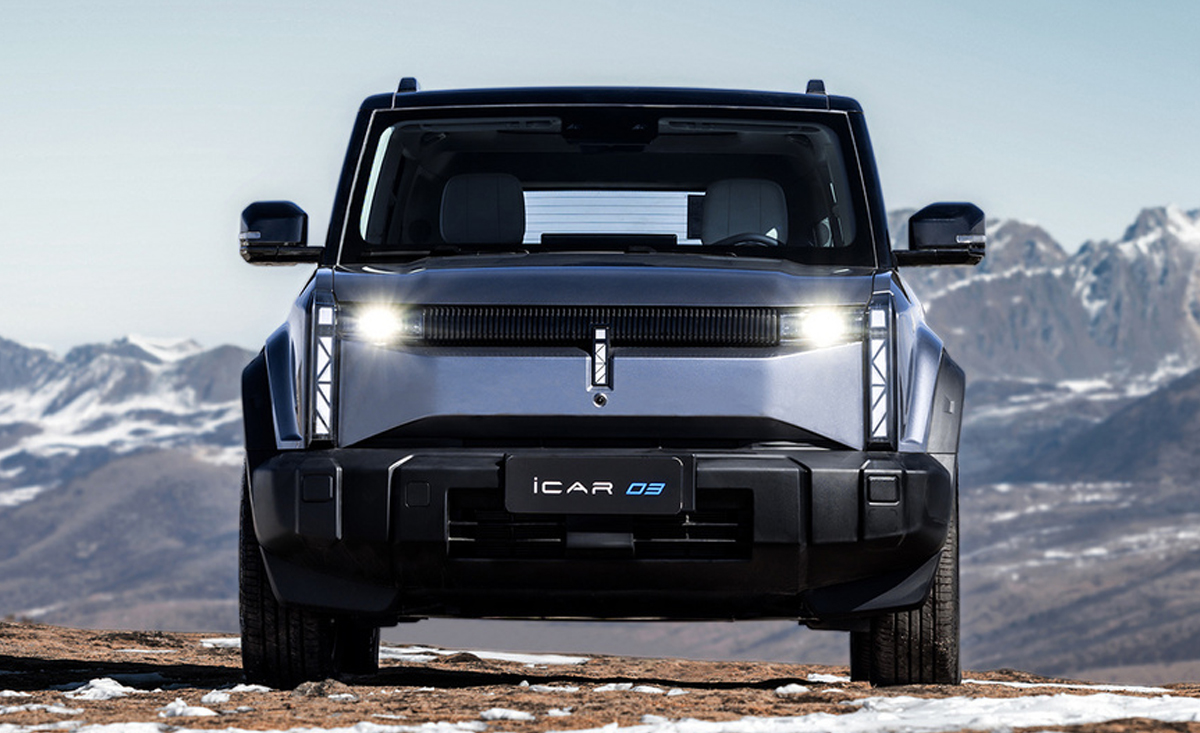
Its first two cars, the 03T and V23, are boxy SUVs comparable in size to something like the Suzuki Jimny 5-door.
iCaur has yet to confirm the specifications for the South African-bound units, but the 03T we saw in China was offered with two powertrain options.
The base models are fitted with a single front-mounted e-motor producing 125kW and 220 Nm, while the top-end version has a second e-motor over the rear axle, raising the power cap to 205kW and 385Nm.
Batteries start with a 50.63kWh cell good for 400km, which can be improved to a 66kWh battery with 472km, or a 70kWh one with 500km.
The 03T is said to be the more “urban” of the two vehicles, while the V23 is better suited for off-roading.
This is exemplified by the fact that the V23 is available as a bakkie, which swaps out the boot for a small but relatively deep load bin.
This version hasn’t been confirmed for our market, but considering how popular bakkies are in Mzansi, we reckon it will appear sooner or later.
Something that has been confirmed is that the 03T will feature a range-extended electric vehicle (REEV) drivetrain, something TopAuto was previously told was still in early development.
REEVs are quite different to pure battery electric vehicles, as they use a combustion engine as a generator to power a battery which, in turn, powers the electric motors.
The advantage of this setup is that they have a much longer range than an EV that relies solely on a battery, hence the name “range extended.”
Details on the 03T are still scarce, so we’ll have to wait until later in the year to learn more about this option.




 Loading ...
-2026.10.webp)

-2026.10.webp)