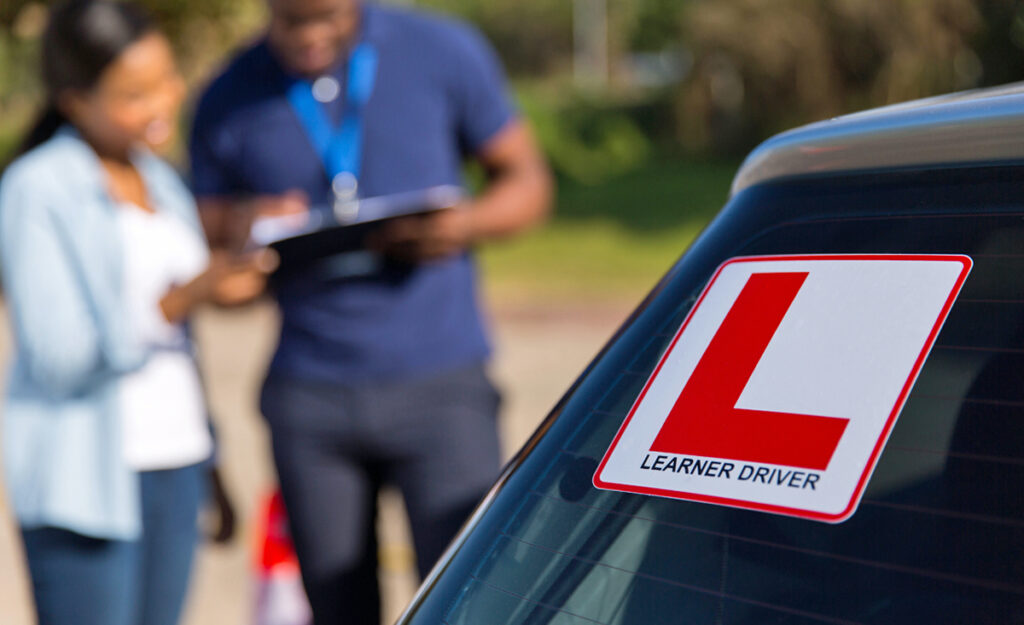
The Department of Transport said it wants to arrest several learner licence applicants suspected of fraudulently obtaining their licences.
This comes after the testing process of securing a learner’s licence was changed to the National Traffic Information System in South Africa (NATIS) Computerised Learner’s Test solution.
In Driving Licence Testing Centres (DLTCs) where it has been rolled out, the system replaced the manual booklet-based test and allowed applicants to complete the test on a touch-enabled digital screen.
While speaking to MyBroadband, the Road Traffic Management Corporation’s (RTMC) chief communication officer, Simon Zwane, noted that this decrease was anticipated.
“It was expected as the system was implemented as an anti-corruption measure, among other things,” he said.
That said, he also explained that the actual failure rate could be even higher as the RTMC has found evidence of examiners covertly assisting applicants during the testing process by showing the right answers to choose.
One of the methods used for this, according to Zwane, is a concealed laser pointer.
He explained that examiners are using laser pointers to discreetly indicate the correct answers to students while patrolling the examining room and pretending to invigilate.
“The concealment of the laser pointer is intended to avoid exposure to the cameras in the classroom. Investigations are underway,” Zwane said.
Zwane also indicated that the RTMC hopes to arrest several applicants they believe obtained their licences through this method of cheating.
The Department of Transport migrated learner’s licence testing to the NATIS Computerised Learner’s Licence Test in eight of South Africa’s nine provinces.
Along with this, it indicated it plans to pilot a new Driving Licence Testing Centre platform in Sandton and further expand it during the 2026/27 financial year.
Once finished, learners will have the option to take the test in one of 11 South African languages, and those with hearing impairments will benefit from features designed to make the experience more seamless.
Additionally, the facility will have a backup power system to prevent disruptions.
Cape Town digital learners

Cape Town, as of mid-February 2026, has almost completed the rollout of computerised tests for learner’s licenses in the metro.
Alderman JP Smith stated that the new system would improve testing speed and eliminate the potential for errors during marking.
He also noted at the time that the metro was completing installations at the last two DLTCs.
“That will be very soon because we’re currently busy with the last two installations,” he said.
“We started last year installing these systems at the 18 driver’s licence testing centres around the city, and they are now just busy concluding the last two.”
Following the widespread introduction of the new system, Smith said they observed a marked increase in efficiency.
He outlined how a person taking the test gets an immediate and accurate result, and that there is no room for marking errors.
“It also, of course, means that it is harder to cheat. The booklet system had a couple of question templates, and these were widely in circulation with learner’s licence schools,” he said.
Along with this, the new system introduced fingerprint identification, making it much harder for someone to take the test while pretending to be someone else.
Smith also indicated that the new system could address the issue of schools only training students on a narrow set of questions.
“That often means that learners go into the environment without a broader understanding of the rules and are then under-equipped to effectively be on the road,” he said.
However, since its implementation, they have seen a noticeable drop in the pass rate.
“When you test for all possible questions, it does become more challenging, and we saw the pass rate significantly reduced,” he said.
“I will engage the provincial MEC around giving better guidance to students when they do not pass, so they can understand what they may have failed.”




 Loading ...

-2026.10.webp)