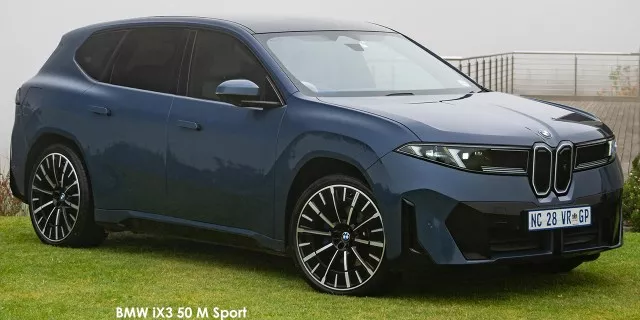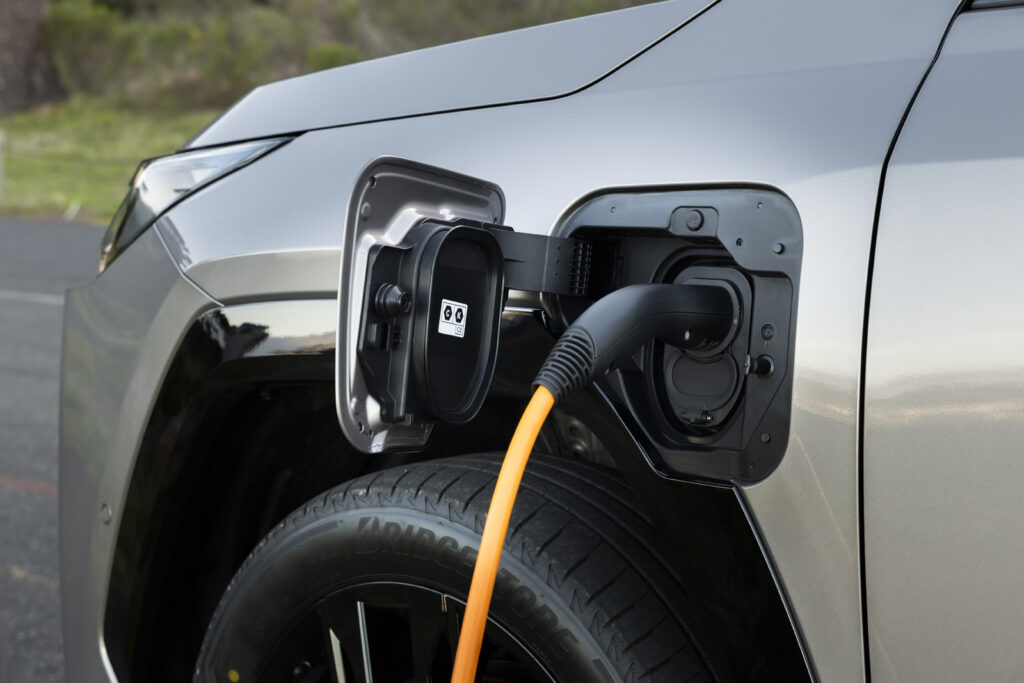
Electric vehicle (EV) adoption in South Africa is accelerating, but can only speed up as fast as charging infrastructure can expand, which seems to be happening already.
According to the Automotive Business Council (Naamsa), of the more than 40,000 cars sold locally in June 2026, one in 17 was an EV.
This has led Black Tower – an EV charging network operator in South Africa – to speed up the rollout of green-energy EV charging stations.
Speaking to CapeTalk, the company’s Business Development Manager, Norbert Stallkamp, said that Black Tower believes in e-mobility and an electrified future.
As a joint venture between Rand Merchant Bank (RMB) and independent power producer Red Rocket, the company developed a laboratory to test its chargers.
“I think people are slowly but surely coming around to the idea of electrifying their mobility. We do a lot of short daily trips, and plug-in hybrids and battery-electric vehicles (BEVs) fill that gap perfectly,” explained Stallkamp.
He added that motorists are starting to realise they can do much more with BEVs than a short commute, including weekend trips and taking longer journeys.
“It requires a bit of a change in behaviour regarding how you use and charge the vehicle, but the learning curve is short. Once you get used to it, the savings are evident from day one,” he said.
According to Stallkamp, many people are still unsure of what an EV charger looks like since they come in varying shapes and sizes, but he added that the more Black Tower installs, the more visible they become.
“Ironically, South Africa currently has an exceptionally good ratio of chargers to battery electric vehicles. However, since it is a large country, there are still some geographic gaps,” he noted.
“While we are making great progress in the major metropolitan areas, there is always room for expansion.”
As EV and plug-in hybrid (PHEV) sales continue to rise in South Africa, infrastructure needs to improve and accelerate with it, as does charging etiquette.
“Drivers should plug in, charge, and then move their cars; these are charging bays, not general parking bays, and they should be used strictly for charging before moving on,” explained Stallkamp.
The evolution of South Africa’s EV market
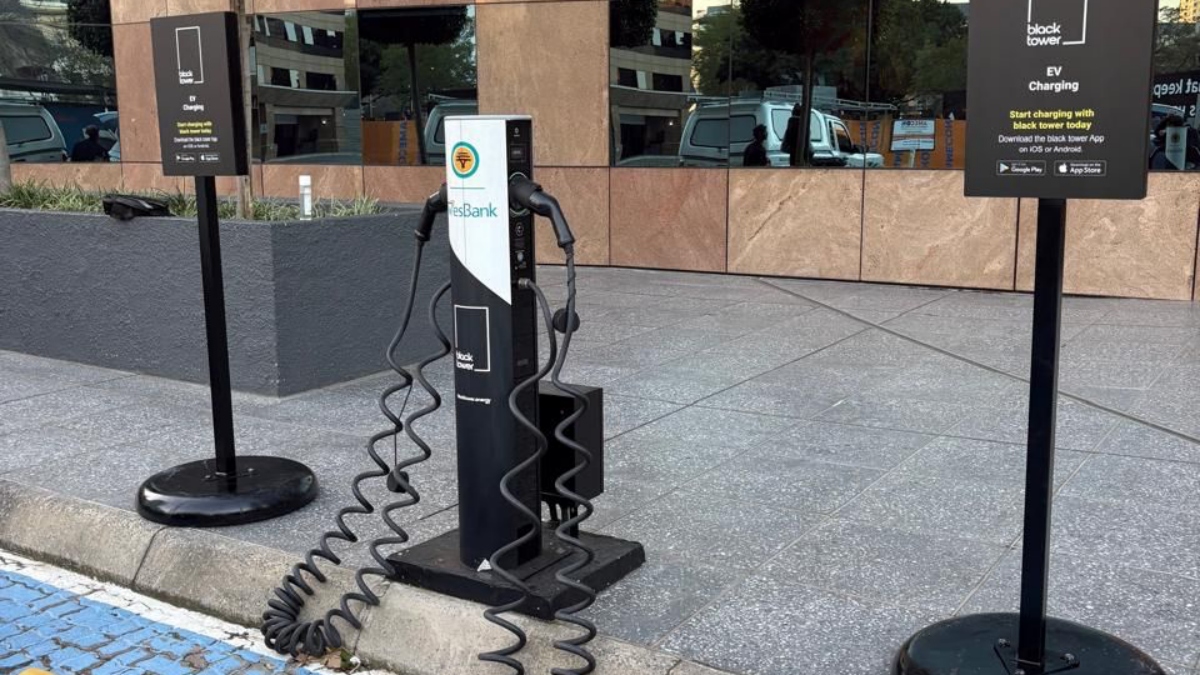
Matteo Brambilla, CEO of Red Rocket, told CapeTalk that the energy industry is highly regulated, not only in South Africa but also globally, and it develops slowly.
“In energy terms, the decisions you take today might only have a payoff in three to five years because building plants is a slow process,” he said.
“However, the market is slowly moving toward being fully deregulated and liberalised, following the recent examples of countries like the Philippines, Chile, Brazil, and India.”
Brambilla added that Red Rocket is slowly transitioning toward electric mobility as the sector evolves, with this being the standard in business models of utilities worldwide.
Sales figures show that South Africa is selling at least 500 electric cars every month, while in other parts of the world, sales have started to follow an S-curve.
Local numbers remain low because they represent a small percentage of the total national vehicle fleet, which is a pattern observed worldwide.
To see an increase in local EV adoption, Brambilla suggested some form of government subsidisation or incentive, as can be seen in other countries.
“If you look at Norway, about 70% of new vehicles are electric simply because they do not have import duties on electric vehicles, whereas they have 100% import duties on internal combustion engine vehicles. Without those incentives, adoption will remain slower,” he said.
“I think that by 2028, when an electric car will probably cost the same as an internal combustion engine vehicle, we will see a major increase in sales.”




 Loading ...

-2026.10.webp)