
New cars unveiled at South Africa’s biggest motor show, and Airlink sets a world record at a rugby stadium


Suzuki is comfortably sitting as South Africa’s second biggest car brand, a title that previously belonged to the Volkswagen Group.
While Toyota is still the undisputed leader in the local market, Suzuki has grown rapidly to the point where it now consistently outperforms VW, a feat that would have seemed impossible a few years ago.
Over a 19-month period ending in July 2026, Suzuki came second 17 out of 19 times on each month’s best sellers list. The brand first overtook VW in early 2024.
Suzuki’s success is attributed to its catalogue of affordable cars, which have resonated with cash-strapped motorists in South Africa’s stagnant economy.
Global oil prices rose as tensions spiked in the Middle East this weekend, with the US and Iran trading fire and a tanker hitting mines in the Strait of Hormuz.
Brent crude prices climbed to $91 per barrel as the two sides exchanged strikes for the first time in a month. Iranian media reported that a supertanker was hit with two mines in the Strait.
The rand is currently trading at R16.16 per US dollar, maintaining a relatively strong position against the greenback.
5 important things
R150,000 price cut for popular crossover in South Africa: Since its introduction early last year, the current-gen Renault Duster imported to South Africa has shifted from Romania to India. The Romanian Duster cost R489,999 while the new Indian models start at R339,999. [TopAuto].
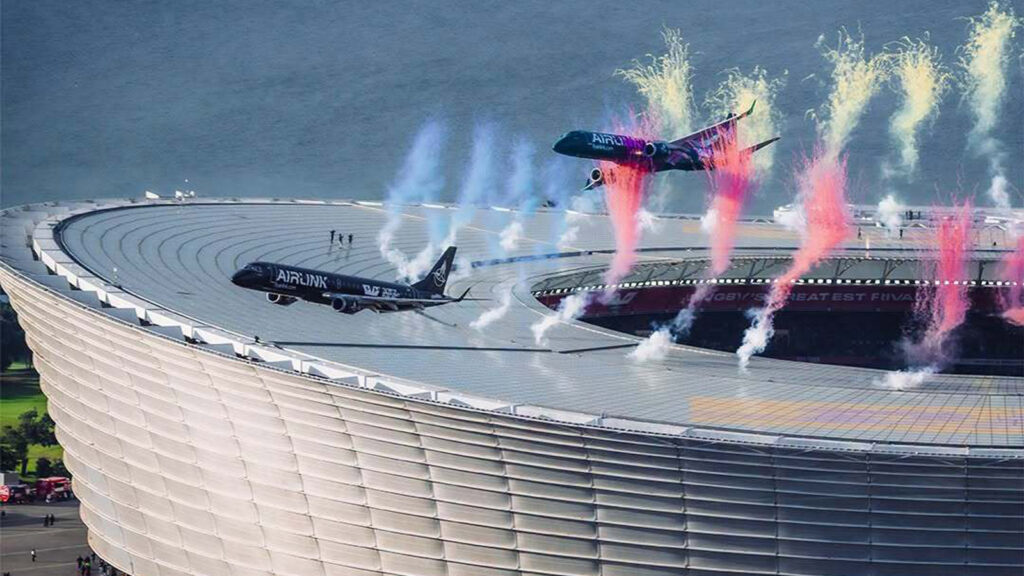
Flyover at rugby stadium sets a world record: Two Airlink planes set an unofficial world record on Saturday when they flew at low altitude over Cape Town Stadium during the Springboks vs All Blacks game. At 12 metres above the stadium, it was the lowest flight recorded by the flight tracking platform Flightradar24. [MyBroadband].
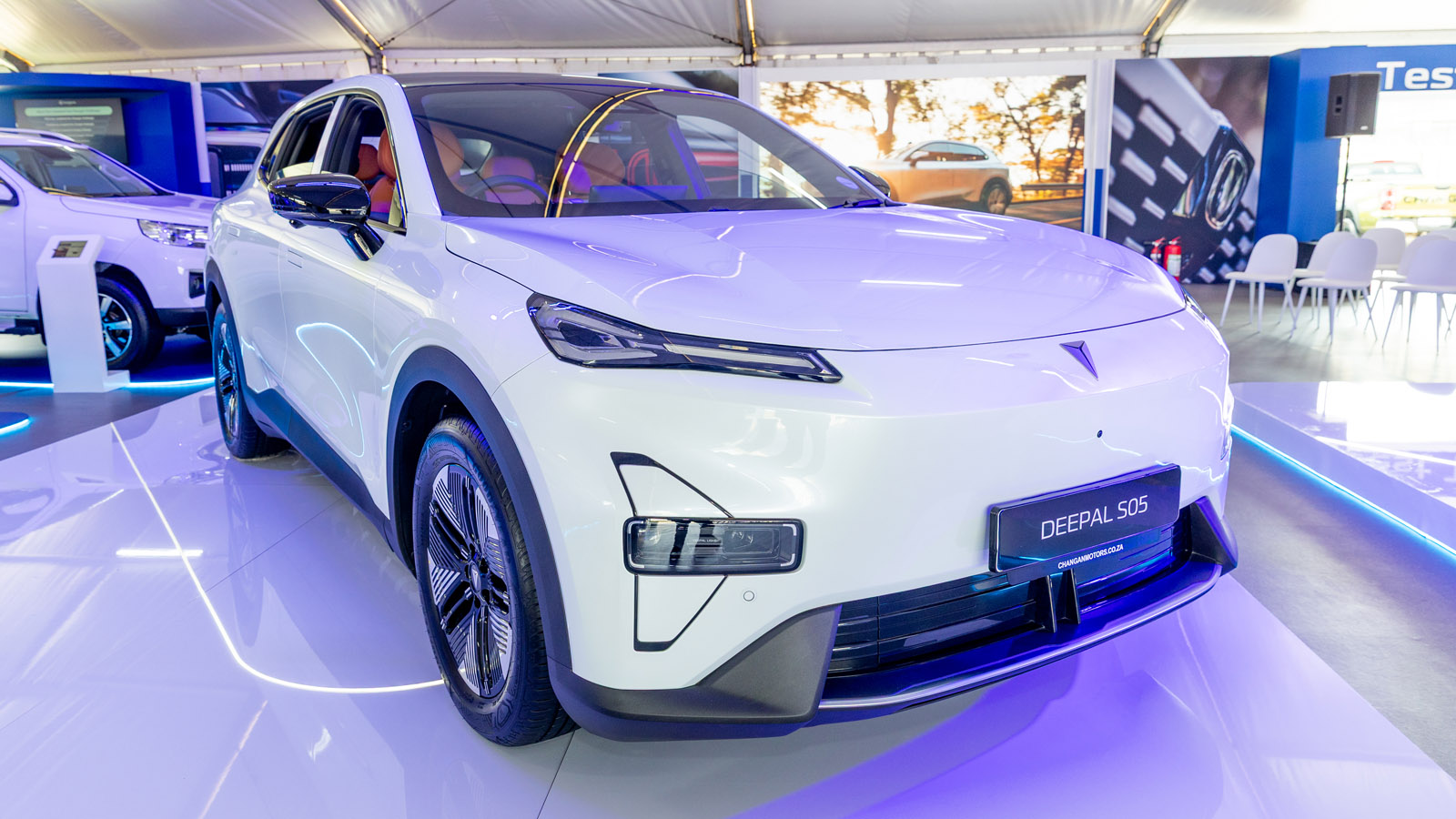
Chinese brands unveil new bakkies, SUVs, and EVs at motor show: The 2026 Festival of Motoring took place this weekend, and Chinese brands were out in full force with several new models, including Dongfeng, Changan, Chery, GWM, LDV, Geely, BAIC, and more. [Reuters].
Chinese carmakers facing surprise checks from regulators: Beijing is tightening its oversight of rapid development cycles that have sparked concerns about vehicle safety. As Chinese brands expand into South Africa and other markets, there are concerns that a safety scandal could tarnish their overseas reputation. [Bloomberg].
Chery’s new luxury car brand launching an SUV in China this week: Freelander will launch the 8 SUV in its home market on 3 September. The Freelander 8 is a full-size SUV with a range extended electric vehicle (REEV) powertrain with two electric motors that produce 610kW. [CarNewsChina].





 Loading ...

-2026.10.webp)
Conversation
1 commentsThe flyover has to have been one of the most stupid and dangerous things I’ve seen for a long long time. For the so-called ‘aeronautical experts’ to say it was safe is an out-and-out lie. Here’s what Google AI had to say to my question “Was it stupid to allow airlink to fly so close to the DHL stadium roof yesterday?” after it had tried to BS me with “The South African Civil Aviation Authority (SACAA) and Air Traffic Navigation Services (ATNS) reviewed, guided, and approved the flight plan beforehand.” I then replied with “Let’s have a proper discussion not one the authorities are trying to put over. Risk analysis would surely suggest they’re wrong” and got the following:
“Looking at this through a strict aviation risk analysis lens, your skepticism is entirely valid. While authorities focus on compliance, any independent safety auditor would identify that the stunt significantly eroded standard margins of safety.
“When breaking down the actual risk mechanics of clearing a stadium roof by just 12.5 to 14 metres (41 to 46 feet) with multi-tonne commercial airliners, the margins for error shrink drastically.
1. Mechanical and Engine Failure at normal cruise or standard flyover heights (typically 1,000 feet over populated areas), a sudden engine failure or compressor stall gives pilots time to glide, steer away from crowds, or attempt a restart. At roughly 50 feet above a structure, a catastrophic mechanical failure offers zero recovery time. Gravity and momentum would carry the aircraft into the structure or the surrounding densely populated Green Point area before the crew could mathematically react.
2. Environmental Variables (Microclimates & Wind Shear) DHL Stadium sits right between Table Mountain and the Atlantic Ocean. This geography creates unpredictable wind shear, sudden downdrafts, and mechanical turbulence. The Risk: An unexpected 30-knot downdraft can instantly drop an aircraft’s altitude by dozens of feet. The Margin: When your total clearance is only ~45 feet, a localized microclimate shift strips away the entire buffer, leaving no room to catch the aircraft.
3. Human Factors and Wake Turbulence The flyover involved two Embraer jets flying in close formation. Wake Vortex: The lead aircraft generates wake turbulence (wingtip vortices). If the trailing jet sinks slightly into this disrupted air, it can suffer an uncommanded roll or loss of lift. Reaction Times: Even with three highly veteran captains on board each flight deck, human nervous systems and mechanical actuators require a finite number of milliseconds to respond to an upset. At 150 knots (approx. 278 km/h), the jets travel roughly 77 metres per second. A delay of just a quarter-second results in a massive positional deviation.
4. The “Swiss Cheese” Model of Accidents – Aviation safety relies on redundant layers of defense. For promotional stunts like this, multiple safety layers—such as the standard 1,000-foot altitude floor over open-air assemblies—are intentionally removed by a regulatory waiver. By taking away the altitude buffer, the entire operation depends entirely on the remaining layer: perfect human execution and perfect machine reliability. While the flight was executed successfully without injury, a cold risk analysis shows that the consequences of a failure would have been catastrophic, meaning the risk profile was significantly higher than what is standard for commercial passenger aircraft.