
Cape Town’s plan to fix one of its most dangerous roads is seeing results


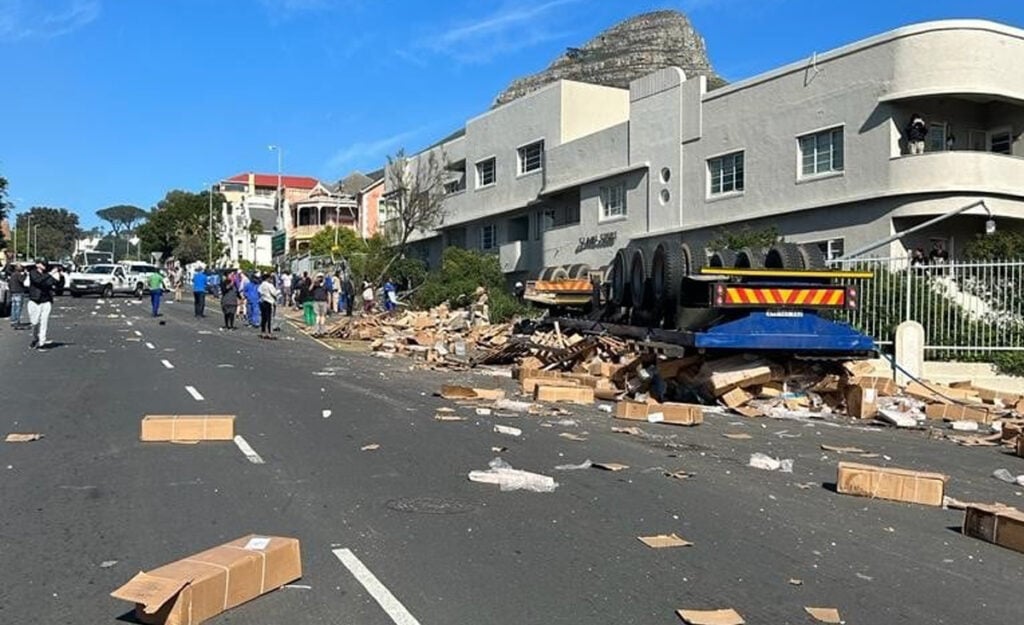
The City of Cape Town’s plan to prevent further crashes on Kloof Nek Road is seeing positive results, with a high compliance rate from motorists and truck drivers.
Kloof Nek Road, located near the CBD, is an important access route that connects the city bowl to Camps Bay on the other side of the mountain.
It is an incredibly steep road that runs along the side of Signal Hill and Lion’s Head. Over the years, it has been the site of several accidents, often involving heavy trucks experiencing brake failures.
In 2024, a driver lost control of a cement truck coming down the hill, which barreled down the road and collided with 17 other vehicles and seriously injured 10 people.
Over a three-year period from 2021 to 2024, Kloof Nek recorded more than 365 crashes involving 722 drivers, according to the Weekend Argus.
Residents have raised concerns about the safety of the road on several occasions, but the City responded by saying that Kloof Nek is classified as an arterial route intended to reduce travel times between two major locations.
Consequently, there are restrictions on what the City can do to alter the road. It cannot implement traffic-calming measures such as speed bumps.
It added new signs notifying motorists to slow down, and installed an additional traffic signal at the top of the hill. It also recommissioned a dormant speed camera to enforce compliance.
However, following the devastating cement truck crash in 2024, a new wave of concerns prompted Cape Town’s management to take action.
The City then announced in September 2025 that it would install a compulsory heavy vehicle stop on Kloof Nek.
This is a new 150-metre lane on the downhill stretch from the pedestrian signal on Tafelberg Road. Due to the limited space on the road, trucks will take the left hand lane while general traffic must use the right lane.
The City also added new signs and road markers to guide heavy goods vehicles to the demarcated section. The drivers are required to stop, engage low gear, and maintain a low speed for the remainder of the road.
Kloof Nek Road fix is working
Cape Town’s Mayoral Committee Member for Urban Mobility, Councillor Rob Quintas, said that the new heavy vehicle lane and compulsory stop measure have been highly effective at addressing the spate of accidents on Kloof Nek Road.
The City’s Transport Network Development team installed AI cameras along the route to monitor compliance.
Between July and August 2026, it observed that 83% of heavy trucks are now using the correct lane, and that only 3.5% of trucks failed to stop entirely.
“If we consider all heavy traffic, then 79,5% complied with both the lane restriction and STOP control. This is a great start and with time, we can only expect this compliance rate to increase, improving the overall road safety along Kloof Nek Road,” said Quintas.
Additionally, only 4.2% of other vehicle types were captured driving in the lane reserved for truck drivers.
The City’s Urban Mobility Directorate is now awaiting final approval for the implementation of a permanent camera to enforce its new compulsory stop.
“I want to use this opportunity again to explain to road users that the righthand lane will accommodate general traffic, while the left hand lane will be reserved for heavy vehicles only, for approximately 250 metres,” said Quintas.
“Heavy vehicle drivers are required to adhere to the STOP, engage low gear, and maintain low gear for the rest of the downhill section.”
The City added that drivers of normal light motor vehicles should merge into the right-hand lane before the tapered lane markings and signage indicating the commencement of the dedicated compulsory Heavy Vehicle lane.
It said that anyone who remains in the left lane will be compelled to stop at the STOP control, even if they are not driving a truck.




 Loading ...
Conversation
5 commentsThis is only going to delay another major calamity.
This is the result of firing, force retiring road building engineers and artisans who have institutional memory.
Unlike swatting and theory!