


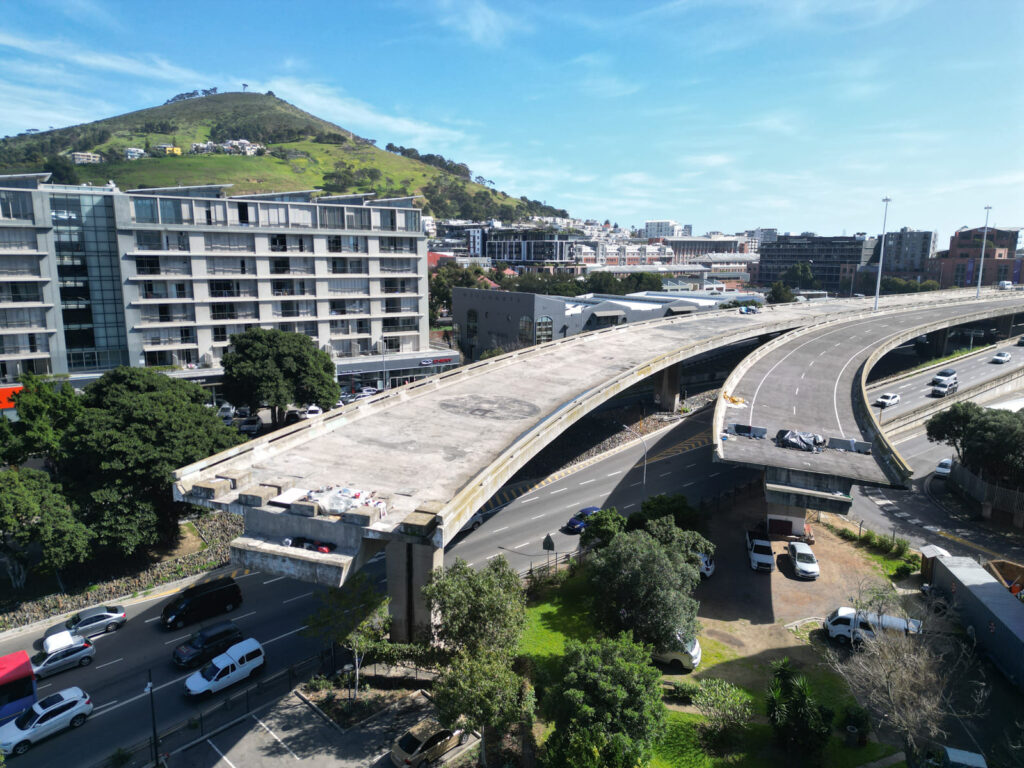
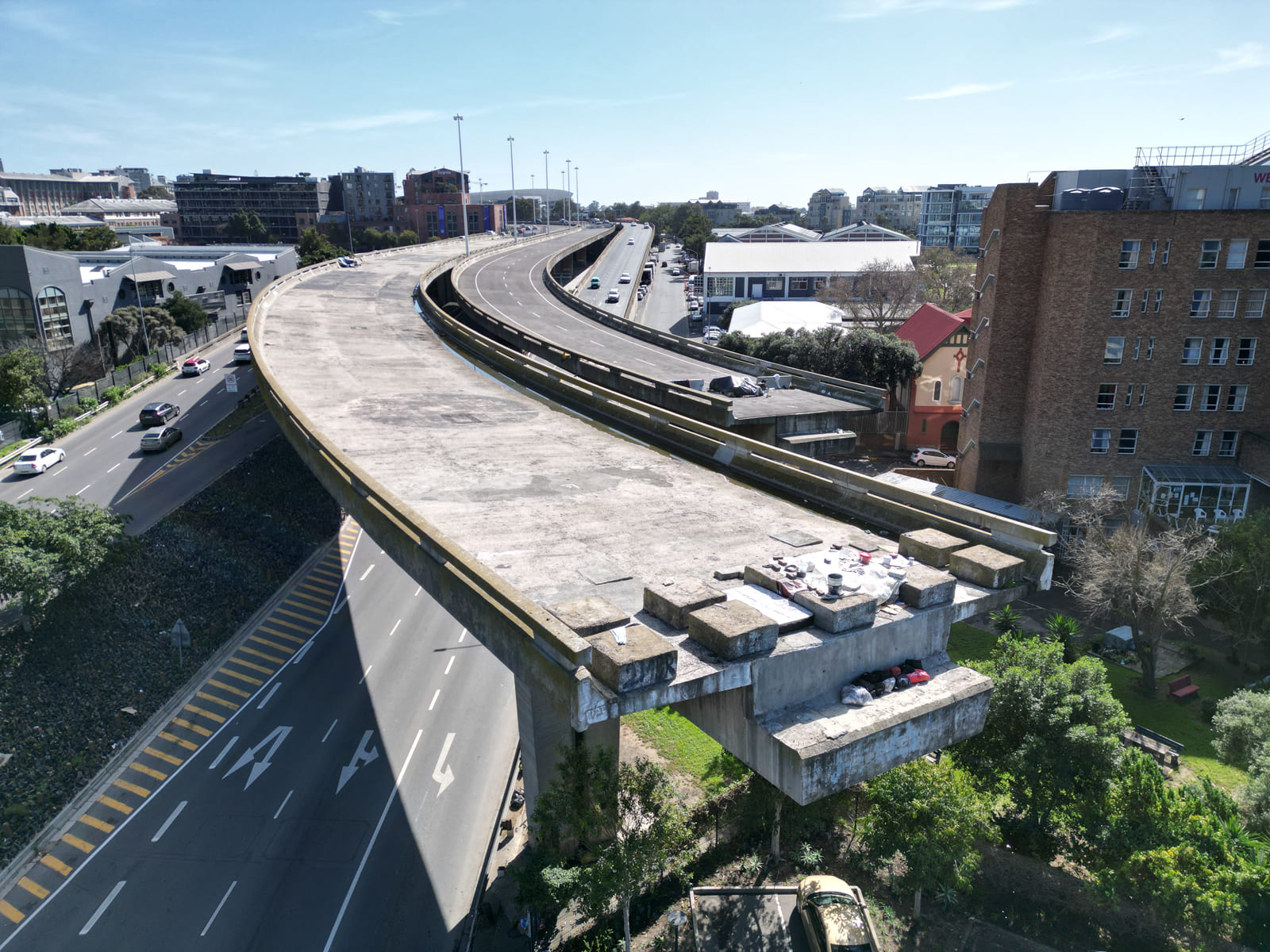
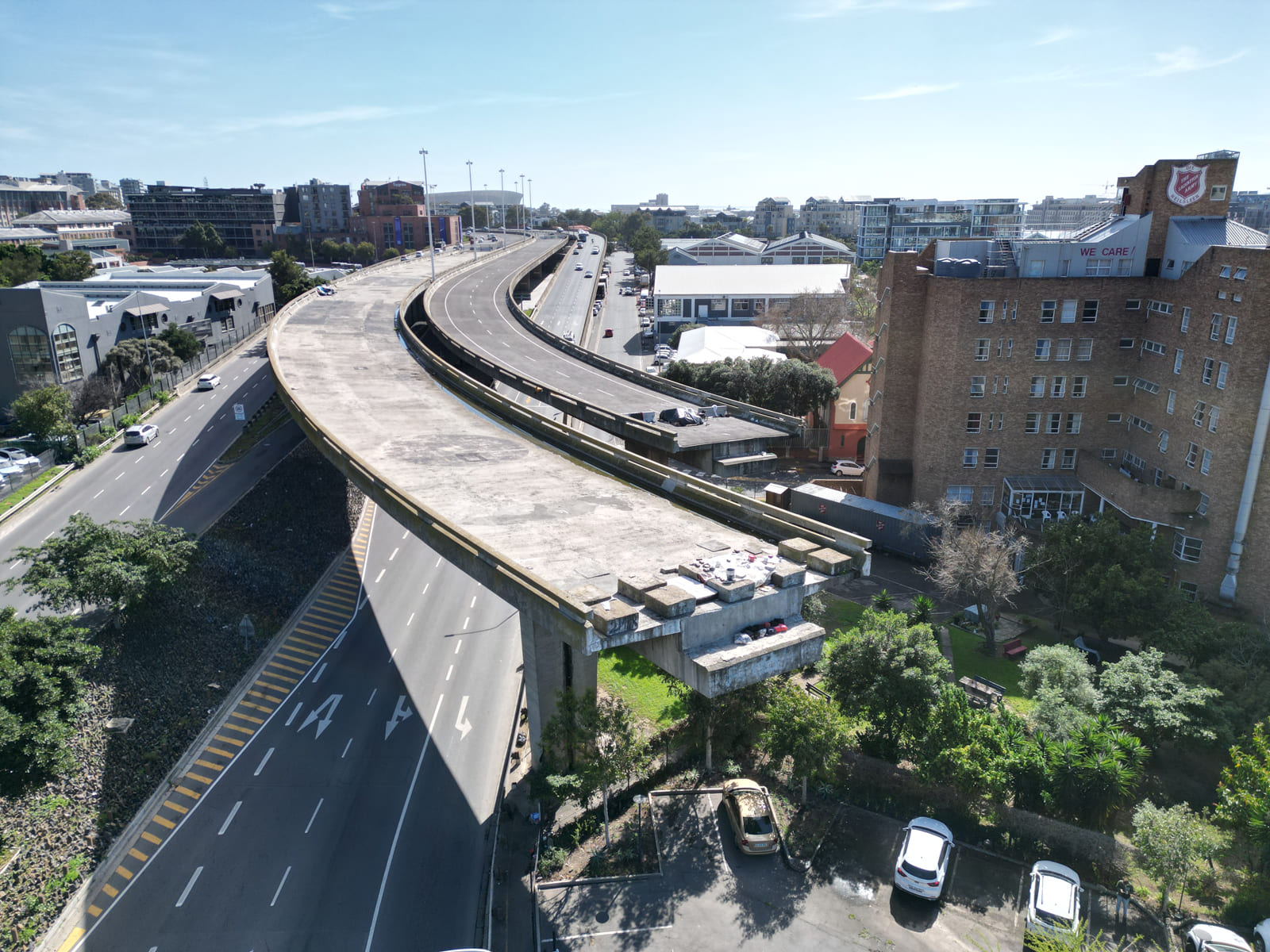
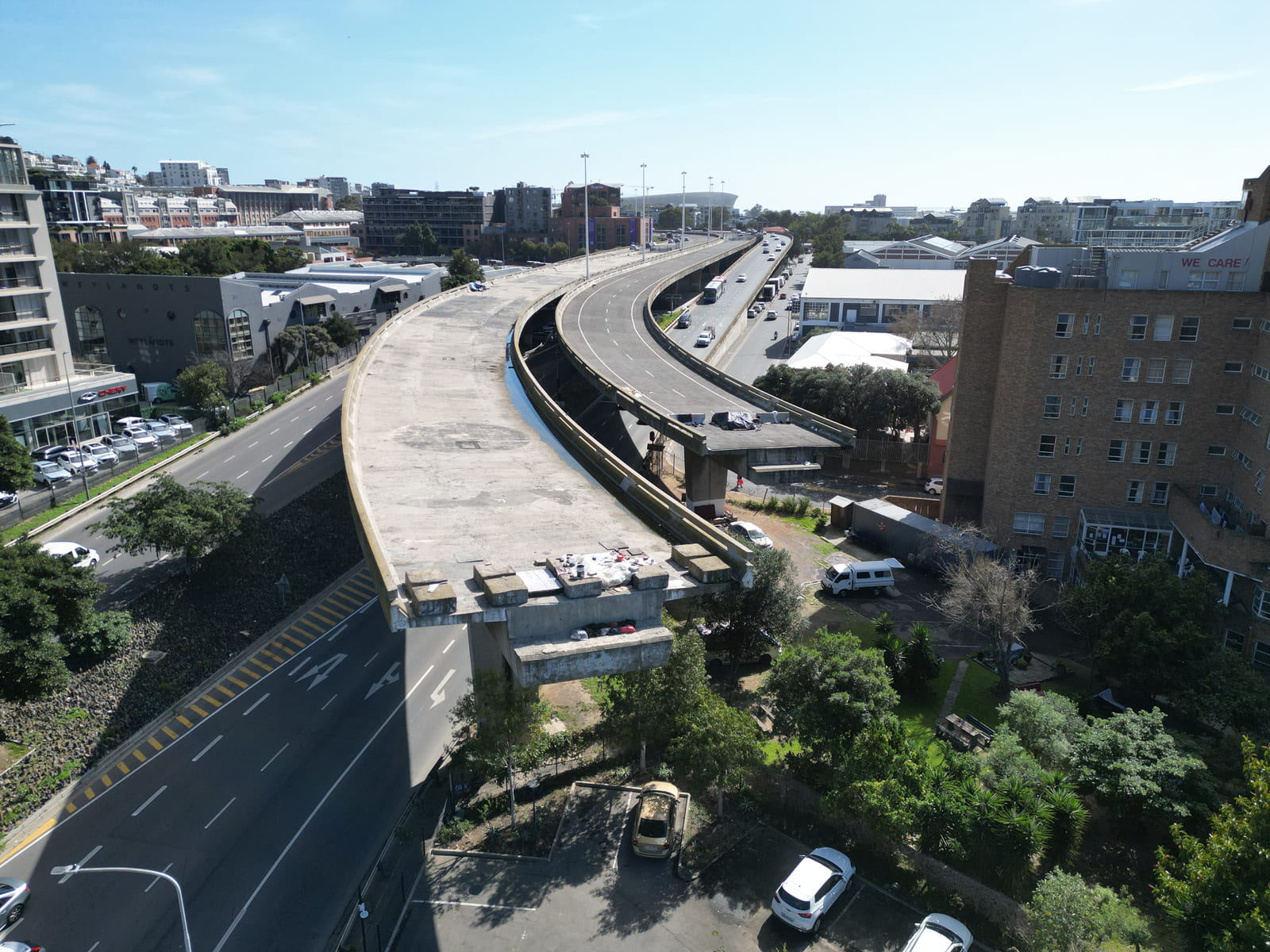
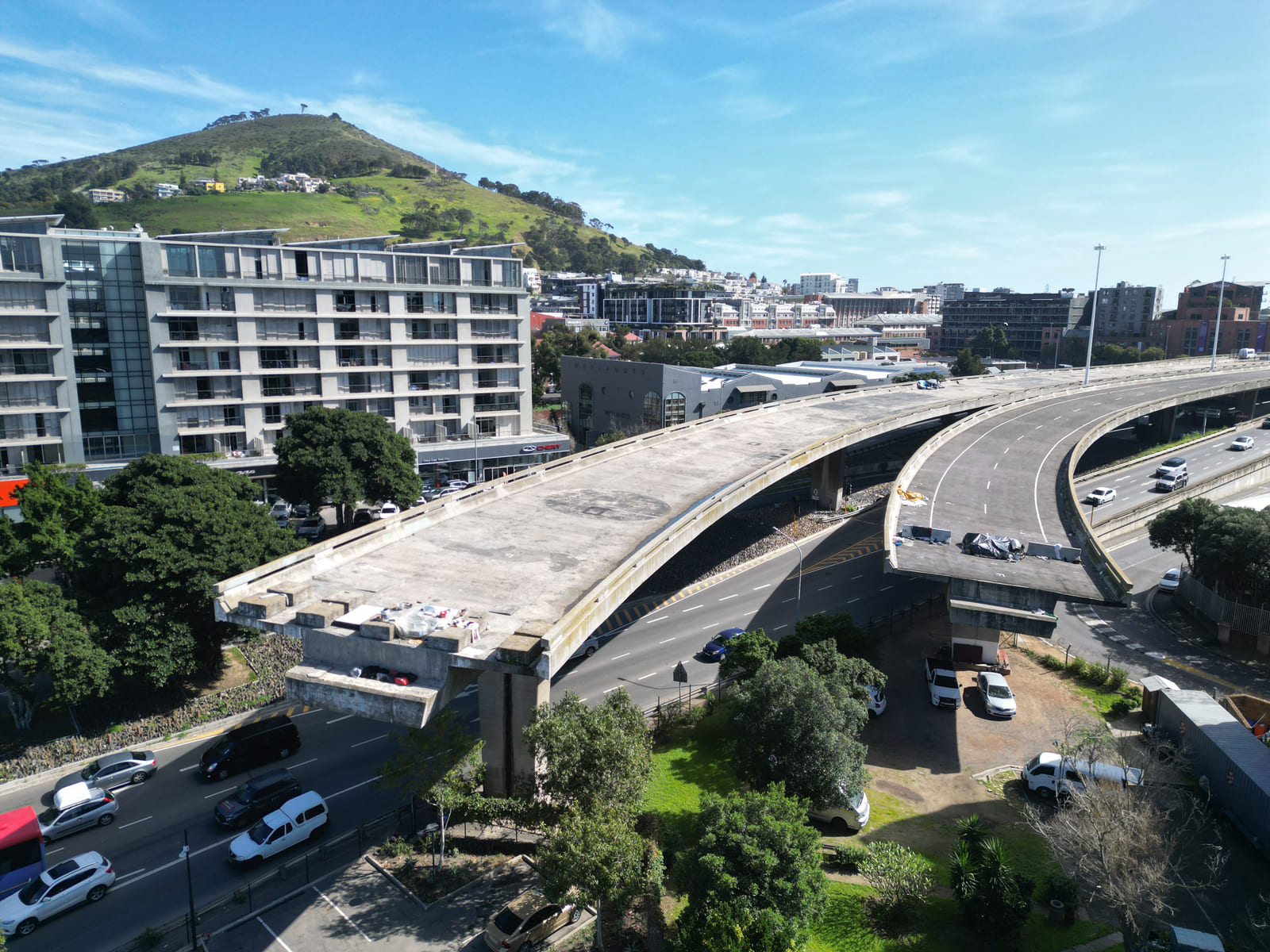
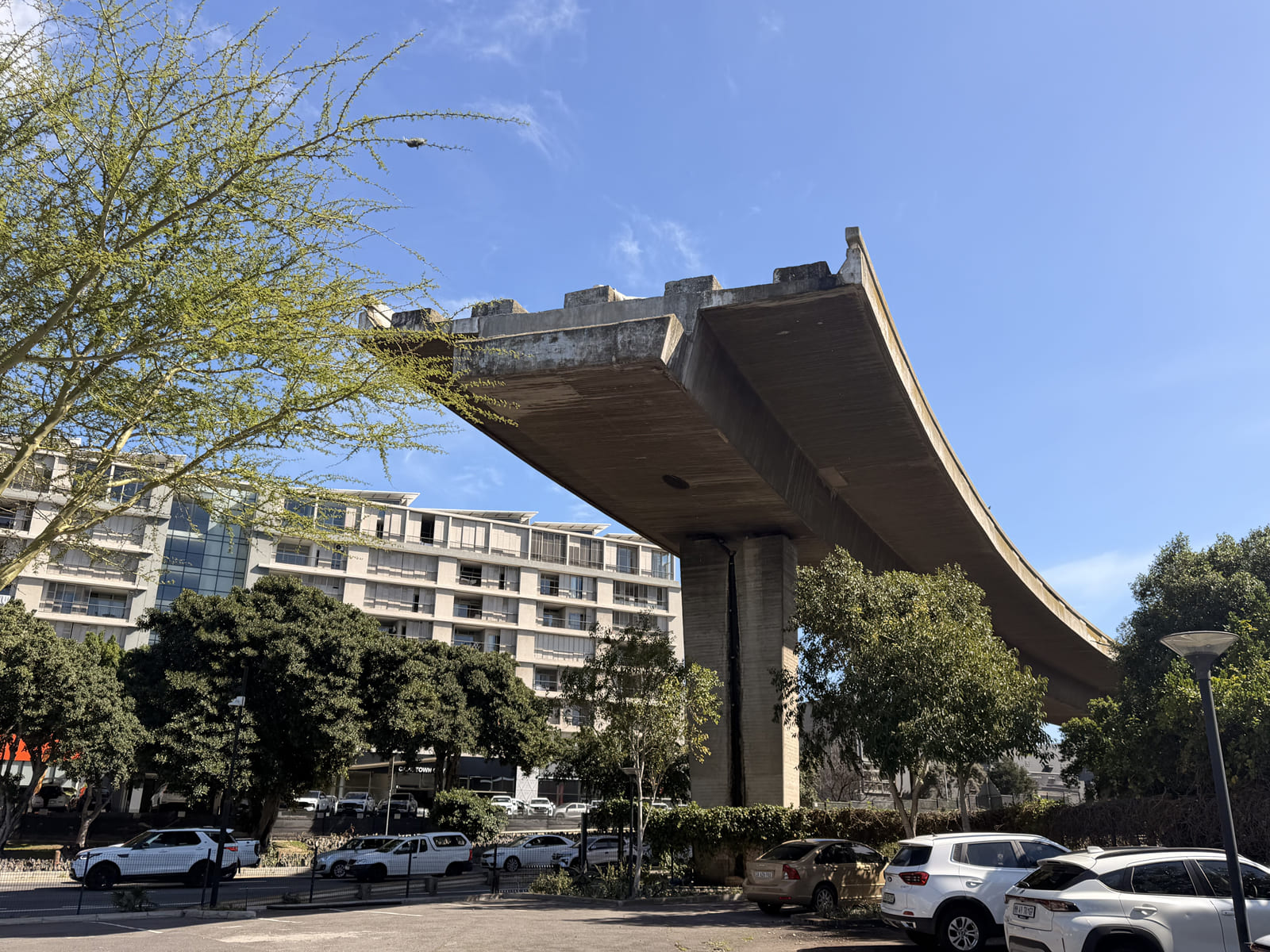
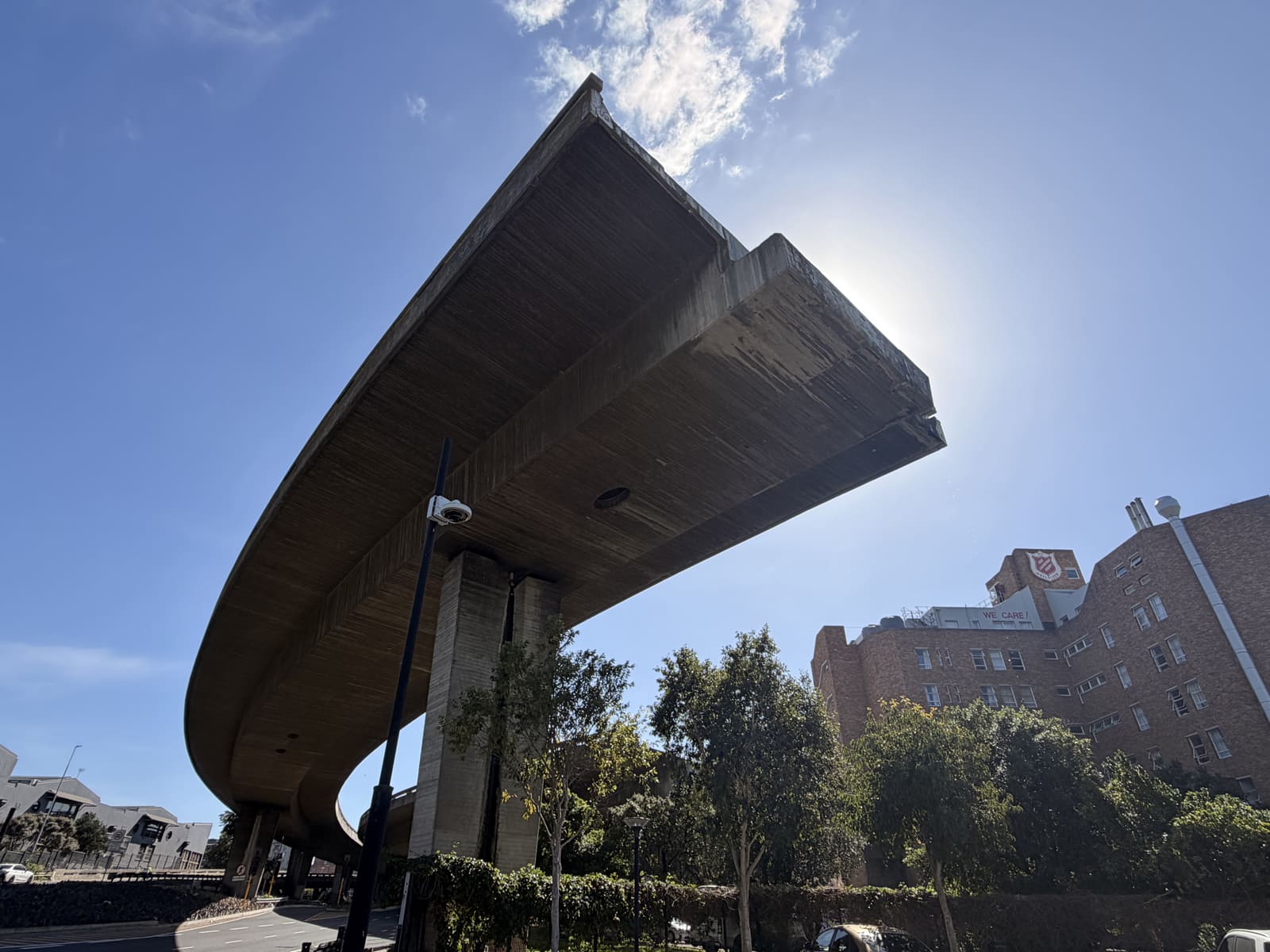
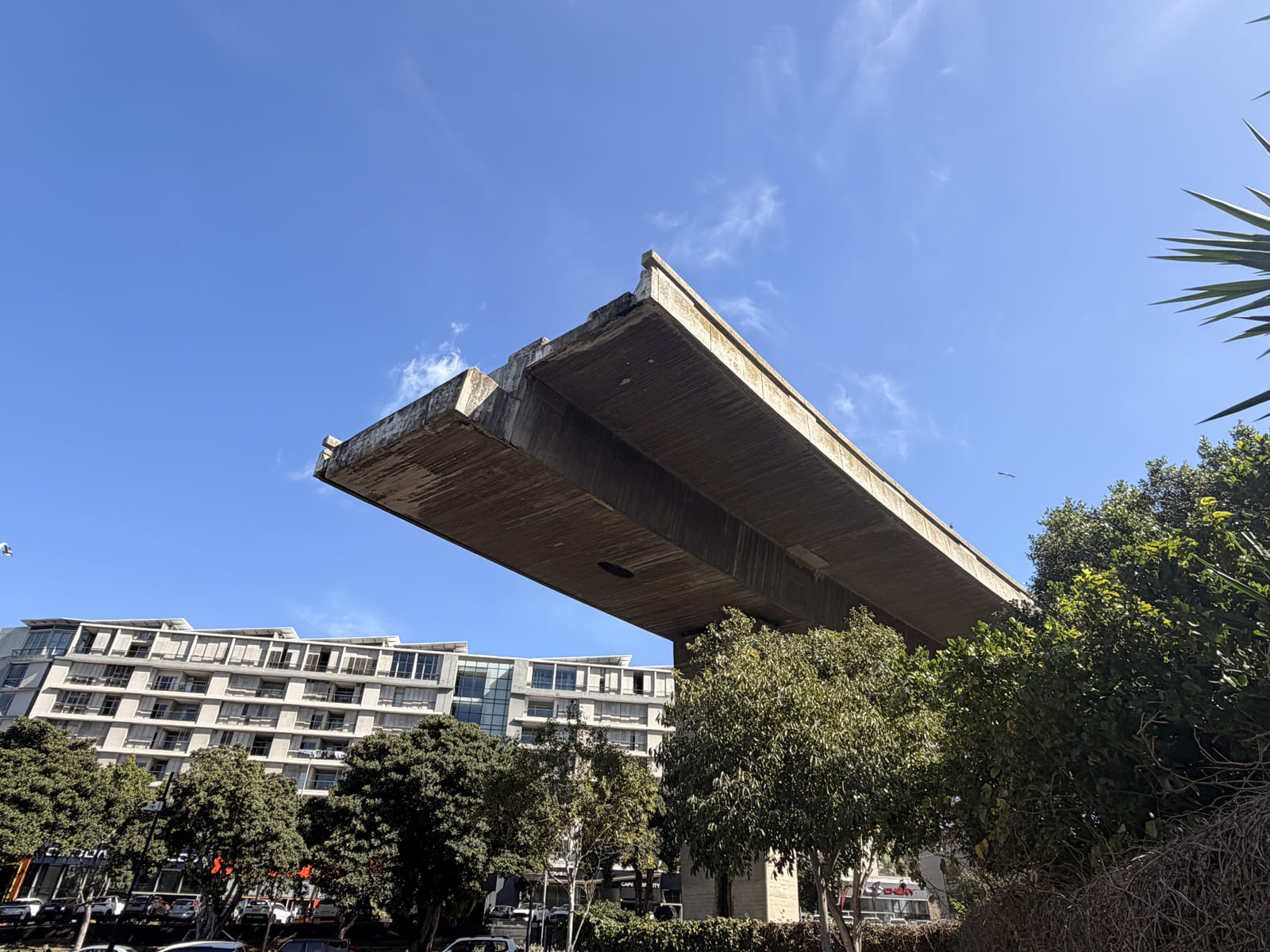
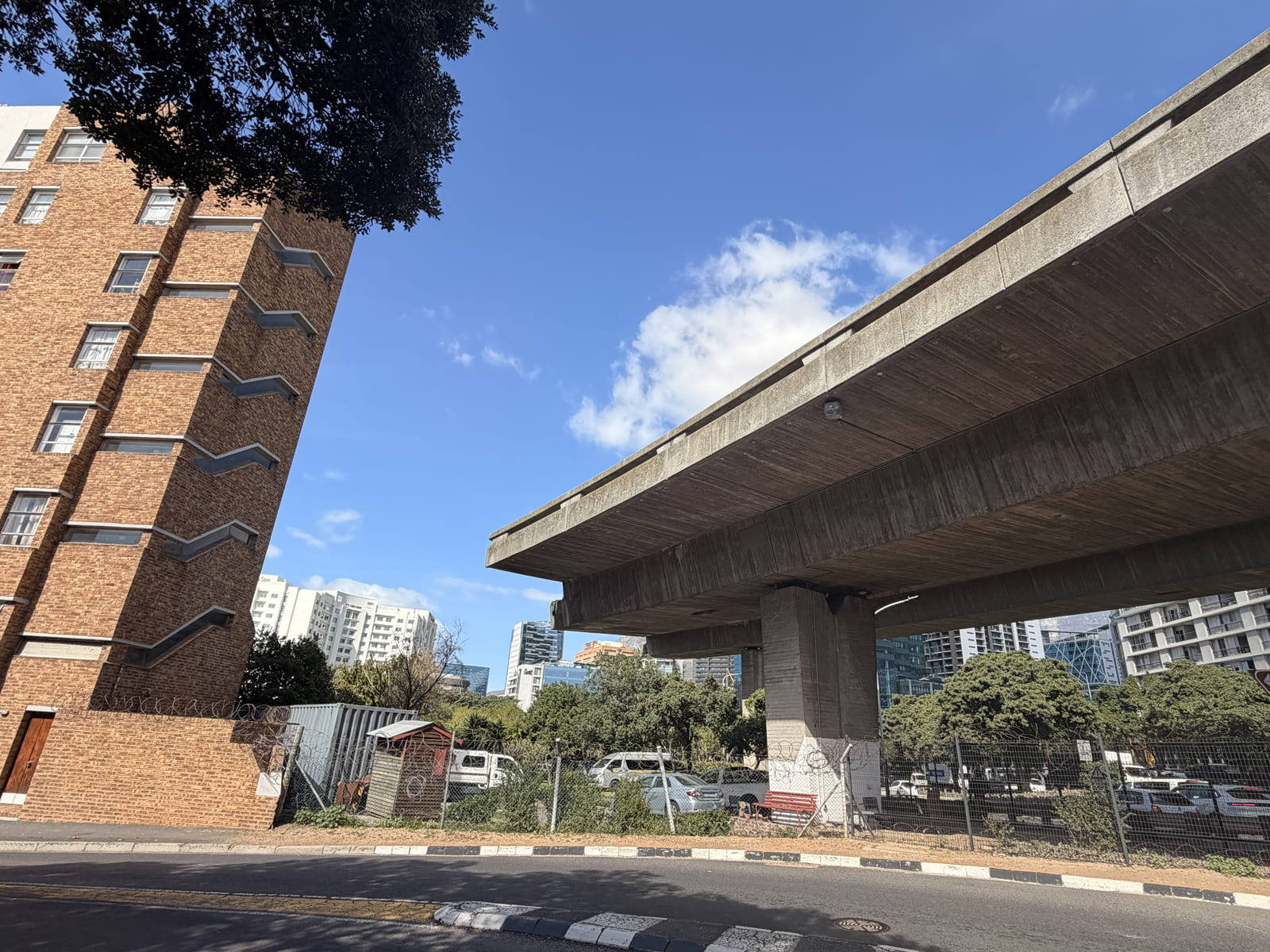
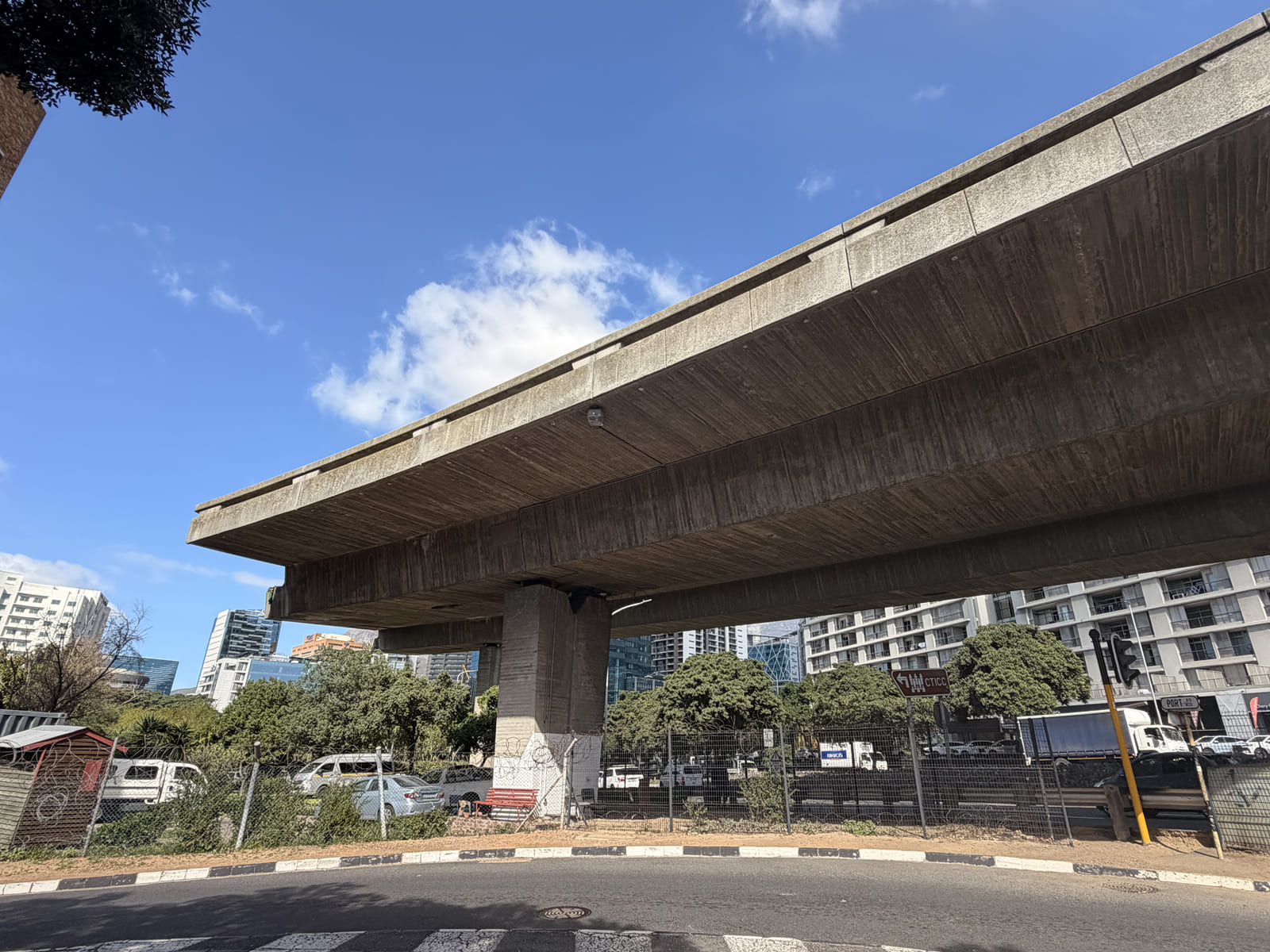
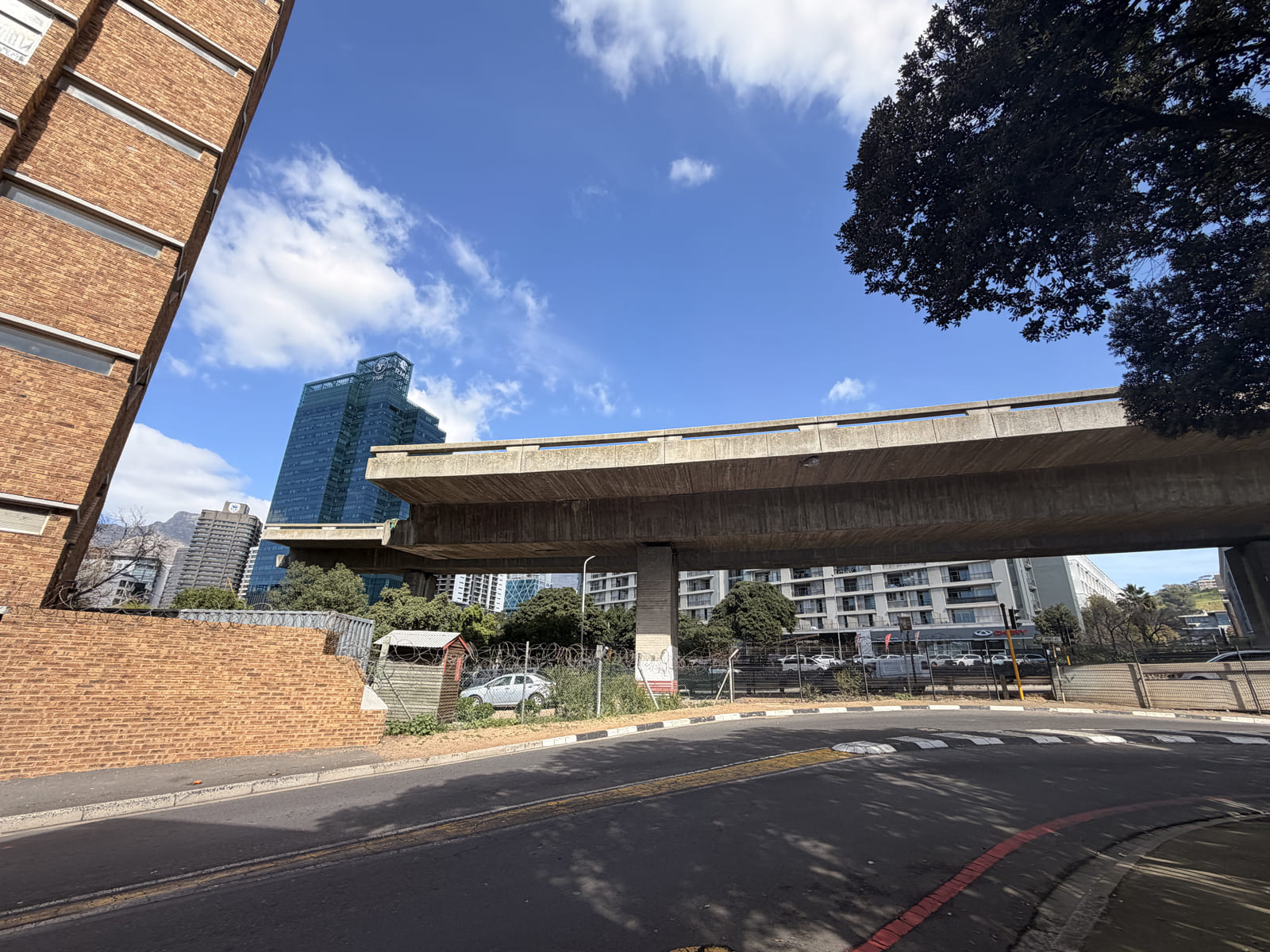
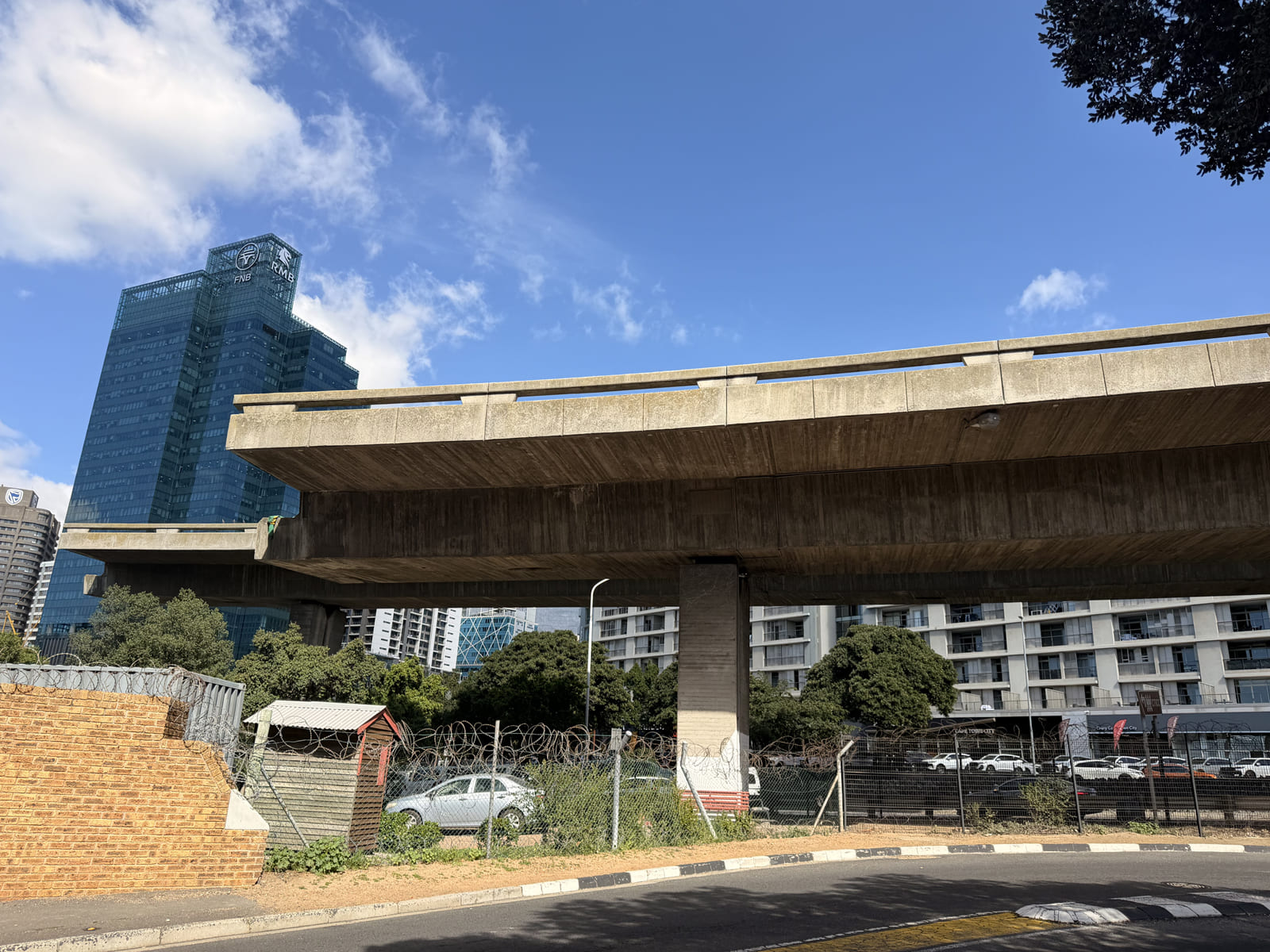
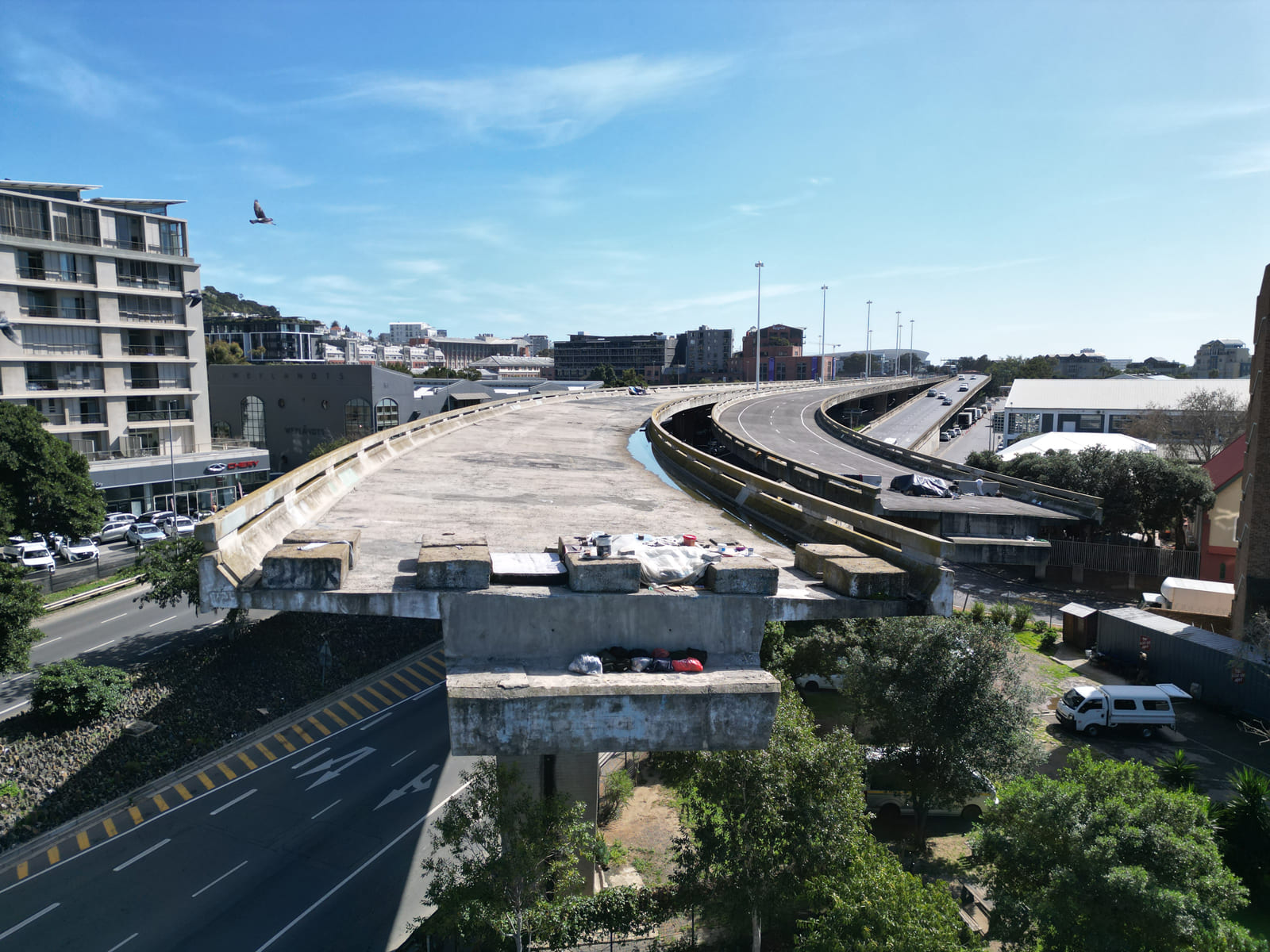
The City of Cape Town has just announced that it will finally address the unfinished Foreshore Freeway bridge, one of the metro’s most iconic landmarks.
In an official statement made earlier today, Cape Town Mayor Geordin Hill-Lewis confirmed that the City plans to redevelop the Foreshore Precinct in order to reclaim valuable land in the CBD.
“With our city centre wedged into this relatively small piece of land between mountain and ocean, the geography that makes Cape Town so beautiful and so memorable is also one of our greatest constraints. There is very little room for the CBD to expand,” he said.
He noted that this restriction is partly man-made, as the city’s elevated highways, including the N1, N2, and the unfinished Foreshore bridge, have cut the city centre off from the ocean.
“This road infrastructure has sterilised the last available inner-city land and left Cape Town with a physical barrier between city and sea, effectively separating us from our maritime identity. “
Now, the City of Cape Town (COTC) is planning to redevelop the area to reclaim 15 hectares of inner-city land that has not been fully utilized for more than 50 years.
“This is an historic day for Cape Town. Every one of us who has grown up in Cape Town has looked up at these big unfinished bridges time and time again and wondered what happened, why they were never finished, and when they ever would be,” said the mayor.
“We’ve all heard ten different urban legends about why they weren’t finished. Most Capetonians today can’t remember a time when they weren’t here. ”
This plan will see the famous unfinished elevated Foreshore Freeway finally completed in order to improve traffic flow while freeing up land for new developments.
“I am excited to unveil this vision for a new Foreshore precinct that will see these legendary bridges being finished at last,” said Geordin Hill-Lewis.
“We’ve been working on this project for the last few years in detail, but in truth, we’re getting the ball rolling on finishing some 50-year-old unfinished business!”
He added that this project is expected to help address Cape Town’s well-known traffic issues while creating new jobs, investment opportunities, and affordable housing for Capetonians.
Say goodbye to Cape Town’s city centre as you know it

The project will develop the city’s unfinished bridges into a new link bridge and tunnel to relieve inner-city congestion while opening the city centre to the seaboard.
Geordin Hill-Lewis said this transformation is expected to create a new Foreshore neighbourhood with affordable housing, walkable streets, and a tree-lined promenade running all the way to Sea Point.
He added that this is the most significant road and transport infrastructure overhaul since the 2010 Soccer World Cup.
The COCT will release drawings to begin a public consultation process, after which the final designs will be turned into detailed engineering plans.
From there, the City will launch a procurement process before finally beginning construction. The mayor added that a public consultation will be included in the development process.
The actual building phase will be split into two projects to minimize the amount of construction and traffic disruptions in any one area.
Phase one of construction will see the creation of a new bridge over Buitengracht Street complete with bus priority lanes.
The incoming elevated freeway will be widened to link the inbound freeway directly to Helen Suzman Boulevard, and a canal link will be added linking to the V&A canal.
The area underneath the new elevated roads will be turned into a new park and other public spaces.
“This means everyone heading from the foreshore towards Green Point, Sea Point and beyond, will effectively bypass the CBD. This will make a big difference in alleviating congestion,” said the mayor.
Phase 2 proposes to add a new outbound link bridge and a tunnel on the vacant land between the Ports & Customs House, which will continue alongside Duncan Road to connect with the outbound highways.
“Once that system is in place, the existing outbound elevated freeway can finally be removed. And that is when the real opportunity opens up. We can then take the land that has been sitting beneath and between these structures and give it back to the city,” the COCT stated.
Geordin Hill-Lewis said this will allow the City to extend the streets of the CBD towards the harbour, creating a new promenade with new homes, including affordable accommodation, businesses, restaurants, and shops.
“Imagine being able to walk from the heart of the CBD to the harbour without the barriers that have stood between the two for generations,” he said.
“Imagine streets where people live and work, where visitors spend time, where children can walk, and where cyclists can move safely. That is the kind of city we should be planning for.”
He stated that, if all goes as planned, construction of the first phase will begin in the next term of Council.
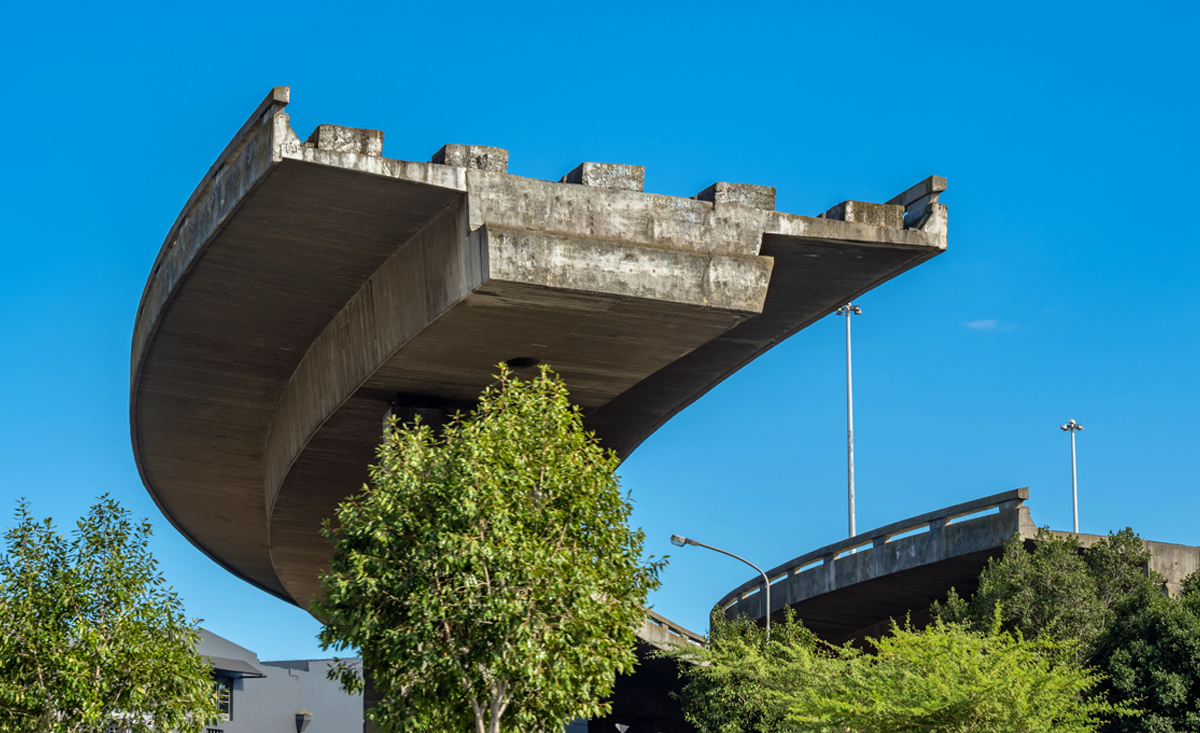
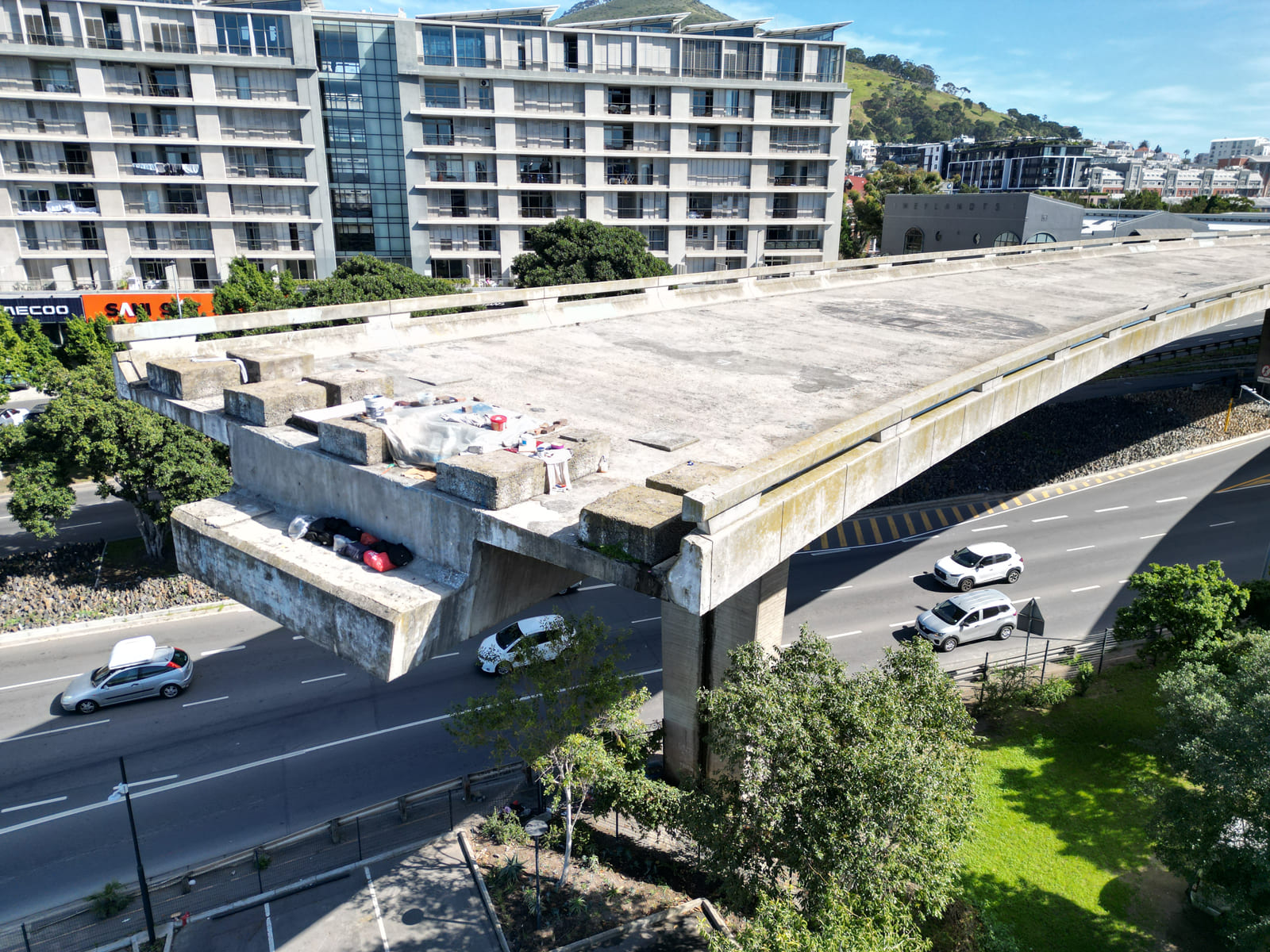
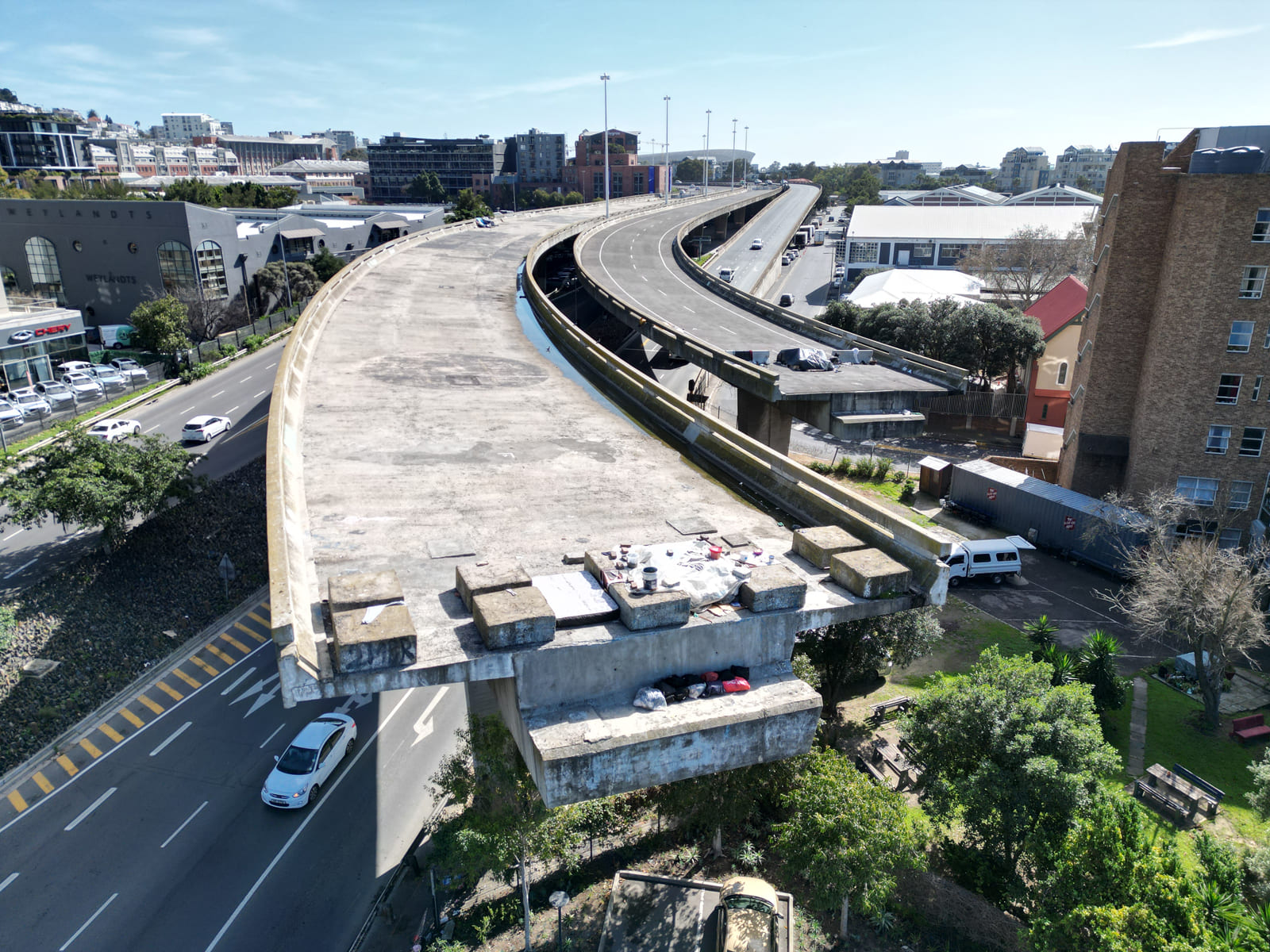
Cape Town’s unfinished Foreshore Freeway





 Loading ...
Conversation
20 commentsIT would be nice to see an AI map of where the bridge itinerary is