


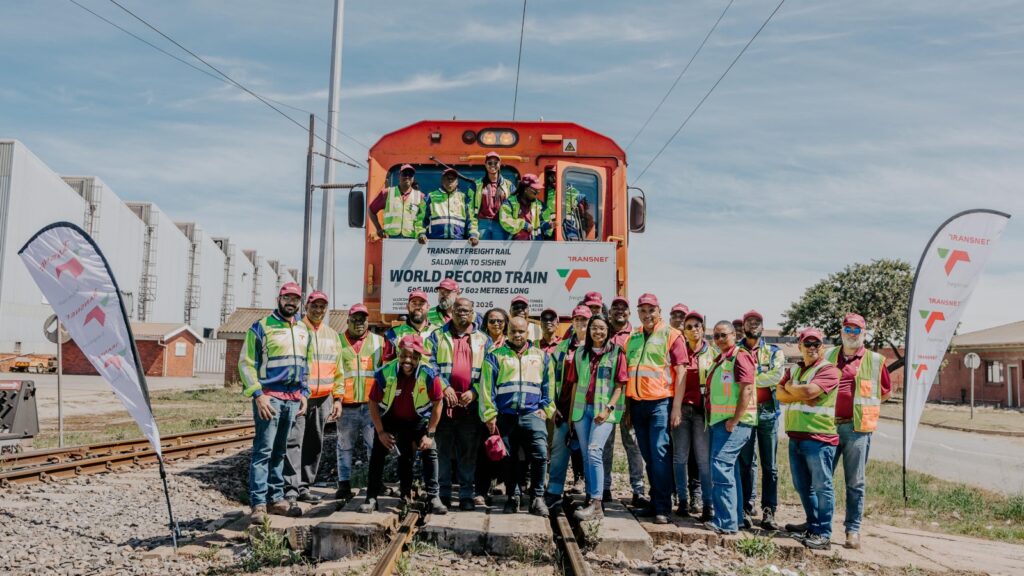
South Africa’s state-owned freight rail operator – Transnet Freight Rail (TFR) – operated a 696-wagon empty train on the Iron Ore Export Line from Saldanha to the Northern Cape, setting a new world record in the process.
According to Transnet, the train reached Loop 18 on Sunday, 18 October 2026, completing the journey of the longest train ever assembled and operated on the corridor.
It pulled nearly 700 wagons from Saldanha, north of Cape Town, to the Sishen Iron Ore Mine in Kathu, Northern Cape, 861km away.
The record-breaking train featured two coaches, with 13 diesel-electric locomotives placed interspersed across the 696 wagons to operate as a synchronised unit, and weighed 15,830 tonnes.
It is not the first time Transnet has set such a record, originally setting a world record for the longest train operation in 1989 on the same Sishen-Saldanha line.
However, this was overtaken in 2001, when Australia’s BHP Iron Ore set the world record for the longest freight train ever operated, with a 7.35km train of 682 wagons.
This is the record that held until Transnet Freight Rail’s latest attempt on the Sishen-Saldanha line, which demonstrated the SOE’s capacity for transporting thousands of tonnes of iron ore across South Africa.
The record attempt was led by TFR’s Train Design Technology and Operations teams working alongside Transnet Engineering, the Transnet Rail Infrastructure Manager (TRIM) and the Railway Safety Regulator.
According to Transnet, the exercise was undertaken as an evaluation programme with the secondary objective of pursuing a world record.
Alongside the record attempt, it aimed to advance technical knowledge in train design, train handling and operational performance.
“The exercise was undertaken as a dynamic train evaluation programme with the dual objective of pursuing a world record and advancing technical knowledge in train design, train handling and operational performance,” it said.
“The achievement represents more than a record-breaking accomplishment. It demonstrates the world-class engineering expertise, operational excellence and innovation that continue to position the Iron Ore Export Line among the world’s leading heavy-haul rail systems”
Extensive planning and execution
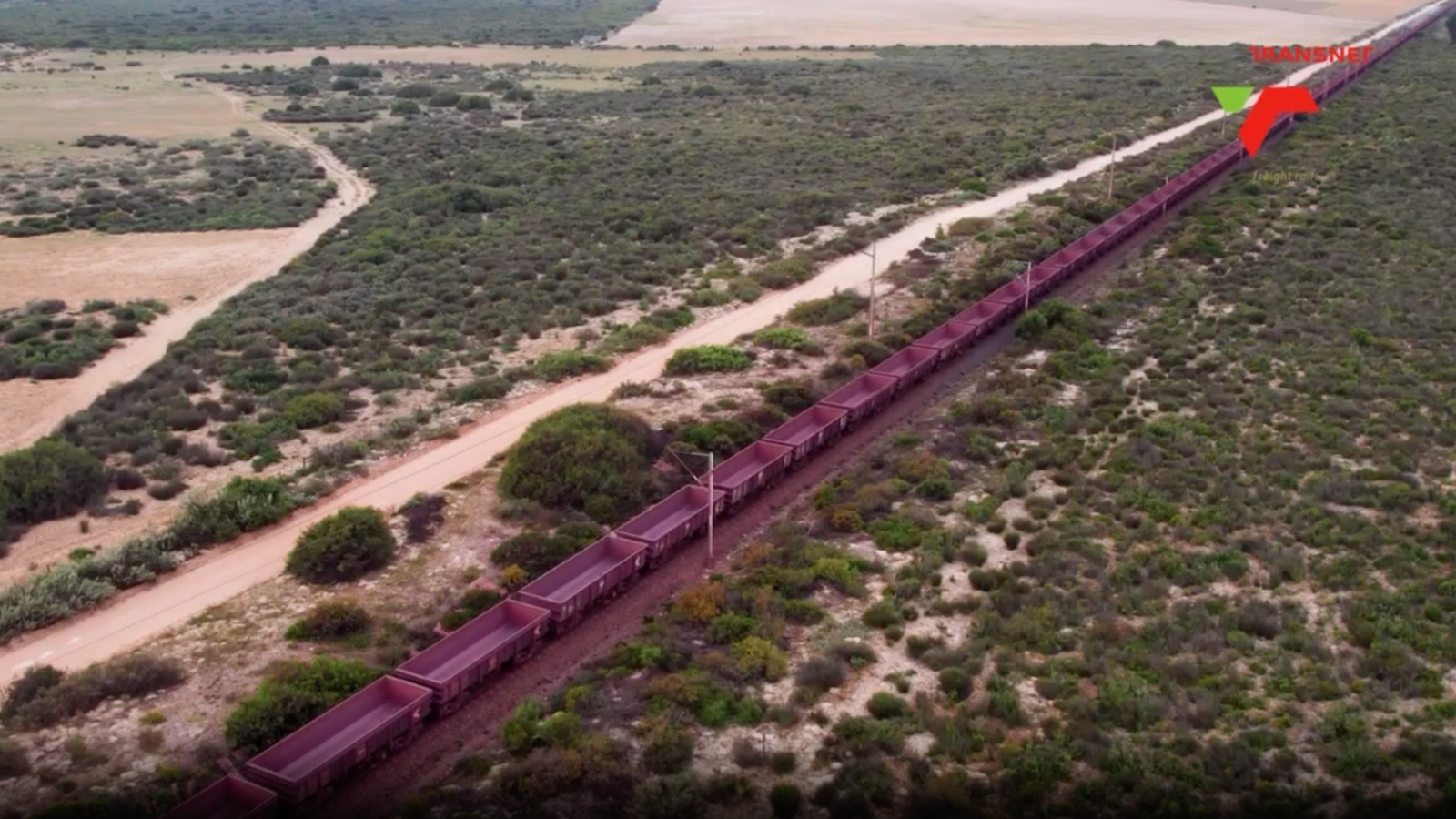
Transnet explained that extensive planning went into designing the advanced technology that allowed locomotive power and braking forces to be distributed across the entire train, ensuring safer handling.
“The successful operation of this train demonstrates the depth of engineering expertise, operational excellence and innovation that exists within Transnet Freight Rail,” said TFR Chief Executive, Russell Baatjies.
“While setting a world record is a significant achievement, the real value lies in the technical knowledge and operational insights gained through this exercise.”
He added that the learnings will contribute to the continued advancement of rail operations, support innovation and strengthen freight rail capability into the future
According to Transnet, extensive planning, modelling and simulation work by Train Design Technology specialists preceded the operation.
“Teams assessed train dynamics, locomotive placement, route readiness, operating strategies, communication protocols and infrastructure requirements to ensure the safe movement of the train,” it said.
“Specialist personnel accompanied the train throughout its journey to monitor train-handling performance and operational behaviour.”
The locomotive data collected during the train’s run will be assessed alongside simulation results to validate TFR’s performance models and enhance its operating capability.
Transnet said the successful completion of the exercise reinforces the Iron Ore Export Line’s reputation as one of the world’s premier heavy-haul rail corridors.
It also highlighted South Africa’s ability to execute rail operations at a scale achieved by only a select number of railway operators globally.
TFR added that the record-breaking run underscores its commitment to safety, innovation and continuous improvement.
This as it aims to unlock greater capacity, improve its operational performance and strengthen the competitiveness of South Africa’s logistics network.



 Loading ...





Conversation
1 commentsNow if South Africa could only set some meaningful world record, instead of an utterly meaningless record that simply wastes money.