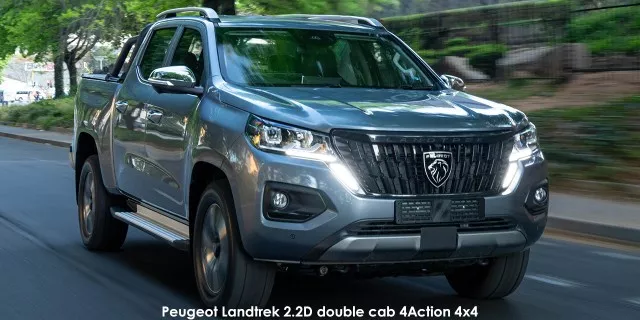
The National Consumer Commission (NCC) has informed South African motorists driving Hyundai SUVs about a serious safety recall.
According to the NCC, Hyundai Automotive South Africa informed the commission that it is recalling 253 Hyundai Tucson NX4 (fourth-generation) vehicles made available for sale nationally in 2025.
“According to the supplier, some vehicles may have been fitted with a side impact airbag sensor with incorrect specifications,” said the Consumer Commission.
“Owners must have the affected vehicles inspected using Hyundai’s diagnostic (GDS) equipment to determine whether the correct sensor has been fitted.”
The NCC urged consumers who own the affected vehicles to book an inspection at their nearest authorised Hyundai dealership.
It added that the inspection will establish whether the correct side-impact airbag sensor has been fitted.
By law, any remedial work required as a result of manufacturing faults will be carried out at no cost to the consumer.
Consumers with questions or queries relating to the Hyundai recall may direct them to the commission via email at [email protected].
Notably, this is Hyundai’s second recall of the month, having recalled 162 Santa Fe MX5 HEV vehicles sold nationally in 2025 for a seat belt fault.
“The defect concerns the front seat belts, with some vehicles potentially experiencing a misalignment of the front seat belt’s snap-on anchor,” explained the NCC.
“This could affect the proper positioning of the front seat belt and may pose a safety risk.”
The luxury SUVs were recalled alongside 235 affected Q3 models sold nationally through Audi SA-approved dealers from 16 April 2026 onwards.
According to the German carmaker, the belt webbing of the front seat belts may not have been guided through the metal eyelet on the lap belt tensioner.
Airbag-related recalls on the rise in South Africa

In August, the Automobile Association of South Africa (AA) reminded local motorists about the ongoing global Takata Corporation airbag recall that affects millions of vehicles.
These recalls date back to 2013, when vehicle injuries and deaths in the United States were traced to Takata’s airbags, leading to a recall of over 42 million cars.
Investigations determined the defect was caused by mishandling of explosive propellants and improperly stored chemicals used in airbags.
This would result in destabilised and volatile propellants causing the faulty airbags to rupture and explode without warning.
The manufacturer later found that there was a risk of moisture and humidity soaking into the airbags, creating further problems.
By 2024, over 100 million vehicle recalls from more than 20 carmakers have been issued as brands struggle to rectify Takata’s airbag manufacturing errors.
The AA in South Africa has reminded motorists that a recall only works if affected motorists act.
“If you own a Toyota, Honda, BMW, Nissan, Mazda, Subaru, Mitsubishi, Ford, Volkswagen, Audi, Mercedes-Benz, Jeep, Chrysler, Citroën, Peugeot, Opel, Chevrolet, Jaguar & Land Rover, this message is for you,” it said.
The AA urged South African motorists to check whether their vehicles are fitted with faulty airbags and have them replaced to ensure safety on local roads.
After the AA’s reminder, Ford Southern Africa recalled 2,275 Ford Ranger double-cab vehicles for faulty side curtain airbags that may interact with the B-Pillar trim during inflation and not deploy as intended.
Last month, Stellantis South Africa recalled 255 Jeep Grand Cherokee vehicles due to a faulty Airbag Control Unit module that may result in delayed deployment.
Lexus South Africa Motors informed the NCC of a recall of Lexus GX and Lexus UX vehicles due to the same Airbag Control Unit module fault as in the Jeep Grand Cherokee models.


 Loading ...