
Legal battle over new dashcam law in South Africa’s biggest city


The Organisation Undoing Tax Abuse (Outa) is taking the City of Johannesburg (COJ) to court to challenge the legality of its new bylaw on private surveillance cameras, which includes everything from smartphones to car dashcams.
In an official statement, the organisation declared that it had filed a case against the municipality, its municipal manager, and the mayor of Johannesburg on 18 June 2025.
“The papers have been served and Outa is awaiting an indication of whether the City intends to oppose the action,” it said.
“The notice of motion calls for the court to declare the City’s Privately-owned Closed-Circuit Television Surveillance Camera By Law invalid and unconstitutional, and set it aside.”
Outa has also called on the municipality to share records detailing the public participation process, adoption, and promulgation of the bylaw.
The controversial bylaw was passed on 21 February 2025 and makes sweeping changes to the way that all devices capable of filming are regulated in the metro.
The ruling states that any person or business planning to install a camera system with a view of a public space, such as a road, will now be required to get formal approval from the municipality before they can do so.
Anyone who installs a camera without permission will be subject to penalties including fines and a prison sentence of no more than two years.
Additionally, the COJ aims to create a database of all privately owned surveillance systems in the city, meaning that pre-existing devices also needs to be registered.
Crucially, the legislation also mandates that no information collected by a private camera may be disclosed with anyone not authorized to share that data.
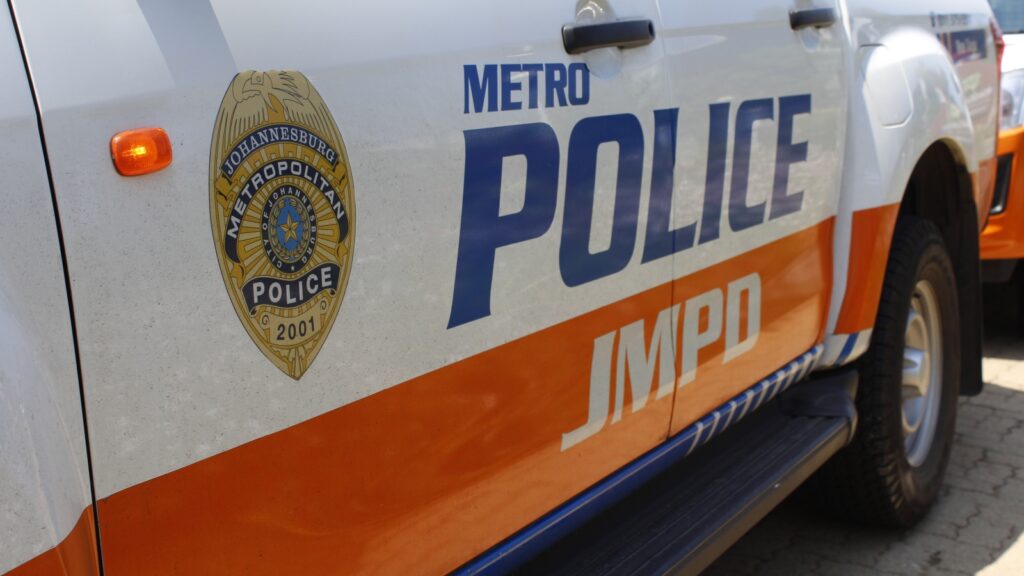
This means that video footage showing a crime taking place in a public area can no longer be shared on social media or other online platforms, as it must now be supplied directly to the Johannesburg Metro Police Department for investigation.
Opponents of the new bylaw claim that it is far too broad in its application, as it is not merely limited to fixed closed circuit television (CCTV) cameras.
Section 2 of the legislation states that the provisions apply to all CCTV and mobile cameras in the metro.
Furthermore, it states that temporary installations of a CCTV camera or system on city land or infrastructure are prohibited, including if used on a trailer or vehicle adapted to be a “roving CCTV camera.”
Other surveillance equipment covered by the bylaw includes:
- Body Worn Video
- Unmanned Aerial Systems
- Automatic Number Plate Recognition
- Other systems that capture information of identifiable individuals or information relating to individuals
Based on these broad definitions, even a smartphone camera or dashcam could be considered a form of surveillance device.
This has raised concerns that individuals can now get in trouble for sharing footage captured from these devices if it depicts a crime.
For example, it may be illegal for a person to use their dashcam to record and publish a video showing a traffic officer asking for a bribe.
Legal troubles
Outa is pushing to have the bylaw overturned for several reasons, including:
- A lack of rationality
- A lack of public participation
- Conflict with section 156 of the Constitution regarding the powers of municipalities
- Infringement of the constitutional rights to property, privacy, and freedom and security
“Given the extent and impact of the bylaw, it appears that limited public participation took place, alternatively, that there was insufficient community participation,” said Outa’s executive director for the accountability division, Stefanie Fick.
“The City of Johannesburg may regulate its own CCTV camera systems as it deems fit, but it exceeds its powers by directly interfering with private property rights.”
Fick argued that the municipality is usurping police functions by commandeering private CCTV systems and overstepping its executive and legislative authority.
Outa’s stance is that the metro’s registration process is irrational, cumbersome, and unimplementable. It requires prior written approval from the municipality before installing, using, or upgrading CCTV cameras.
Residents with CCTV systems must also provide the metro with plans and motivations for their camera systems, get sign-off from a registered engineer, reapply annually, and pay fees to the metro, according to MyBroadband.
Fick condemned the bylaw as little more than a “scheme to secure additional revenue for the City of Johannesburg, which is financially crippled.”
Another vocal critic isthe anti-crime activist Yusuf Abramjee, who alleged that there is likely an ulterior motive behind the legislation.
“This new bylaw is here totally because social media has made the state’s failures in curbing crime too visible,” he said.
“I post hundreds of crime videos each month. If it weren’t for social media users like myself, residents would have no idea about the extent of crime in our country.”
Security companies have also taken issue with the bylaw, arguing that there have been many instances where criminals were only caught as a result of people sharing security footage from their cameras.





 Loading ...