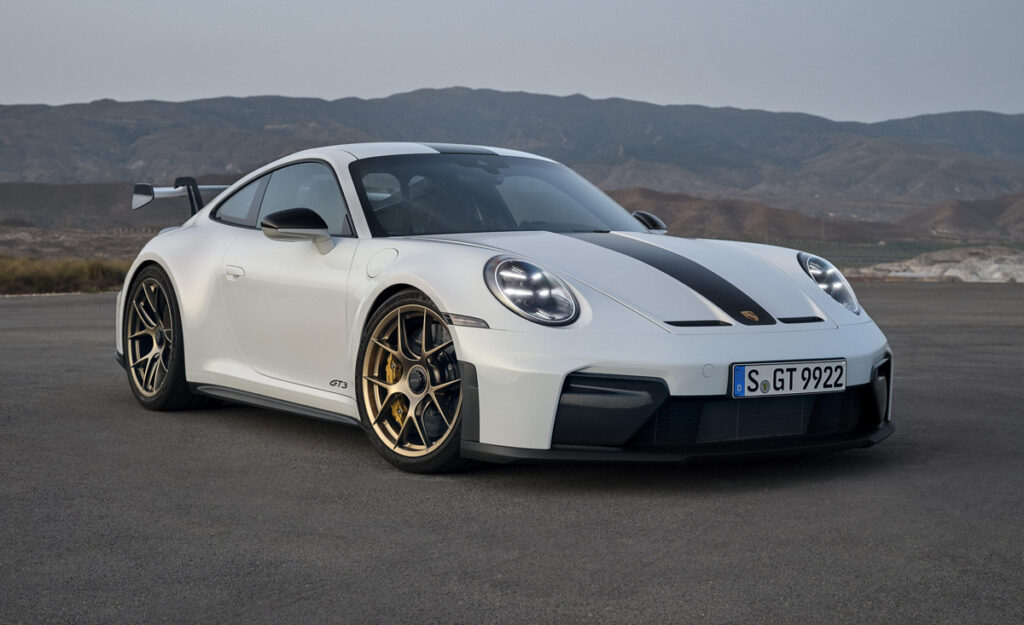
Volkswagen lowered its financial outlook for the year, with the escalating cost of President Donald Trump’s tariffs weighing on earnings at the Audi and Porsche brands.
The automaker now sees an operating return on sales as low as 4%, from at least 5.5% previously, after the US duties added €1.3 billion ($1.53 billion) in costs during the first half.
Volkswagen also cited internal restructuring expenses and greater sales of lower-margin electric vehicles for the forecast change.
Europe’s largest carmaker is under pressure to cut costs and improve its products to deal with crises in three key markets.
Trump’s levies are eating into sales and earnings for import-dependent Audi and Porsche, while muted demand and high production costs weigh on profits in Europe.
Volkswagen also is losing market share in China, where consumers increasingly opt for local brands.
Volkswagen now sees flat revenue for the year, from 5% growth previously, and also reduced its outlook for free cash flow.
The lower end of its forecast assumes the 27.5% US tariffs will stick in the second half, while the upper end foresees the levies being reduced to 10%.

The German manufacturer isn’t alone in facing challenges: Some of its peers are dealing with tumult in top management, with Stellantis having recently named a new chief executive officer and Renault seeking a permanent CEO.
Volkswagen is counting on partnerships with Rivian Automotive in the US and China’s Xpeng to bolster its products, though new models from those efforts won’t be available until next year.
Volkswagen’s trucking business Traton SE late Thursday cut its outlook due to the trade hurdles as well as weak economic growth in Europe and declining orders in Brazil.
The unit’s adjusted operating result slumped 29% in the second quarter.
There were some bright spots. The namesake VW brand has seen EV sales rise in Europe in recent months thanks to rebating and buyers increasingly shunning Tesla over Elon Musk’s political activities.
Volkswagen’s group-wide EV deliveries rose 73% in the region in the second quarter, driven by robust demand for models including the VW ID.5, the Audi Q4 e-tron and the Skoda Enyaq.


 Loading ...
-facelift-2-2025.10.webp)