


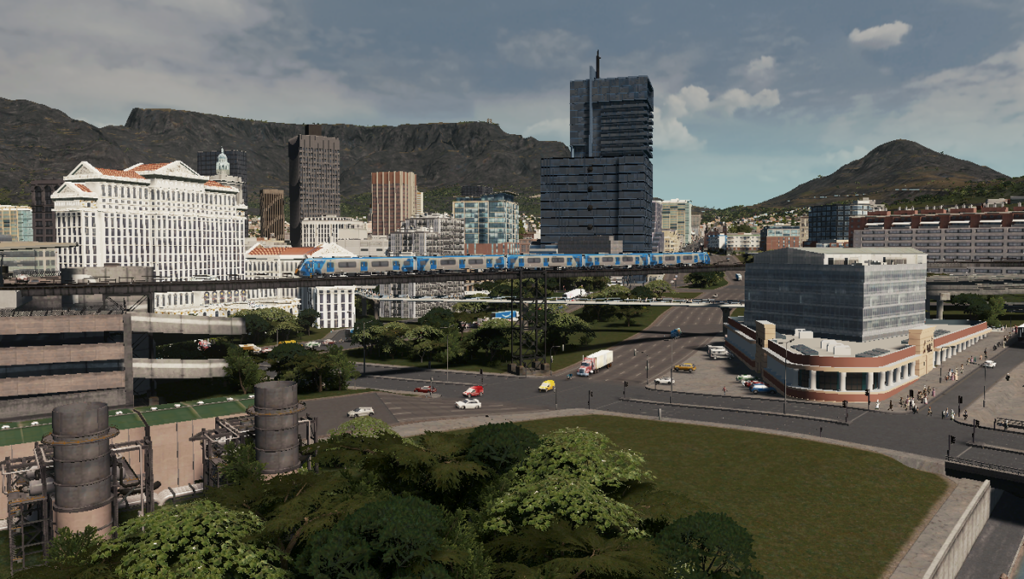
The City of Cape Town’s plan to repurpose land in Three Anchor Bay is currently open to a public participation process, allowing citizens to comment on how the land should be used.
The city-owned piece of land is located just outside the boundary of the Green Point Common and is estimated to be worth around R700 million.
The 4.5 hectare area was previously earmarked for affordable housing; however, the city’s management has opened the Three Anchor Bay for “mixed-use development,” allowing private developers to submit their proposals on how the land should be used.
One of these proponents is Gareth Ramsay, a South African development engineer advocating for the creation of a new “sky train” in Cape Town.
Ramsay’s plan is to use the Three Anchor Bay site as one of the end points for a new elevated railway, which will run from Sea Point to Woodstock through the CBD.
“The city aims to increase jobs and investment in the Cape Town economy through the sale of this piece of land for mixed-use development, which it says will include a significant portion of “affordable housing” to the residents of Cape Town,” he said.
“But what if there were another solution? A solution that will provide more increased, equitable access to this historically exclusive part of the city than any amount of affordable housing ever could?”
Ramsay claims that the sky train would create new jobs while providing an affordable transport solution that could help to reduce Cape Town’s infamous traffic problems.
“[The sky train project] proposes that a portion of this Three Anchor Bay Mixed-use Development site be used for a train terminus connecting an elevated train line from Woodstock to Sea Point via the unfinished foreshore freeways, with new train stations at the Cape Town International Convention Center and Cape Town Stadium.”
The alternative would be finishing construction of the incomplete foreshore freeway, which Ramsay argues would create a visual eyesore while failing to meaningfully reduce congestion in the area.
The sky train, on the other hand, would improve access to Sea Point, Cape Town Stadium, the V&A Waterfront, and Cape Town International Convention Centre (CTICC) while reducing road traffic.
Citizens who wish to show their support for the project are encouraged to submit their public participation comments on the City of Cape Town’s website, which you can access using this underlined link.
Important to note: the window to submit comments closes on 25 August 2025.
The route the Sky Train will use
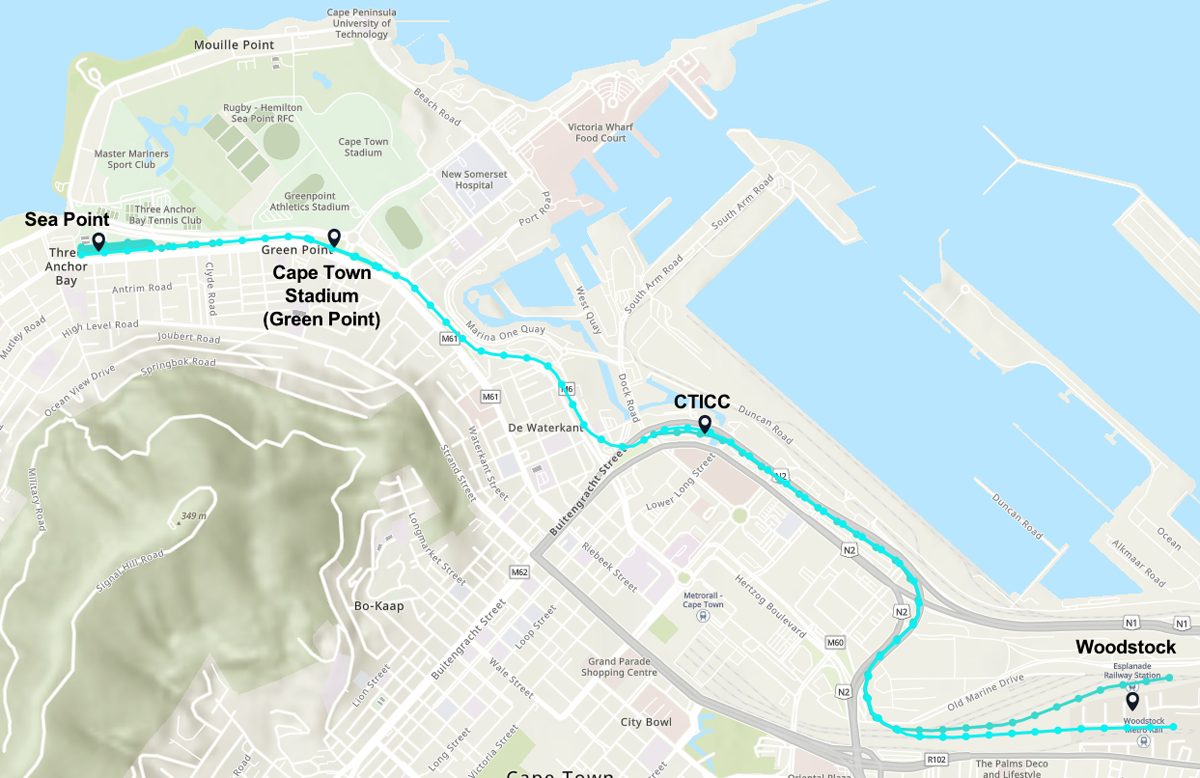
The proposed elevated railway features four stops, including the points at the beginning and end of the line.
Starting in Woodstock, commuters will travel to the CCTIC in town before moving on to a station located right outside Cape Town Stadium in Green Point.
The final location is a station located at the Three Anchor Bay site in Sea Point.
Sections of the railway feature two lines to allow trains to travel in different directions simultaneously, while other sections use a single line that will let trains back and forth at timed intervals.
“This Cape Town Sky Train would enable the current plans for the expansion of the Waterfront at Granger Bay and densification of the Atlantic Seaboard area, without increasing congestion,” said Ramsay.
“The Cape Town Stadium Station would significantly enhance stadium event access and the spectator experience, with no further need to battle the traffic before and after major events and the inconvenience this causes residents of the area.”
He added that the service would be a boon to tourism in the area.
“The CTICC station would support the City’s goal of making Cape Town the destination of choice for major conventions, exhibitions and conferences and with a link to the Cape Town Cruise Terminal it could also reduce congestion during the embarking and disembarking of cruise ships during the cruise season.”
The train will work in tandem with the MyCiti bus service, serving as a last-mile transport solution for commuters.
“Imagine a public transport system so efficient and reliable that even the wealthy choose it over private cars – helping to fund and subsidise broader access and opportunity for all. When mobility is excellent for everyone, equity follows,” said Ramsay.
“A developed country is not a place where the poor have cars. It’s where the rich use public transportation.”
All 3D image models and illustrations featured in this article were created by JetJunky Builds Real World Cities.



 Loading ...
-facelift-2-2025.10.webp)

