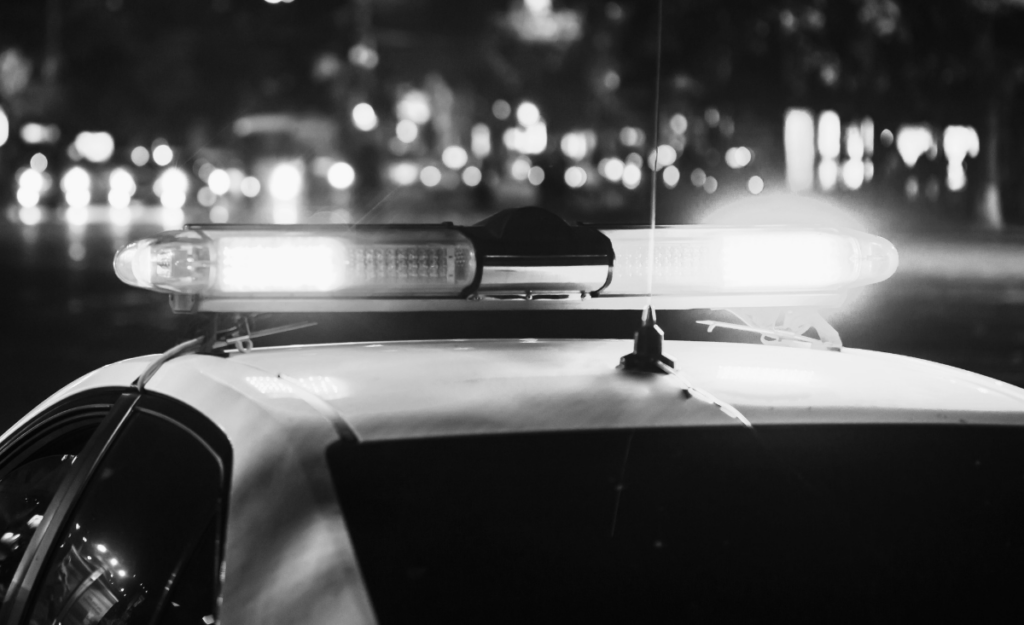
Cars fitted with white flashing lights are becoming increasingly common on South African roads; however, motorists are not obligated to give way to them.
A recent analysis from MyBroadband found a clear uptick in unmarked vehicles with strobing lights between their windscreens and dashboards on the roads over the last few weeks.
The unmarked vehicles frequently speed on major highways and flash their high beams at other vehicles to move out of their way.
Rob Handfield-Jones, managing director of Driving.co.za, corroborated this observation, saying that the use of white lights on private vehicles was getting out of hand.
A key concern over this trend is that these vehicles generally don’t feature any marking or branding that would indicate a specific purpose, and their number plates aren’t the type used by government officials, police, or diplomats.
This is important, as South Africa’s National Road Traffic Act does allow vehicles to be equipped with white lights, but only if they are driven by security officers while rendering security services.
These vehicles must be owned by a body (company or organisation) or a person registered under the Security Officers Act, 1987.
The lights used by these vehicles also feature strict regulations in terms of placement and type – including prohibiting strobing or rotating lights.
Below are the specific requirements for where the lights must be placed:
- They must be at equal distances from the back-to-front centre-line of the motor vehicle and as near as possible to, but not more than 500 millimetres from, the outer edge of the front or rear of the motor vehicle.
- The lights must be mounted to be visible from the front and rear, anywhere within an angle of 15 degrees inside and 45 degrees outside of a line parallel to the back-to-front centre line and which passes through the centre of the illuminated area of the indicator.
The vehicle must also have the word “security” illuminated by a white light and the vehicle owner’s name in black letters in clear view to other drivers.
This essential means that putting white flashing lights on a vehicle’s dashboard is not legal, and therefore, many motorists are actively breaking the law.
One reason is that it’s easy to turn off and hide such lights when approaching a police roadblock.
The importance of white lights
While motorists aren’t required to make way for any vehicle using white lights, legally or otherwise, it should be noted that, sometimes, moving is advisable.
Private security companies play a major role in South Africa, and yielding to them could be considered a common courtesy.
Motorists are only legally required to make way for vehicles with blue, red, or green lights, which are designated for emergency services.
Blue lights can only be used by the South African Police Service, metro police, traffic police, and South African Defence Force vehicles rendering support to law enforcement, while red lights are reserved for ambulances, firefighting vehicles, and rescue services.
Green lights are less common and represent disaster management vehicles.
These official vehicles will also be outfitted with audible sirens to alert drivers to their presence.
Such sirens are another illegal feature for private vehicles, even those used by security companies.



 Loading ...
-facelift-2-2025.10.webp)
-2025.11.webp)