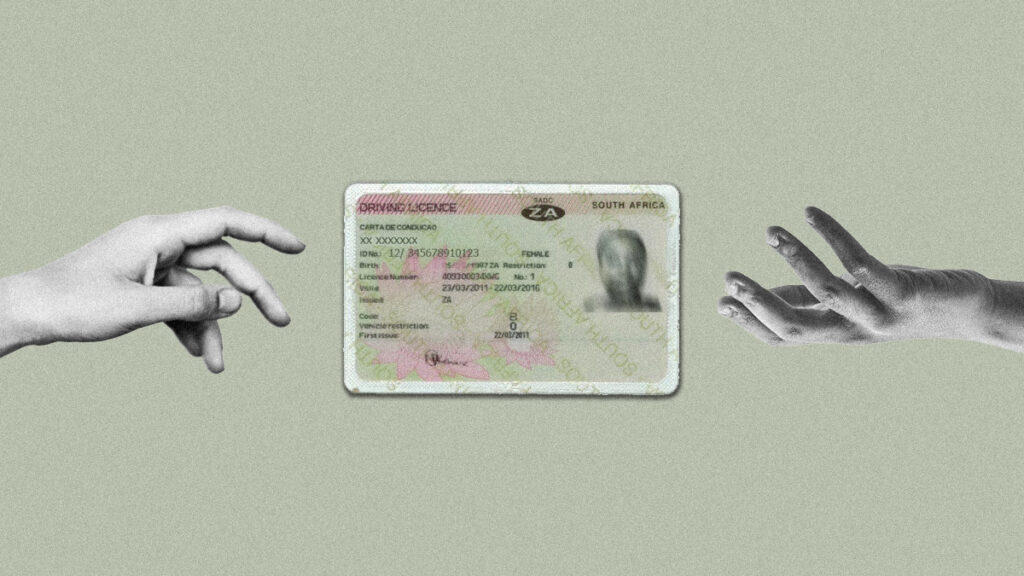
The government is likely to face a widespread driver’s licence boycott if it fails to address the issues surrounding licence renewals in South Africa.
Afriforum recently warned that the Department of Transport could see a spike in non-compliance with driver’s licences, similar to what has been observed with e-tolls and TV licences.
In a official statement, campaign officer Louis Boshoff argued the government cannot continue to make driving licence renewals mandatory if it makes it difficult to comply with the obligation.
He noted that by August 2025, three months after the country’s only card printer resumed operations following its latest breakdown, the licence backlog was still over 500,000.
The printer last broke down in early 2025 and was only restored on 8 May, leading to a backlog of renewal applications that peaked at roughly 750,000 cards.
South Africa’s one and only printer is notoriously old and unreliable. It has broken down several times in the last few years, creating backlogs that took months to clear.
When this happens, thousands of motorists are left without a valid licence for several weeks.
These individuals are still on the hook if stopped by law enforcement, too, as drivers are expected to always carry a valid licence or proof of application.
Workarounds like a cellphone photo or printed photocopy are not considered valid alternatives, and road users can be fined R500 for failing to produce a licence.
“History teaches us that civil non-compliance occurs when unreasonable obligations are imposed by the government. Just look at what happened with e-tolls and TV licences,” said Boshoff.
E-tolls and TV licences set a precedent

The South African Broadcasting Corporation (SABC’s) TV licence scheme has failed due to a high non-compliance rate from holders who refuse to pay their annual fees.
This has created significant problems for the public broadcaster, which is still trying to finalise a new funding model to replace the disastrous TV licence scheme.
Intentional payment avoidance from licence holders reached 86% by the end of the 2023/24 financial year, leading to a R4.3-billion loss for the SABC.
The true non-compliance rate is even higher, as this figure only represents licence holders who refuse to pay, and does not include those who own TVs but don’t have a licence.
TV licence fee dodging has gained significant traction in the last few years, as illustrated below:
- 2019 — 69%
- 2020 — 81%
- 2021 — 82%
- 2022 — 82%
- 2023 — 84%
- 2024 — 86%
E-tolls experienced a similar boycott, as the majority of Gauteng motorists refused to comply with a system they saw as yet another unreasonable tax.
The e-toll scheme was heavily criticised by the public and civil groups like the Organisation Undoing Tax Abuse, which called on private motorists and businesses to not pay their e-toll bills.
These acts of civil disobedience were ultimately successful, as the much-loathed system was officially shut down in April 2024.





 Loading ...
-facelift-2-2025.10.webp)
-2025.11.webp)