Great news about South Africa’s new digital driver’s licences


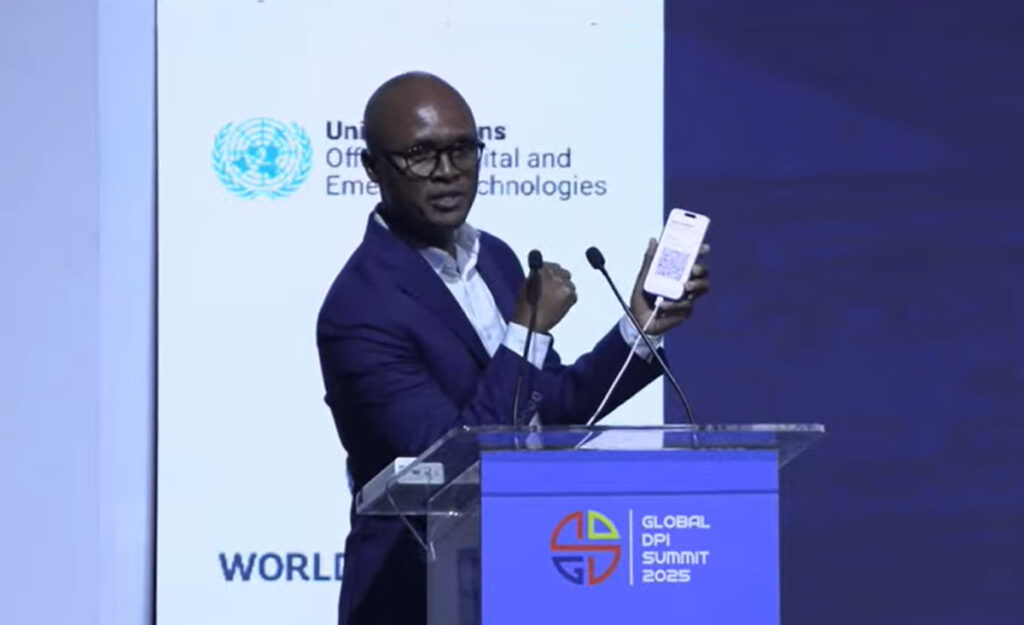
Minister of Communications and Digital Technologies of South Africa Solly Malatsi showed off the new digital driver’s licence renewal process during his opening speech at the Global DPI Summit this week.
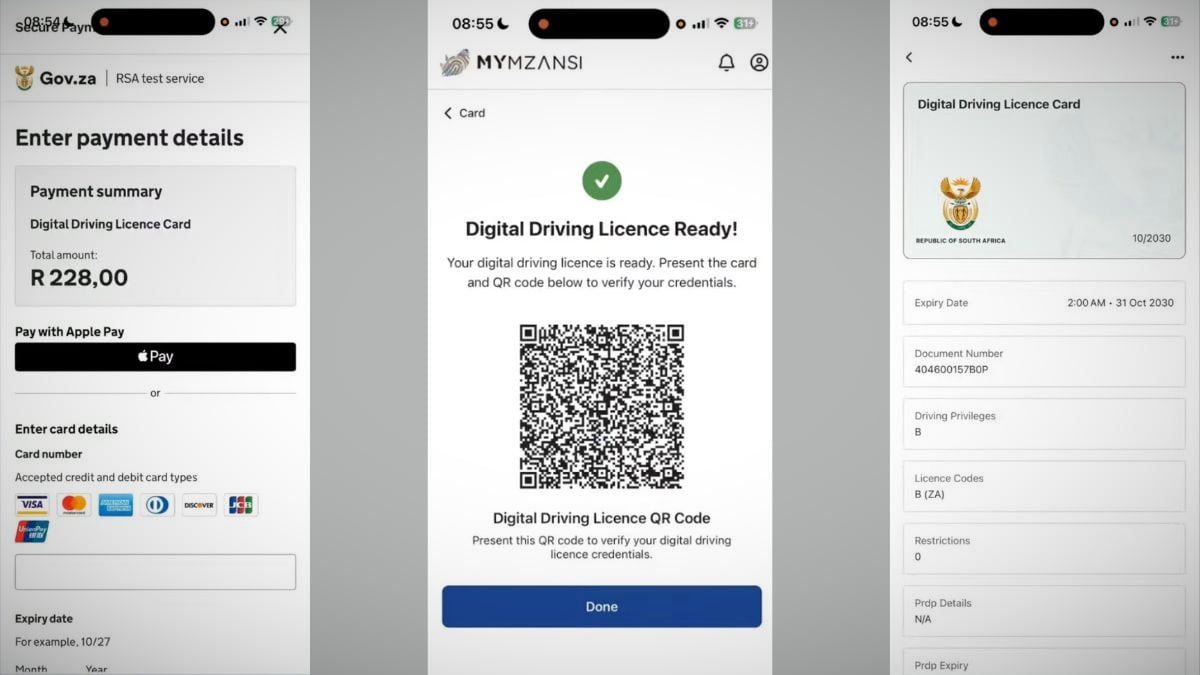
The live demonstration showcased a working prototype of the new MyMzanzi smartphone app, which the government intends to expand across multiple services in South Africa.
Malatsi said during the event that the app will enable citizens to easily access a variety of government services.
“Today I opened the Global DPI Summit with a live demo of the MyMzansi working prototype — South Africa’s one-stop, zero-rated platform for government services.”
“We showed how a driver’s licence renewal can be completed in minutes: credentials verified, details updated, steps processed, and a digital licence displayed — all connected to existing national systems.”
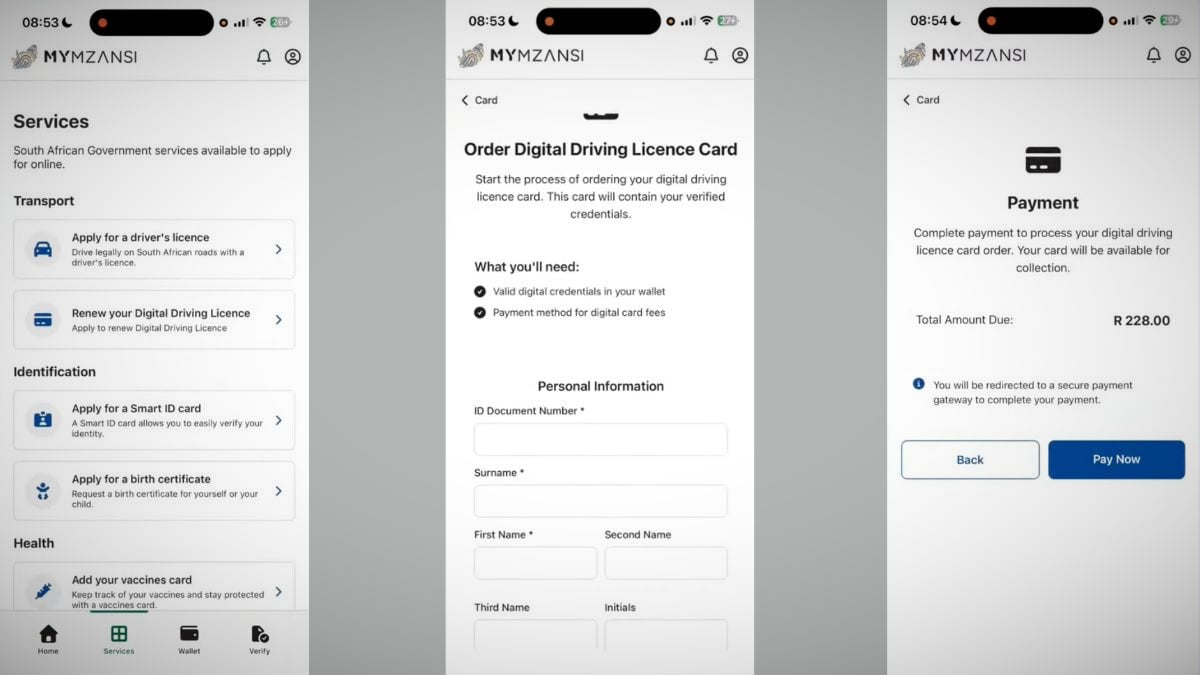
The process of renewing a licence starts by opening the MyMzanzi app’s digital wallet, which takes users directly to their digital driver’s licence card.
“It has all the credentials, including the names, the card number, and in there, it will also have the category of the licence, including whether you’ve got any traffic fines or not,” said Malatsi.
Users can select an option to renew their digital licence, which takes them to a form where they must fill out their ID number, names, and contact information.
They are also required to digitally sign the form and take a photo of themselves for verification purposes.
All of this is done in-app, and after completing the form, users are taken to a payment page where they can submit their details and pay the fee through a secure portal.
The payment options listed included debit and credit cards like Visa, Mastercard, and American Express.
Notably, it also supported Apple Pay, though it is unclear whether the app will support other forms of e-wallets, as the demonstration was done on an iPhone.
Once payment is concluded, the app flashes a message onscreen that reads “Success. Payment completed successfully! Your digital card has been added to your wallet.”
The digital driver’s licence includes a QR code, which traffic officers can scan to check whether the licence is legitimate.
“Indeed, it works, and the South African legend of being asked for a cold drink on the spot will not prevail in this regard because it will be digitally verified that your licence is in compliance,” said Malatsi.
The minister added that the MyMzansi app will integrate with the Department of Transport and Natis to verify drivers’ licences.
You can watch the demonstration on YouTube using this link.
The driver’s licence demo begins two hours into the presentation.
Doubts over new digital driver’s licences
World Wide Worx CEO and technology sector analyst Arthur Goldstuck has expressed his concern over the digital licences, arguing that the country must first deal with various technological, social, governmental, and security hurdles.
“We’re definitely not there yet,” he said. “If you have ever been to Home Affairs and seen how often their computers are down, you can see the issues lurking.”
While smartphone adoption is has become widespread in South Africa, many communities still lack reliable network coverage.
“The single most important thing is going to be security. We need strong encryption, biometric verification, and systems that can work offline as well. That’s quite a challenge,” said Goldstuck.
“For that, we need best practice, not best connections with the government when they award the tenders. If the contracts go to the wrong vendors, we’ll end up with weak systems and wasted money.”
Illustrating his point, Goldstuck mentioned that many of the countries that have adopted digital licences, such as Singapore, South Korea, and Denmark, all have advanced, developed infrastructure.
“Already they have robust systems in place for all kinds of digital services, and on top of that, you’re able to effect the rollout of a digital driver’s licence.”
The Driving Licence Card Account (DLCA), the entity responsible for producing the nation’s licence cards, has set distant targets for the implementation of the digital licences.
In its latest Annual Performance Plan, the DLCA only set performance targets for the project for 2026/2027, listing an output indicator for the “percentage of new card implementation.”
It targets 25% implementation by 2026/27 and 75% implementation by 2027/28.





 Loading ...
-facelift-2-2025.10.webp)
-2025.11.webp)