


Toyota Motor’s Lexus brand is putting a bow on a record year in the US, with some customers waiting months for its newest SUV.
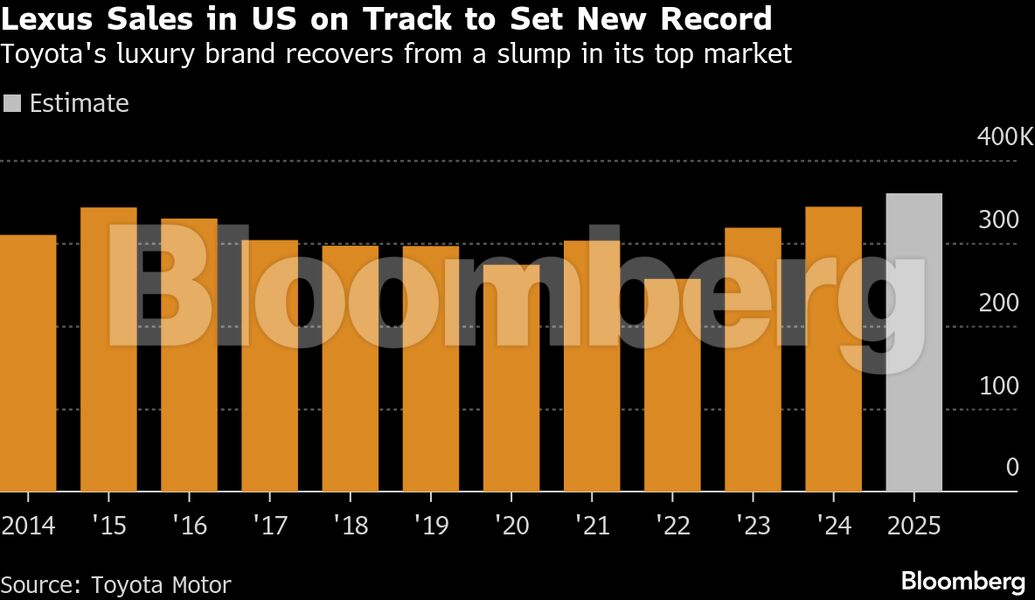
The Japanese automaker expects 2025 deliveries to grow about 5% to more than 360,000 vehicles, led by its perennially best-selling RX midsize SUV. Toyota and many other automakers will report US sales results on Jan. 5.
The breakout year for Lexus — a contender for the top luxury nameplate in the US — is largely a result of an expanded range of crossovers and SUVs, which now account for more than 80% of its volume.
“They’ve filled out all the white spaces with their range of crossovers and SUVs,” said Sam Fiorani, an analyst at consulting firm AutoForecast Solutions.
“Lexus has everything from small-to-large in both car-based and truck-based vehicles.”
The boom has become that much more remarkable given many Lexus vehicles are shipped from Japan, making them subject to the Trump administration’s tariffs on imports.
It’s the kind of turnaround that was hard to foresee a few years ago, when Lexus was struggling through a slump rooted in a tired product lineup and lack of features sought after by younger buyers.
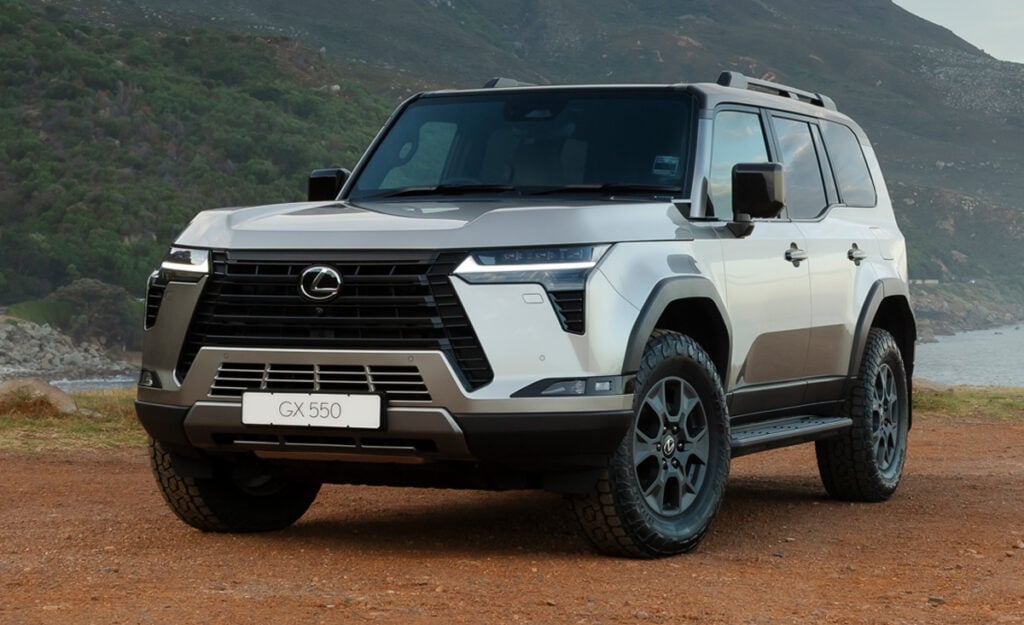
Take Brock Johndro, 28, a pharmacy district manager in Charleston, South Carolina. Johndro said he called a half dozen dealers in search of an Atomic Silver-hued Lexus GX after learning the nearest showroom had dozens of buyers awaiting deliveries.
He found one online in Rockville, Maryland, and swiftly placed a deposit, agreeing to pay the dealer sticker price.
“These cars are really, really hard to find,” he said of his $88,000 purchase in early December. “I flew 500 miles one-way to get it.”
Cody Goodman, General Sales Manager at Hendrick Lexus in Charleston, said buyers vastly outnumber his GX inventory. “We just can’t keep up with demand,” he said.
Lexus still faces challenges. Limits on Toyota’s production capacity could crimp sales volumes. And the luxurification of mass-market brands means features once only available on pricier upscale models — like leather-wrapped steering wheels, panoramic sun roofs and ventilated seats — are now offered as options on non-luxury vehicles such as the Camry and RAV4.
Lexus also may undergo a dilution of its own high-end image with the debut of Toyota’s super-premium Century brand, which will sit atop the global lineup of the world’s largest carmaker.
Kid-Hauler SUV
Toyota factories already are straining to increase production of an all-new kid-hauler SUV called the TX and an updated version of the more rugged GX model.
Supplies of the Japan-made GX, which underwent its first full model change in nearly 15 years in 2024 alongside the Toyota 4Runner, were running at less than three days’ supply nationally as of late December.
“Capacity has continued to be a challenge and most of, if not all of, our plants are operating at peak capacity,” Dejuan Ross, a group vice president in charge of Lexus sales in the US, said in an interview.
Lexus also is benefiting from a growing selection of gas-electric hybrids, which are surging in popularity even as sales of fully electric cars have stalled.
While other luxury brands went all-in on EVs, Toyota has pursued a “multi-pathway” approach offering a variety of options, including gas-only models, hybrids and a handful of battery-electrics.
That’s given it a leg up over rivals, with hybrid and other electrified vehicles now accounting for nearly half of all Toyota and Lexus brand sales in the US.
In the first half of 2025, Lexus managed to outsell BMW in the US, albeit by only a few hundred vehicles. Lexus executives view the 350,000-vehicle sales threshold as a milestone, but not a high water mark.
“That’ll be our new floor moving forward as long as, obviously, the industry continues to remain strong,” Ross said.
Five years ago, Lexus faced a mid-life crisis in the US as it suffered from sliding market share, flat sales and an aging lineup.
Some models had outdated styling and others lacked creature comforts such as large touchscreen displays.
In a market rapidly shifting to all-wheel drive crossovers and truck-based SUVs, it still had six Lexus sedans vying for buyers.
As part of a fleet makeover, Toyota killed off a midsized sedan known as the Lexus GS in 2020.
In September, it announced the demise of the flagship LS, marking the end of an era dating from the brand’s debut in 1989.
Toyota also is moving production of the Lexus ES sedan from a plant in Kentucky back to a factory in Japan as US sales volumes dwindle.
Meanwhile, a stop-gap effort to cram a third-row into its mainstay RX model failed to impress American buyers and was discontinued in 2022.
That set the stage for the debut the following year of the larger, US-built TX, which seats as many as eight with cargo room to spare.
It’s become something of a surprise hit, with more than 50,000 deliveries in 2025.
While the portly TX has eaten into sales of the similar-class RX, it’s also brought new buyers to the brand — and kept others from leaving it.
Doug Ebner, general sales manager at Earnhardt Lexus in Phoenix, Arizona, said the SUV has been a much-needed addition.
“The people that we were losing to a Cadillac Escalade, we’re now recapturing with the TX,” he said.





 Loading ...