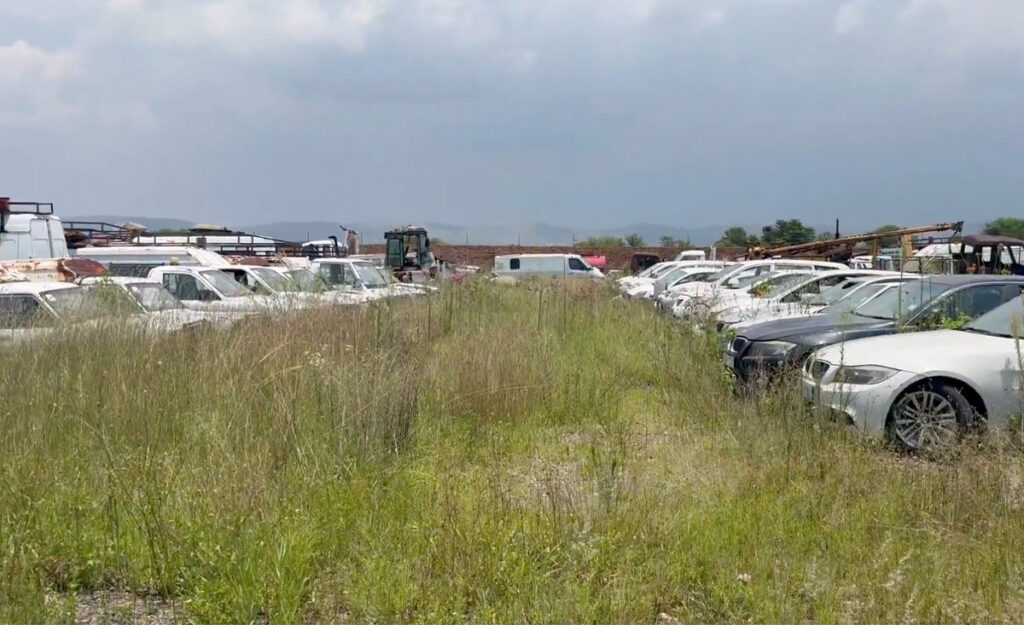
In an attempt to increase municipal revenue, the City of Tshwane will look to auction off approximately 800 outdated municipal fleet vehicles.
The auction does not yet have a confirmed date, but Tshwane mayor Dr Nasiphi Moya has announced that the date has been tentatively set for 28 February 2026.
Bidding will take place through an online auction, with the value of the vehicles to be determined by the auctioneer, who will assess their condition and market demand.
According to Kholofelo Morodi, a Member of the Mayoral Committee for Corporate and Shared Services, the vehicles have reached their optimal economic life cycle.
The vehicles expected to go under the hammer are largely aged, high-mileage units, and have no further purpose in the city.
The MMC said a combination of extended vehicle retention, budgetary pressure and the need to prioritise frontline service delivery led to the decision to keep certain vehicles beyond their recommended replacement periods.
“Many are either no longer operational or require frequent and costly repairs, making them unsuitable for reliable service delivery,” she stated.
Due to the rising maintenance costs of these ageing vehicles, the City of Tshwane has made the call to dispose of the cars in a way that allows for revenue generation.
Dr Moya reiterated this, saying, “These vehicles are too expensive for the city to keep.”
“Instead of leaving them stationed at our various depots, we will make them available to the secondhand goods market.”
Morodi noted that the revenue generated from this auction will be paid into the City’s revenue stream.
She explained that it will be managed from there in accordance with the approved municipal framework.
The revenue generated will be utilised in projects supporting broader service delivery priorities, which will be determined by the City’s budgeting and planning processes.
According to Morodi, the auctioning and replacement of the aged vehicles will not negatively affect municipal operations or service delivery.
She also clarified that over the last six financial years, a Fleet Strategy has been implemented to achieve just that.
“A Fleet Strategy has been implemented that prioritises the replacement of vehicles through outright purchases that include warranties and maintenance plans,” Morodi explained.
She added that most of the vehicles that have been earmarked for disposal have already been replaced using the Fleet Strategy’s processes, which ensures ongoing service delivery.
According to the municipality, it has selected cost-effective and fuel-efficient vehicles as replacements.
These vehicles are fit-for-purpose, and their purchase includes maintenance plans, which the municipality believes will reduce long-term operating costs.
“To prevent a recurrence of similar challenges in future, the City has strengthened its fleet governance framework,” the MMC said.
“This includes lifecycle-based replacement planning, enhanced preventative maintenance programmes, improved asset tracking and utilisation monitoring, and regular condition assessments and reporting.”
Not the first to do it
The City of Tshwane is not the first to use such an auction for revenue generation, and it certainly won’t be the last.
As recently as June last year, the eThekwini Metropolitan Municipality in Durban hosted several online auctions and generated nearly R20 million in revenue.
“The City’s auction team has raised over R100 million from 15 online auctions over the past two financial years,” the KwaZulu-Natal municipality said in a statement.
During its 2025 auction, this municipality put 327 vehicles under the hammer, alongside other lots of assets.
The eThekwini Municipality was able to sell a large portion of its auction vehicles at over 80% of their reserved recommended prices.
In 2024, the Ekurhuleni Municipality hosted an on-site auction of several of its fleet and construction vehicles, also for the purpose of revenue generation.


 Loading ...
-facelift-2-2025.10.webp)
-2025.11.webp)