Wake-up call for children’s transport safety in South Africa


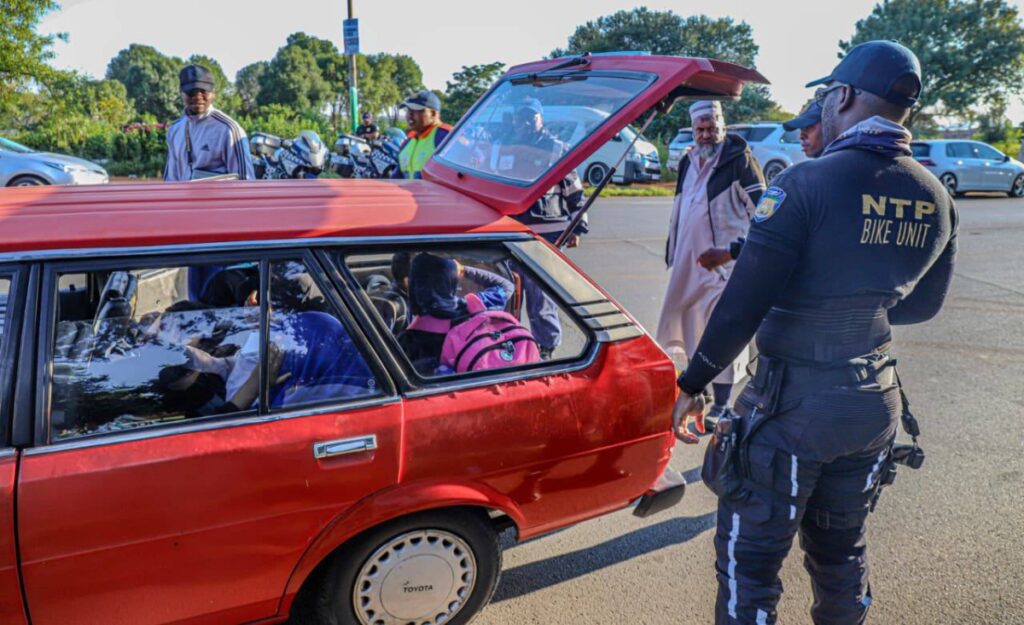
After Monday’s horror crash in Vanderbijlpark that claimed the lives of fourteen learners on their way to school, calls are mounting from nearly every department and stakeholder, demanding scholar transport reform.
The driver of the scholar transport vehicle, 22-year-old Ayanda Dludla, appeared in the Vanderbijlpark Magistrate’s Court yesterday, facing 14 counts of murder and three counts of attempted murder.
He is also facing charges of driving without a valid professional permit and operating an unlicensed vehicle.
Since then, the Transport Department has been cracking down on scholar transport across several provinces, removing dozens of unroadworthy, unlicensed, and overloaded vehicles.
On Wednesday and Thursday, the Tshwane Metro Police Department Public Transport Unit impounded 20 minibuses for being unroadworthy and for drivers operating without the necessary licenses.
Yesterday, several local and national law enforcement agencies joined Transport Minister Barbara Creecy in Lenasia, where they intercepted 30 unroadworthy scholar transport vehicles.
Nationwide law enforcement agencies have adopted a zero-tolerance approach to scholar transport safety.
President Cyril Ramaphosa stated that it is unacceptable that young lives are put at risk as learners seek education and enrichment.
“We cannot let this tragedy pass. We need to act now, and we need to act together to ensure that scholar transport is safe and reliable,” he said.
Other calls for change came from the Democratic Alliance in KwaZulu-Natal, whose Spokesperson on Transport, Riona Gokool, called for stricter enforcement and oversight.
This includes ongoing, unannounced inspections by the provincial Department of Transport to address the serious safety failures within the learner transport system.
On the same day that the accident in Vanderbijlpark, the South African Human Rights Commission (SAHRC) released its findings on the failures within the North West scholar transport programme.
“The majority of scholar transport services are characterised by vehicle overloading, the use of unroadworthy and unsafe vehicles, frequent breakdowns, and late collection and delivery of learners,” the SAHRC declared.
Citizens online have called the government and its agencies reactive rather than proactive, as it took a major incident for reform to happen.
A complete overhaul on the cards

The Minister of Transport and her Deputy, Mkhuleko Hlengwa, instructed traffic law enforcement agencies, including the National Traffic Police, to intensify law enforcement with a focus on scholar transport.
They stressed that law enforcement operations must intensify their focus on overloading, roadworthiness and speeding.
The ministers highlighted that the lack of law enforcement operations on scholar transport has brought the country’s scholar transport service to its knees.
They also urged scholar transport operators, as well as buses and taxi associations, to “get their act together or face the full might of the law”.
According to Minister Creecy, the Traffic Department is in the final stages of reviewing the National Learner Transport Policy.
This policy aims to tackle crucial issues relating to the safety of and reliable access to scholar transportation.
The Chairperson of the Standing Committee on Appropriations, Dr Mmusi Maimane, highlighted the long-standing and systemic challenges experienced in scholar transport across the country.
“Through its oversight work, the committee repeatedly identified scholar transport as a critical weakness that undermines learners’ constitutional right to basic education and places their safety at unacceptable risks,” said Maimane.
He added that the committee is of the view that public funding of scholar transport is a critical and urgent matter that requires coordinated national intervention.
The committee called for urgent engagement between the Transport Department, Department of Basic Education, and Education MECs to address scholar transport provision, safety standards, funding and regulatory oversight.
“We must work together to find long-term, sustainable solutions that ensure learner transport is safe, dependable, properly regulated and adequately funded,” he said.
“If we fail to act with urgency, we risk more preventable tragedies like this one.”
The Chairperson of the Select Committee on Education, Sciences and the Creative Industries, Makhi Feni, said, “Police should be given full powers to handle criminality on our roads as it relates to driver behaviour.”



 Loading ...
-facelift-2-2025.10.webp)
-2025.11.webp)