How much it costs to convert your petrol car to electric in South Africa


South Africans looking for long-term relief from the uncertainty and instability of the local fuel prices and potential supply interruptions may look towards alternatives like retrofitting electric motors to their current vehicles.
This is not a new practice, especially not in South Africa, where universities have demonstrated in the past that it is possible, and private companies convert safari vehicles to be fully electric.
Electric Powered Vehicles Africa (EPVA), a Mpumalanga-based electric vehicle retrofitting company, specialises in converting safari vehicles from diesel to electric.
Alongside them, Stellenbosch University pioneered the first retrofit minibus taxi in South Africa to run on electricity.
These are not the only parties to do so, and the latest to join these is the University of Johannesburg (UJ), whose Centre for Automotive and Electric Vehicle Innovation (CAEVI) is leading the electric transition.
Dr Samuel Gqibani, the centre’s Director, told TopAuto that, along with fossil fuels’ negative environmental impact through their emissions, the war in the Middle East has highlighted how fragile petrol supply chains are.
He explained that the ultimate goal is for the centre to fully convert an internal combustion vehicle to a fully electric one.
“What is driving us is the fact that there are so many internal combustion vehicles on the road, and taxis alone make up around a quarter of a million,” Dr Gqibani explained.
“If we are looking at scrapping these, what happens to the owners who cannot afford to buy new electric vehicles (EVs)?”
He explains that the university is not saying that conversion is a cheap option, but rather that there is an opportunity to research it and how feasible retrofitting will be in the South African context.
The CAEVI is currently working on converting a tuk-tuk to be fully electric, involving students and experts from several departments coming together to develop the technology and components to rebuild and retrofit the vehicle.
Dr Gqibani says they aim to complete the conversion by October to gauge its viability.
How much it costs to convert to electric
While the university continues its research and determines the viability of retrofitting South Africa’s vehicles, there are some options already available to local motorists.
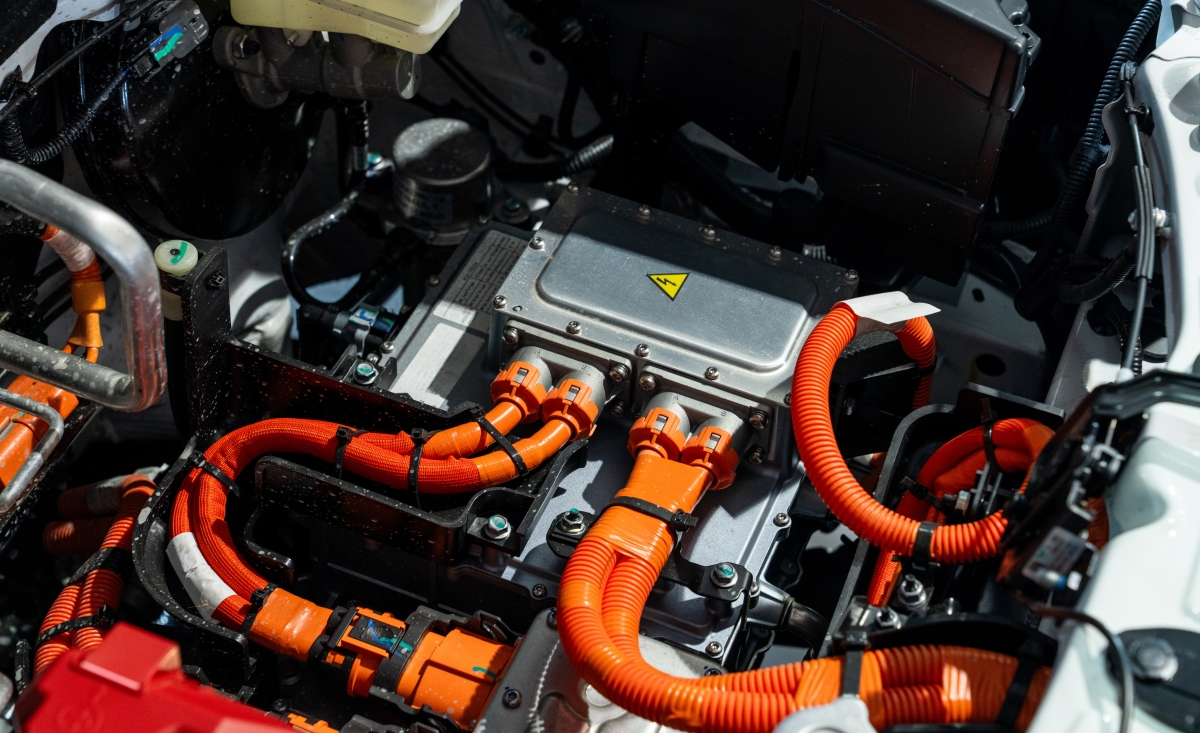
Global provider of high-performance EV components, Convert My Vehicle to Electric (CMVTE), which falls under the Green Motor Technology Group (GMT), provides motorists, including South Africans, with conversion kits.
Dr Kevin Wang, Managing Director and CEO at GMT, explains that the idea of owning an electric vehicle is appealing, yet often out of reach for car owners in South Africa.
“Rather than investing in prohibitively expensive new EVs, converting a beloved existing vehicle, or even a fleet, offers a pragmatic pathway to electric mobility,” he said.
Dr Wang noted that certain models that are popular in South Africa are already ideal candidates for retrofitting and conversion, due to their robust chassis, ample space for batteries, and widespread availability.
These include the Toyota Hilux and Corolla, VW Golf, and smaller, older bakkies like the Nissan NP200 and the Ford Bantam.
“South Africa’s EV charging infrastructure is growing, with an increasing number of public charging stations in major cities and along key routes,” he noted.
CMVTE provides three different conversion kits, ranging from $3,500 (around R60,00) to $7,000 (around R120,000), which do not include shipping and customs fees.
These kits also range from 15kW motors with 15kWh battery capacity to 40kW and 30kWh. Expert installation is also required, and can take up to ten days to complete.
While retrofitting and converting from internal combustion to EV may sound pricey, Dr Gqibani believes it remains a viable option for South Africa.
“In my view, we need to devise or derive our own approach when it comes to issues like this. As a country, we need to come up with our own solutions,” he mentioned.
“The sooner we establish businesses around EV conversion, the better, and if it is expensive, we need the government and policymakers to chip in with subsidies.”




 Loading ...