
9 popular cars that should be banned in South Africa – According to the AA


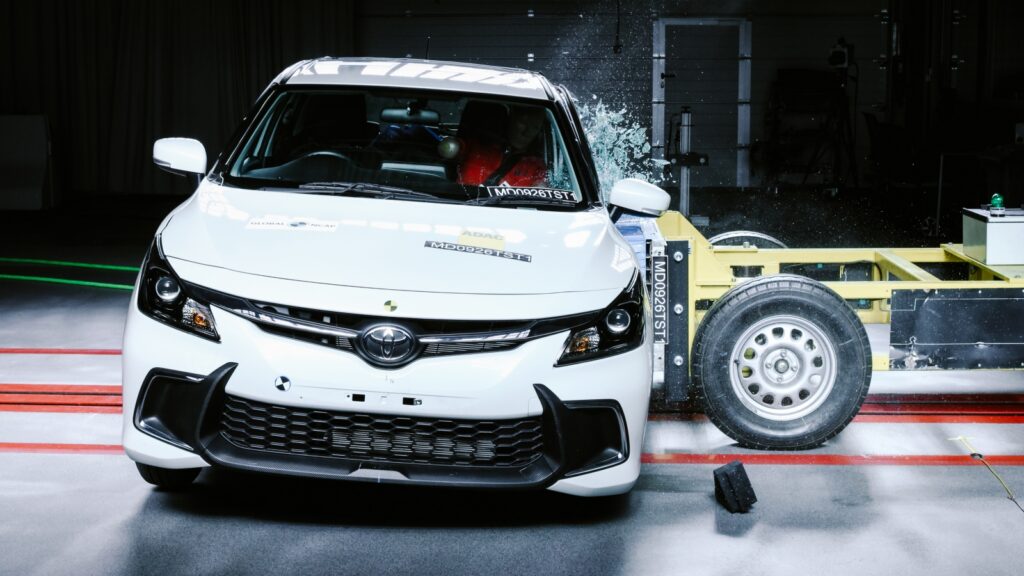
The Automobile Association of South Africa (AA) argues that all cars should include the bare minimum in terms of safety equipment in order to be sold in South Africa.
This includes electronic stability control (ESC) and a minimum of six airbags, particularly those meant to protect occupants from side collisions, which account for the majority of accidents.
If the AA’s viewpoint was enforced, nine of the country’s top 20 most popular vehicles, including the base versions of the VW Polo Vivo, Toyota Corolla Cross, and Chery Tiggo 4, would no longer be allowed in South Africa.
Most of the AA’s criticisms are targeted at entry-level vehicles, as these tend to offer less safety equipment as standard, only including features like two front airbags, anti-lock brakes (ABS), and seatbelts.
The association challenged the idea that additional airbags and other basic safety features could be reserved for more expensive trim levels.
It highlighted that cars sold in African countries are held to a lower standard than those sold in other markets, with fewer safety features than equivalent models in regions like the European Union.
“Safety should never be an optional extra, and certainly not reserved for markets outside Africa,” it said.
“The AA believes no vehicle should be sold here without side head protection for front and rear rows.”
The group clarified that it does not expect all cars to feature Advanced Driver Assistance Systems (ADAS), such as adaptive cruise control, lane-keep assist, or blind-spot detection.
It considers these features “nice to haves” because they can assist drivers but are quite expensive and non-essential for protecting occupants in a crash.
In contrast, the AA said that ESC and side protection are essential to improve the car’s control and occupant protection.
Popular cars that fail the AA’s standards

TopAuto looked at the top 20 best-selling cars in South Africa in May 2026 to see which models would no longer be allowed if South Africa’s vehicle safety laws were updated to reflect the AA’s views.
We checked whether the entry-level units of each vehicle came with ESC and six airbags as standard.
For the bakkies, we specifically looked at the double-cab options because they are more relevant to private motorists.
These were the results:
| Model | Minimum of 6 airbags | Electronic stability control | Pass / Banned |
|---|---|---|---|
| Toyota Hilux Double Cab | Yes | Yes | Pass |
| VW Polo Vivo | No | Yes | Banned |
| Ford Ranger Double Cab | Yes | Yes | Pass |
| Chery Tiggo 4 | No | Yes | Banned |
| Hyundai Grand i10 | No | No | Banned |
| Suzuki Swift | Yes | Yes | Pass |
| Haval Jolion City | No | Yes | Banned |
| Toyota Corolla Cross | No | Yes | Banned |
| Suzuki Fronx | Yes | Yes | Pass |
| Jetour T2 | Yes | Yes | Pass |
| Isuzu D-Max Double Cab | No | Yes | Banned |
| Toyota Starlet | Yes | Yes | Pass |
| Toyota Starlet Cross | Yes | Yes | Pass |
| Toyota Vitz | Yes | Yes | Pass |
| Omoda C5 | No | Yes | Banned |
| Suzuki Ertiga | Yes | Yes | Pass |
| VW Polo | Yes | Yes | Pass |
| Kia Sonet | No | Yes | Banned |
| GWM P-Series Double Cab | No | Yes | Banned |
| Toyota Rumion | Yes | Yes | Pass |
Nine out of the 20 vehicles on the list failed to meet the AA’s safety expectations.
While side airbags are available as a paid extra or as a feature on the more expensive trim levels, they are not included as standard on the base models.
Only one car, the Hyundai Grand i10, did not include ESC as standard.
Airbags and ESC are only the beginning
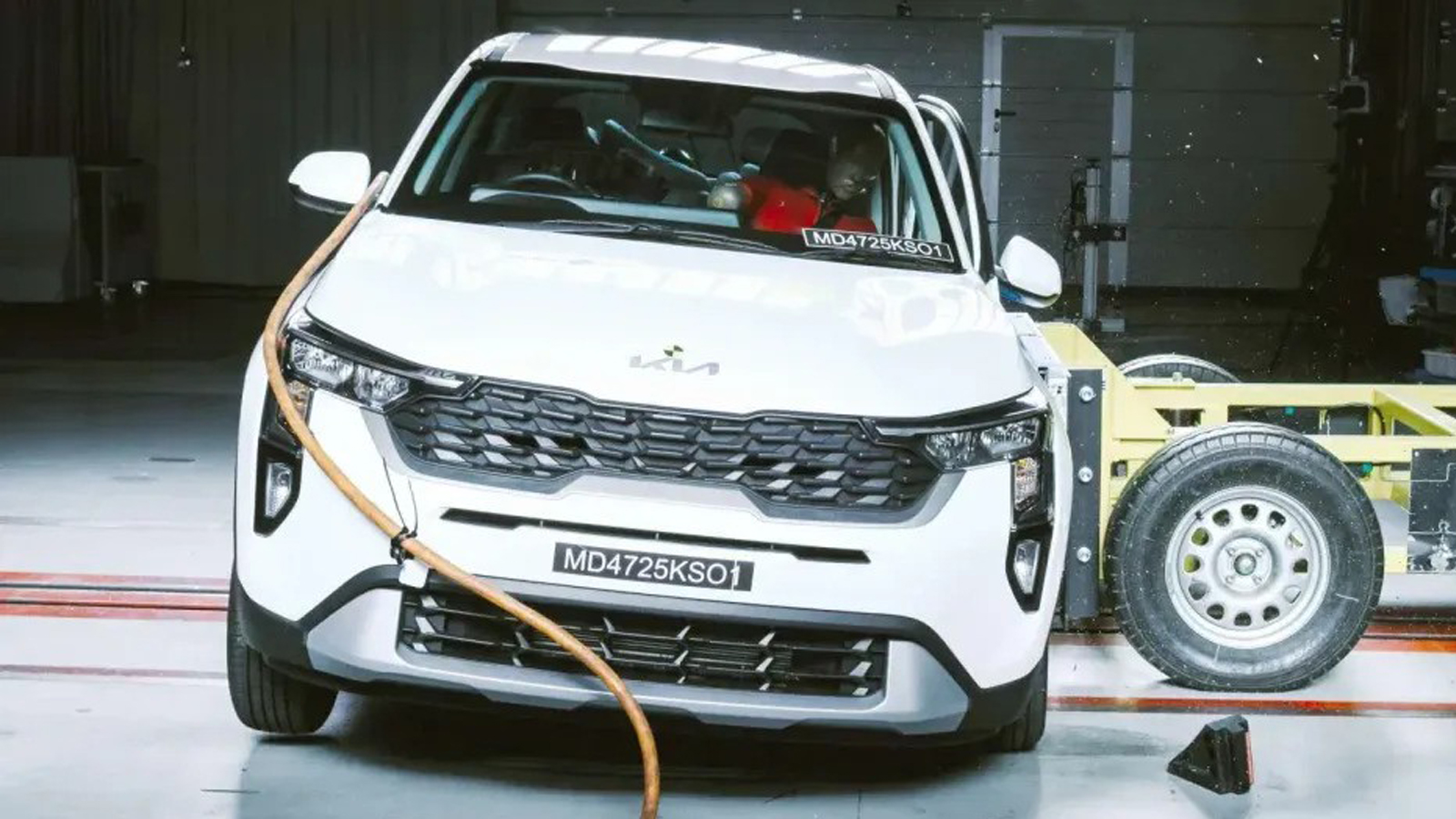
While most of the above-mentioned cars do come with six airbags and ESC, the AA still considers some of them to be sub-par in terms of safety.
The AA is currently running its #SaferCarsForAfrica campaign, which aims to highlight the safety gap between vehicles sold in Africa and those sold in other regions.
The campaign submits popular cars sold in South Africa to the Global New Car Assessment Programme (GNCAP) for crash testing to determine how well they protect adult and child occupants in head-on and side-collisions.
So far, the AA has tested the Hyundai Grand i10, Toyota Corolla Cross, Chery Tiggo 7, Toyota Starlet, Kia Sonet, and Haval Jolion, all of which received a score of between zero and two stars out of five.
The Sonet, for example, scored one star for adult occupant protection, and three stars for child occupant protection.
The AA said the crossover demonstrated serious gaps in the safety protection offered to occupants, largely due to a lack of standard side head protection airbags (also known as curtain airbags).
The official crash test report states the following:
- The footwell area and bodyshell were unstable and not capable of withstanding further loadings.
- In the side impact test, poor chest protection limited the adult protection rating to one star, while abdomen protection was rated as adequate.
- The side pole test was not conducted because side head protection airbags are not fitted as standard.
- Child Occupant Protection: both child dummies received full protection in the dynamic test, but the absence of 3-point belts in all seating positions, no passenger airbag disabling switch and a low child restraint system (CRS) installation score resulted in a 3-star rating.
The CEO of the AA, Bobby Ramagwede, said that entry-level vehicles need to be held to a higher standard in South Africa.
“South African motorists should exercise extreme caution when purchasing a new or used entry-level vehicle,” he said.
“The recent series of crash tests has shown a worrying trend with entry-level models on sale in South Africa lacking adequate crash safety and, perhaps more worryingly, very few of the vehicles tested offering safety ratings similar to those of the same models on sale abroad.”
Ramagwede said the tests demonstrated how ESC and side curtain airbags can make a life-saving difference in an accident.
“These features offer a major safety boost to any vehicle and, in most cases, can be added with only a marginal increase in vehicle price,” he said.
“We are awaiting meaningful actions to ranges of vehicles tested recently, be these in the announcement of additional safety added to the spec of the entry-level vehicle, the discontinuation of the entry-level model in the wake of the safer next-up model in the range, or in the case of major structural flaws, the consumer being availed of options that exist within other model ranges.”





 Loading ...
-2026.10.webp)
-2026.10.webp)