The Minister of Mineral and Petroleum Resources, Gwede Mantashe, has warned petrol stations in South Africa that withholding fuel from motorists is illegal.
Mantashe made this proclamation in the National Assembly yesterday, threatening to prosecute any petrol station found to be deliberately withholding fuel from the market.
He noted that there is currently no shortage of petrol, diesel, or jet fuel in South Africa, despite the growing concern over diesel availability across the country.
TopAuto has received several comments and emails from readers regarding diesel shortages in their areas, detailing their experiences with fuel rationing and price hikes at petrol stations.
This sentiment was echoed by the Freedom Front Plus (FF+), which noted that despite the minister stating that there is no shortage of fuel, nor is one expected, numerous petrol stations and wholesalers have no diesel.
“They claim that they cannot obtain diesel from the few large oil companies that import fuel,” noted the FF+.
“There are even rumours circulating of a public enterprise claiming it has no fuel, while it has around 25 million litres in its fuel reservoirs.”
Mantashe warned that dealers may be tempted to withhold fuel to maximise their profits ahead of next month’s steep fuel price increases.
He promised his department would keep an eye on the situation and promised to investigate should the diesel supply improve suddenly, once prices increase, and take action against the perpetrators.
The FF+ questioned whether the department would only be focusing on small offenders or if it would investigate large fuel importers as well.
The party noted that it will be keeping a close eye on the matter.
The latest data from the Central Energy Fund paints a bleak picture for fuel prices in April, with projected increases of R5.18 per litre for 93 octane petrol, R5.72 for 95, a massive R9.67 per litre for 0.05% diesel, and R9.81 per litre for 0.005%.
Planning for future crises

During his response to a question regarding South Africa being a “price taker” in the global petroleum market, Mantashe stated that his department is looking at improving local refining capacities.
He started by confirming that South Africa is indeed a price taker, as Brent crude oil prices are not determined by individual countries, but rather announced globally and impact everyone.
“But, if we have our own sources of energy, we can mitigate the increase in prices, but if we don’t, we cannot mitigate them and are vulnerable,” he noted.
The minister also confirmed that there are strategic fuel stores, intended to cushion the blow of drastically increased prices.
Despite the presence of these stores, Mantashe explained that South Africa must be able to generate its own sources of energy.
He said that he welcomes discussions around the Orange Basin off the coast of the Northern Cape, as well as shale gas extraction in the Karoo, as alternatives to protect South Africa from future crises.
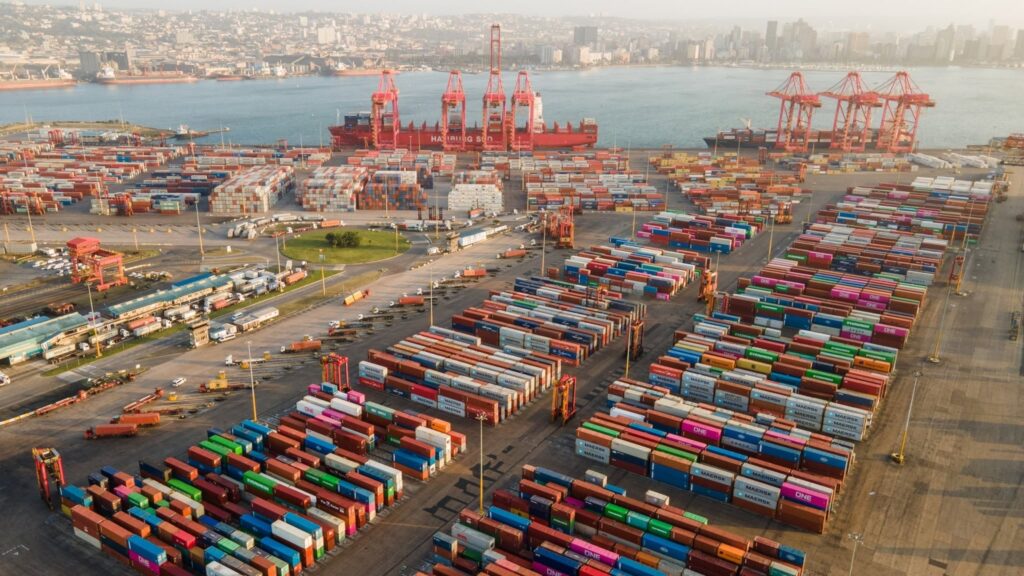
Responding to another question regarding domestic refining capacities, Minister Mantashe explained that his department is rebuilding the SAPREF refinery in Durban.
“We are not going to do anything extraordinary to ensure that it supplies crude. We import crude, and we process it in what is already there,” he declared.
“We will continue to rebuild SAPREF and PetroSA, and increase our refining capacity, but for this crisis, we depend on what is in place.”
He noted that even private companies diversify their energy sources, adding that South Africa will similarly diversify and increase refining capacity over time, not immediately.
“You do not try to do something extraordinary just because there is a crisis,” Mantashe stated.



 Loading ...
-facelift-2-2025.10.webp)
-2025.11.webp)