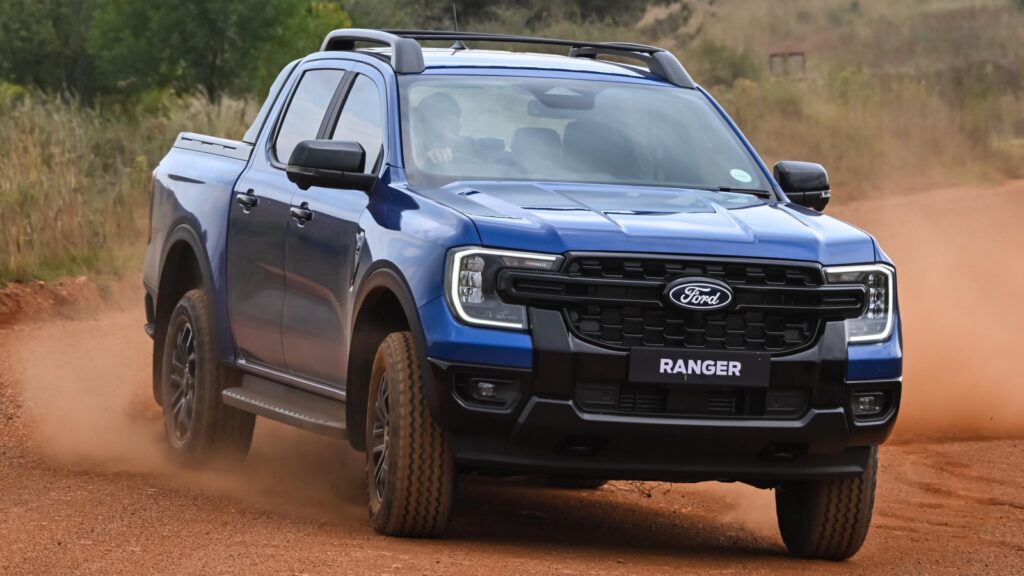
Ford has introduced a refreshed Ranger stable in South Africa, including updated powertrains, as well as the Ranger Sport derivative with a new powertrain option available to the bakkie line-up.
Intended as a mid-range trim level for the super-cab and double-cab, the Sport slots between the XLT and the Wildtrak, and allows buyers to choose the 2.3-litre EcoBoost for the first time.
The turbocharged petrol motor produces 222kW and 452Nm, and has been coupled with a 10-speed automatic transmission, which sends that power to the rear wheels.
This configuration is already employed relatively successfully by the VW Amarok, proving that the EcoBoost motor can become a popular choice for Ford Ranger buyers as well.
In recent years, premium bakkies, and high-performance ones in particular, have shifted away from diesel powertrains, replacing them with more powerful petrol motors instead.
This has led to a distinct split, where diesel bakkies are seen more as workhorses, while petrol variants have become favourites in the passenger market.
It may be for this exact reason that Ford opted to discontinue the 2.0-litre bi-turbo diesel, which occupied an awkward middle ground between the powertrain options.
Ford may also have gotten the timing of the EcoBoost introduction spot on, as diesel prices in South Africa continue to skyrocket, and petrol offers some reprieve from the volatility.
This alone may be turning the heads of some buyers, who would benefit from the savings of a cheaper fuel source, despite the EcoBoost being slightly less efficient than the remaining diesel options.
The all-wheel-drive versions of the Ranger Sport are fitted with the turbocharged 3.0-litre V6 diesel motor also found in high-end derivatives like the Platinum and Wildtrak, which produces 184kW and 600Nm.
Another premium double-cab
The introduction of the Ranger Sport marks the addition of a new premium bakkie offering, following Ford’s decision to remove the Wildtrak X derivative, demoting it to an optional trimline.
While the Sport did not come to replace the Wildtrak X, it certainly offers bakkie enthusiasts an exciting new derivative with a proven drivetrain.
Firstly, the Ranger Sport can be had in the Command Grey finish found in the more upmarket Tremor and Raptor derivatives, while its new-look black bumpers also set it apart from the XLT variant.
Fitted directly into the bakkie’s frame are twin recovery hooks, serving as a welcome backup for off-road adventurers and providing peace of mind.
It has also been fitted with 18-inch alloy wheels, designed to define the Sport’s versatile character, as well as handle tough tracks.
In the front, a black grille is joined by C-Clamp daytime running lamps with automatic function, while the Sport also features black accents across the door handles and adjustable exterior mirrors, which feature puddle lamps.
As can be expected, the bakkie features both side-steps and a load box access step, which leads to a rubberised bed, with a 12V/400W inverter, tailgate ruler with cupholders, and power tailgate.
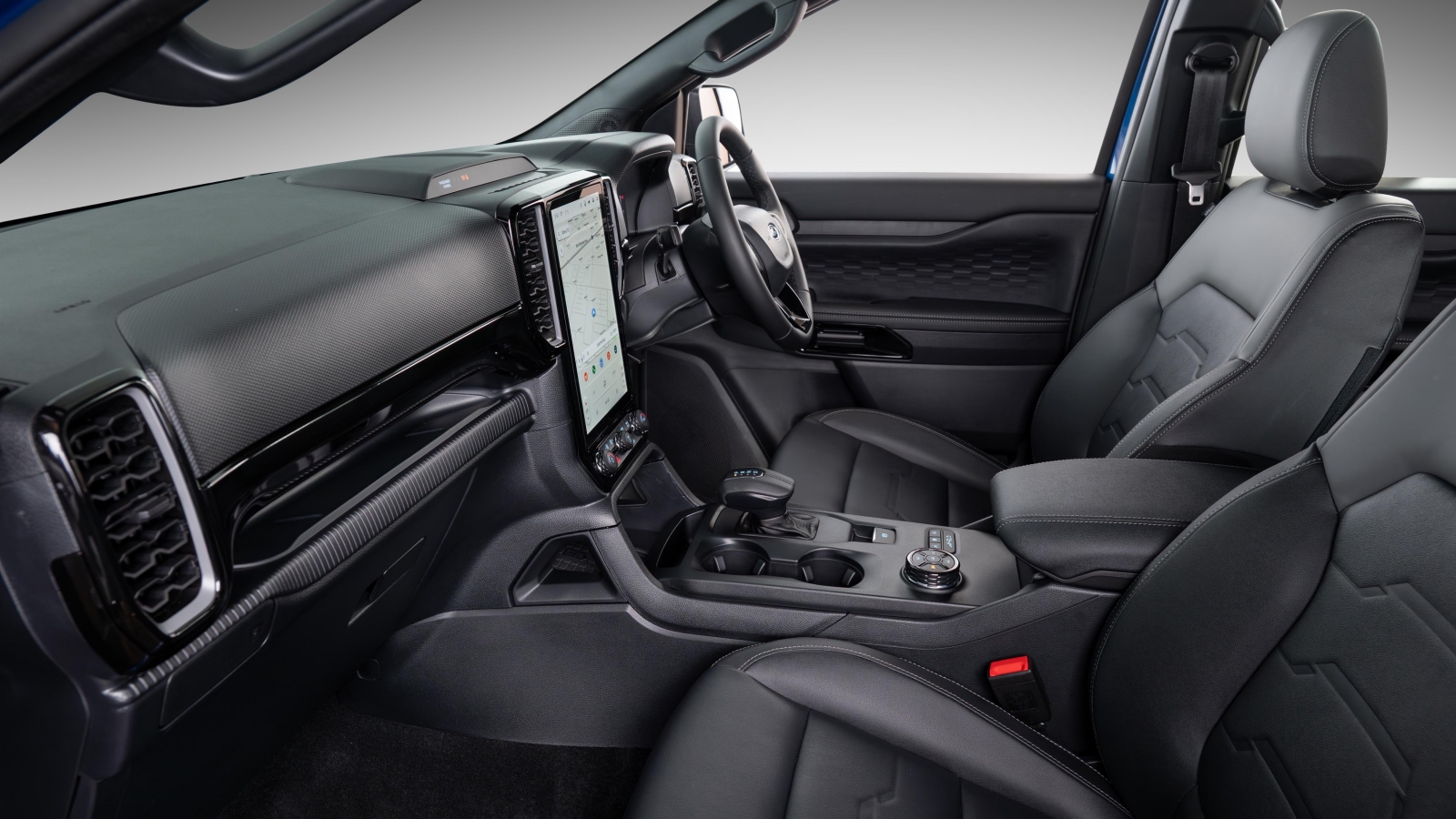
Inside, the Ranger Sport features an adjustable, vinyl-wrapped multi-function steering wheel and leather gear knob, partial leather seats that are 8-way adjustable on the driver’s side and 6-way for the passenger, as well as two ISOFIX child seat anchor points.
Connectivity and infotainment features include an 8-inch digital driver cluster and a vertical 12-inch infotainment display with wireless Apple CarPlay and Android Auto connectivity, Ford Sync and an app featuring remote start and vehicle locator.
The bakkie also features several 12V charging points, USB ports, a wireless charger, as well as dual zone automatic climate control, rain-sensing wipers, and an electrochromatic rear view mirror.
For safety and driver assistance, the Sport features blind-spot monitoring, rear cross-traffic alerts, a 360-degree camera, forward collision warning with autonomous braking and pedestrian detection, dynamic stability control, traction control, trailer sway control, hill launch assist, descent control, lane keep assist, and adaptive cruise control.




 Loading ...
-facelift-2-2025.10.webp)