


South Africa’s fuel refinery capacity has collapsed since the start of the decade, with most of its facilities becoming uneconomical to operate.
The margins on refining fuel in South Africa are incredibly slim, discouraging companies from investing in upgrades.
Instead most companies opt to simply invest the minimum needed to keep their facilities operational.
As of 2026, South Africa only has three operational refineries. Astron Energy has a site in Cape Town, and Sasol has its Natref and Secunda hubs.
Combined, these three sites have a production capacity of roughly 350,000 barrels per day.
OMIG analyst Siya Mbatha explained that Sasol and Astron can add modular components to increase refinery capacity, but these are unlikely to bring about a meaningful improvement.
The silver lining is that some of South Africa’s refining capacity can be restarted, as the Central Energy Fund is looking to restart operations at Sapref in Durban.
This is the country’s largest refinery with a production of over 180,000 barrels per day – roughly 35% of the nation’s total capacity. However, it was shut down in 2022 when BP and Shell ceased operations at the facility.
“Following consultation with government, unions, and employees, Sapref shareholders (BP Southern Africa and Shell Downstream South Africa) have today announced that they will commence with a spend freeze and pause refinery operations at SAPREF no later than the end of March 2022,” the companies previously stated.
Engen’s refinery in Durban, which had a capacity of 135,000 barrels per day, was permanently shut down in 2020 after a fire broke out in one of the buildings.
The site has since been converted into a fuel storage and import terminal. Engen stated that financial and operational challenges led to the decision to close the ageing refinery.
Another facility, the PetroSA gas-to-liquid plant in Mossel Bay, was mothballed due to a lack of feedstock.
South Africa lacks refining capacity during a global fuel crisis
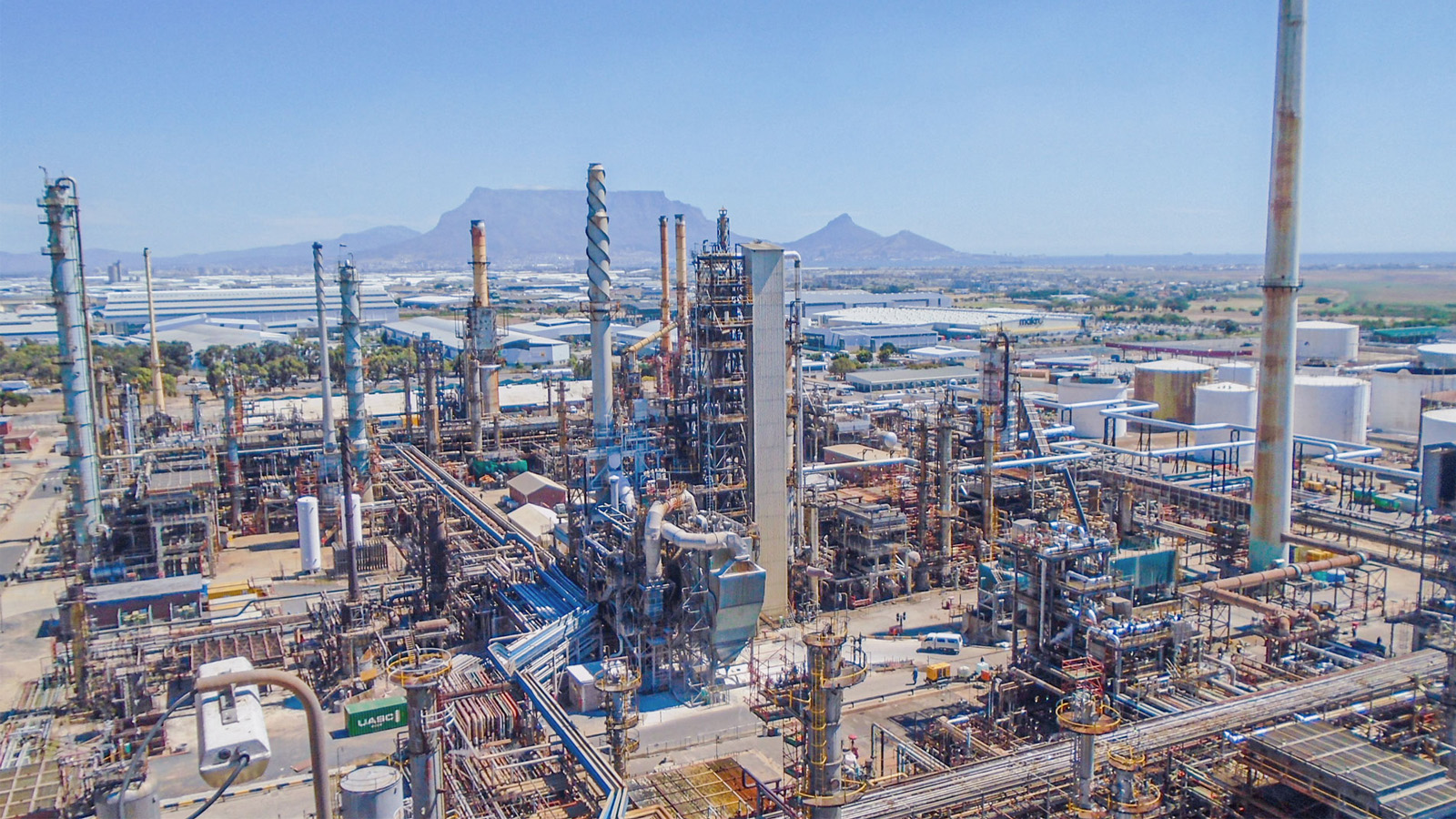
The collapse of South Africa’s refining capacity has been thrown into the spotlight, following the outbreak of the war between Iran and the United States.
The conflict led to the closure of the Strait of Hormuz, a crucial shipping lane that usually transports 20% of the world’s total oil supply.
As a result, oil prices have skyrocketed in recent months, going from $55 dollars per barrel in January to over $100 per barrel in March.
Since South Africa is heavily reliant on imported fuel, it is highly susceptible to global price shocks.
The price of petrol and diesel surged in April and May, with motorists now paying R26.63 per litre for petrol, and R32.30 per litre (wholesale) for diesel
Mbatha noted that restoring South Africa’s refining capacity to a level where it provides a significant buffer to external energy shocks will take billions of rands and a decade of sustained investment.
It would require a major shift in operational thinking from the government, investors, and businesses, with energy security taking priority over emissions.
Sasol is South Africa’s only domestic petroleum producer and refiner, but its operations are under pressure from the government.
It is not reliant on imported crude oil as it can produce its own fuel via its coal-to-liquids facility at Secunda.
However, years of increasing government pressure on refineries to reduce carbon emissions, onerous regulations, and investor pressure have led Sasol to avoid expanding its domestic capacity.
Instead, it has largely engaged in subsistence investing to keep its facilities operational, despite the need to increase South Africa’s refining capacity.
In the 1980s, Sasol produced roughly 40% of the country’s refined fuel, which has since dropped to 20%.




 Loading ...

-facelift-2-2025.10.webp)
